Creative Economy Bill 2026: KSh6.5 Billion Allocation, New Institutions & Film Training Framework

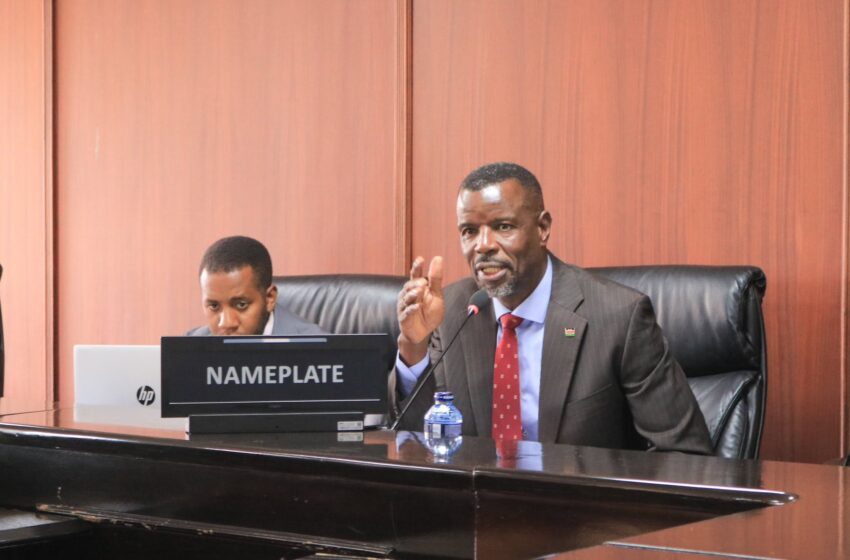
Dan Wanyama speaking in Parliament
Creative sector is entering a new phase of legislative and financial restructuring as Parliament considers a proposed law that would establish dedicated institutions for promoting, regulating and developing creative industries.
The Creative Economy Bill, 2026, sponsored by Webuye West MP and National Assembly Departmental Committee on Sports and Culture Chairperson Dan Wanyama, was introduced in Parliament in August 2026. The Bill seeks to create a comprehensive legal and institutional framework covering creative industries, while separating promotional responsibilities from regulatory functions.
The proposed legislation comes alongside increased government attention to the creative economy, including a reported KSh6.5 billion allocation to the creative sector in the 2026 budget. The funding has been linked to initiatives targeting festivals, live events and youth employment, although the KSh6.5 billion allocation should not be confused with a direct appropriation created by the Bill itself.
Read Also: Pharmacy Board Looks to Shape Future of Pharmaceutical Practice
The legislation proposes new bodies, including the Kenya Audio-Visual and Cinema Commission, the Kenya Audio-Visual Regulatory Authority and the Kenya School of Film and Creative Arts.
At the centre of the proposed changes is an attempt to give Kenya’s creative economy a clearer institutional structure while creating mechanisms for financing, training, infrastructure development and market expansion.
Statutory Framework Restructuring
The proposed law would significantly change the way the State handles the film and audio-visual industry.
The Bill proposes establishing the Kenya Audio-Visual and Cinema Commission as the body responsible for promoting and developing the audio-visual and cinema industry. Its proposed responsibilities include marketing Kenyan audio-visual works locally and internationally, supporting industry development and establishing an archive for cinematic works.
A separate Kenya Audio-Visual Regulatory Authority would handle regulatory responsibilities.
The separation is important because promotion and regulation involve different functions. One institution would concentrate on growing the industry, supporting investment and expanding markets, while the other would oversee compliance, licensing and classification.
The proposed regulatory authority would have responsibility over the creation, distribution, exhibition and broadcasting of audio-visual works. The Bill also proposes licensing requirements covering audio-visual producers, distributors, exhibitors, service providers and streaming or online platforms operating in Kenya.
The proposed structure would replace parts of the existing framework. The Bill seeks to repeal the Films and Stage Plays Act, Cap. 222, while also providing for changes involving existing film-sector institutions.
Such restructuring could affect filmmakers, production companies, distributors, broadcasters and digital platforms that currently operate under the existing regulatory arrangements.
The Bill also proposes a Creative Industries Development Plan, which would provide a longer-term framework for setting targets, strategies and programmes for the sector.
The plan is intended to address areas including skills development, infrastructure, research, innovation, investment and market development.
Read Also: Top Comoros Official Hospitalized in Nairobi Amid Rising Tensions in Moroni
The proposed approach reflects a broader attempt to treat creative work not only as cultural production but also as an economic activity capable of generating employment, businesses and investment.
Creative Industry Development Fund
Financing remains one of the biggest issues facing creative professionals, particularly independent artists and small production companies.
The Bill proposes a Creative Industry Development Fund to provide financial support to creative enterprises and initiatives.
The proposed fund is designed to sit within a wider financing framework that includes public resources and partnerships with private investors. Parliament’s description of the Bill specifically identifies public-private partnerships as a mechanism for mobilising investment into the creative economy.
Such a structure could potentially support projects that struggle to secure conventional commercial financing.
Film production provides a useful example. A producer may have a viable script and production team but lack the capital needed for equipment, locations, post-production, marketing and distribution. Similar financing challenges affect musicians, theatre groups, digital creators, designers and other creative businesses.
The Bill proposes broader investment in creative infrastructure, research and innovation, creative clusters and hubs. These facilities could provide shared equipment, production spaces, training opportunities and networking platforms for practitioners.
Public-private partnerships could also bring commercial investors into projects that might otherwise depend entirely on government funding.
The proposed framework therefore goes beyond grants. It attempts to establish an ecosystem where public support can help attract private capital and create commercially sustainable creative enterprises.
The reported KSh6.5 billion creative-sector allocation for 2026 adds another dimension to the discussion. Government funding has been presented as support for festivals, youth employment and live events, while the proposed Bill would establish the institutional mechanisms through which longer-term sector development could be coordinated.
The two developments should nevertheless be distinguished. A budget allocation is a financial decision for a particular financial period, while legislation creates statutory institutions and powers that can continue beyond one budget cycle.
Kenya School of Film and Creative Arts
Professional training is another major component of the proposed legislation.
The Bill provides for the establishment of the Kenya School of Film and Creative Arts, with responsibility for implementing curricula, training programmes and competency standards in film, audio-visual, cinematic and performing arts.
The proposed school would provide technical, vocational, professional and specialised training, alongside mentorship and talent-development programmes.
It would also have a role in assessments and qualifications, creating a more structured pathway for people seeking professional skills in the creative industries.
The proposal comes at a time when the creative sector is increasingly dependent on specialised technical skills.
Film production now involves cinematography, sound engineering, editing, visual effects, animation, production management and digital distribution. Music production similarly requires knowledge of recording technology, sound engineering, publishing, licensing and digital platforms.
A formal training institution could therefore help bridge the gap between raw talent and professional production.
The Bill also proposes mechanisms for internships, apprenticeships, mentorship and talent development, potentially giving young people practical exposure alongside classroom-based learning.
Such training could have employment implications if it is connected to actual production opportunities, creative enterprises and investment.
The legislation also proposes maintaining a register of creatives, creative groups and associations, creating a formal database that could potentially help government identify practitioners and design targeted support programmes.
Intellectual Property and Creative Rights
Money and training are only part of the challenge facing Kenya’s creative economy.
Creators also depend on effective protection of their intellectual property.
Music, films, photographs, scripts, books, designs and digital content can all generate commercial value. Unauthorised reproduction or distribution can deprive creators of income while making it harder for legitimate businesses to recover production costs.
The proposed Bill comes within a wider policy environment in which the government is also reviewing the Copyright Act and the country’s creative economy policy. Treasury’s medium-term planning documents included completion of reviews of the Creative Economy Policy, Creative Economy Bill 2026 and Copyright Act as government priorities.
The Bill itself is not a replacement for copyright legislation, but its institutional framework could interact with existing intellectual-property systems.
Its emphasis on training, commercialisation, investment and market development therefore places intellectual property within the broader economic structure of the creative sector.
Creators need not only opportunities to produce content but also systems that allow them to earn from that work.
Regulation, Streaming and Digital Content
The proposed law also introduces potentially significant changes for digital content and streaming services.
The proposed Kenya Audio-Visual Regulatory Authority would have licensing responsibilities extending to streaming and online platform operations within Kenya. It would also oversee classification of audio-visual content.
That provision is particularly relevant because Kenya’s entertainment industry has increasingly moved beyond cinemas and traditional television.
YouTube creators, streaming services, online broadcasters and digital production companies have become part of the country’s wider audio-visual economy.
The Bill’s proposed regulatory framework would therefore have implications extending beyond conventional filmmaking.
The proposed Authority would also have enforcement powers under the Bill, including penalties and other measures against entities that fail to comply with regulatory requirements. Reports on the Bill have highlighted provisions allowing measures such as take-down orders for prohibited or unclassified audio-visual content.
These provisions are likely to attract close attention during public participation and parliamentary debate because they touch directly on digital content, licensing and the relationship between regulation and online expression.
What the Bill Could Mean for Kenya’s Creative Economy
The Creative Economy Bill, 2026 represents a proposed overhaul of the legal architecture surrounding Kenya’s creative industries.
Its institutional model would separate promotion from regulation, establish a dedicated development fund, create a specialised film and creative arts school and introduce a national planning framework.
The proposed Kenya Audio-Visual and Cinema Commission would focus on development and promotion, while the proposed Kenya Audio-Visual Regulatory Authority would handle regulatory responsibilities. The proposed school would address professional skills and qualifications, while the Creative Industry Development Fund would provide a financing mechanism for creative enterprises.
The reported KSh6.5 billion allocation for the wider creative sector in the 2026 budget adds financial weight to the government’s broader focus on the industry, but the Bill itself remains a legislative proposal rather than an appropriation of that amount.
Read Also: Kenyan marathoner remanded over Ksh8 million land fraud case
The legislation must still go through Parliament’s legislative process, including public participation, debate and consideration of proposed amendments before it can become law.
Its final impact will therefore depend not only on the provisions eventually enacted but also on how the proposed institutions are funded, staffed and implemented.
Kenya’s creative economy already includes filmmakers, musicians, actors, writers, designers, photographers, digital creators and other professionals whose work contributes to employment, entertainment and cultural expression.
The proposed legislation seeks to place that activity within a more formal economic and institutional framework.
The next stage of parliamentary consideration will determine how far those proposals translate into practical opportunities for the people whose work forms the country’s creative economy.