
CS Duale Makes Big Move as Kenya, UK Deepen Health Partnership


Kenya has strengthened its health cooperation with the United Kingdom following high-level bilateral talks between Health Cabinet Secretary Aden Duale and British High Commissioner to Kenya Matt Baugh OBE.
The meeting focused on expanding collaboration in Universal Health Coverage (UHC), digital health, workforce development and health security.
The discussions reflected Kenya’s ongoing efforts to modernise its healthcare system through reforms under the Bottom-Up Economic Transformation Agenda (BETA). Government officials believe stronger international partnerships will play a vital role in improving access to affordable and quality healthcare for millions of Kenyans.
Read: Pharmacy Board Looks to Shape Future of Pharmaceutical Practice
Healthcare remains one of the government’s top priorities, particularly following the rollout of Taifa Care and the operationalisation of the Social Health Authority (SHA). Authorities are also investing heavily in digital systems, primary healthcare services and improved health financing to support Universal Health Coverage.
“Hosted the British High Commissioner to Kenya, Matt Baugh OBE, for bilateral discussions on strengthening the longstanding Kenya–United Kingdom health partnership and advancing our shared priorities in Universal Health Coverage (UHC), health security, workforce development and digital health transformation,” said Health Cabinet Secretary Aden Duale.
Kenya Highlights Progress on Taifa Care and SHA Reforms
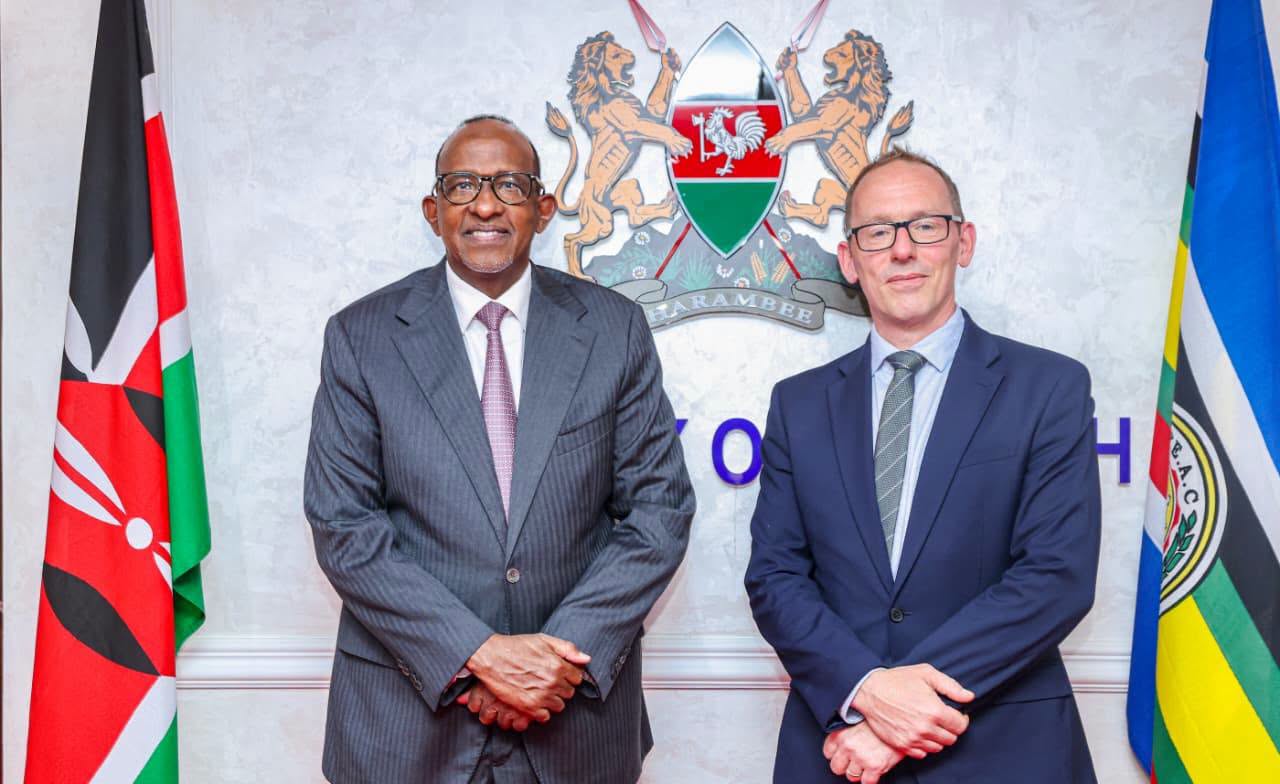
Kenya and the United Kingdom have maintained a close relationship in the health sector for many years, supporting programmes ranging from medical research and disease surveillance to healthcare worker training. The latest meeting reaffirmed both countries’ commitment to expanding that cooperation at a time when Kenya is implementing major reforms.
Officials from the Ministry of Health say international collaboration remains essential in strengthening the country’s health systems, particularly in areas requiring technical expertise, innovation and investment.
Duale noted that the government briefed the British delegation on the progress being made under the Taifa Care programme and other reforms aimed at transforming healthcare delivery.
“I highlighted the health sector reforms being implemented under the Bottom-Up Economic Transformation Agenda (BETA) through the Taifa Care programme, including the operationalization of the Social Health Authority (SHA), expansion of Primary Health Care, rollout of the Digital Health ecosystem, health financing reforms and investments in health infrastructure aimed at improving access to quality and affordable healthcare.”
The Social Health Authority remains central to the government’s strategy of delivering Universal Health Coverage. The authority replaced the National Health Insurance Fund (NHIF) and is expected to provide a more sustainable healthcare financing model while widening access to essential medical services.
Read Also: Top Comoros Official Hospitalized in Nairobi Amid Rising Tensions in Moroni
Expansion of Primary Health Care also continues to receive significant government attention. Health experts have consistently argued that stronger primary healthcare reduces pressure on referral hospitals by enabling early diagnosis, preventive care and treatment closer to communities.
Digital transformation forms another major pillar of the reforms. Electronic systems are expected to improve efficiency, minimise paperwork and make healthcare services more accessible across the country.
Human resource development also featured prominently during the bilateral meeting. Kenya continues to face shortages of healthcare professionals in several specialised fields despite increasing demand for medical services.
“We reviewed progress under the Kenya–United Kingdom Health Workforce Partnership and explored opportunities to deepen collaboration through specialist training, scholarships, fellowships, institutional partnerships and leadership development to strengthen Kenya’s healthcare workforce.”
The Kenya–United Kingdom Health Workforce Partnership has already supported capacity building in different areas of the health sector. Both governments are now seeking to expand opportunities for specialist training and professional development.
Scholarships, fellowships and institutional partnerships are expected to provide Kenyan healthcare workers with additional skills while strengthening local medical institutions. Leadership development programmes also formed part of the discussions, reflecting the importance of effective management in delivering quality healthcare services.
Disease surveillance and emergency preparedness emerged among the other key issues discussed during the meeting.
Health Workforce and Digital Innovation Take Centre Stage

Kenya has continued strengthening its public health systems following lessons learned from recent disease outbreaks. Better laboratory capacity, stronger surveillance systems and faster emergency response remain critical in protecting the country from future health threats.
“Our discussions also focused on enhancing epidemic preparedness, laboratory systems, genomic surveillance and emergency response capabilities, while accelerating efforts to reduce maternal and newborn mortality through targeted training, mentorship and digital health solutions.”
Reducing maternal and newborn deaths remains a major national priority despite progress recorded over recent years. Government programmes continue to focus on improving skilled birth attendance, expanding maternal healthcare services and strengthening referral systems.
Digital technology is increasingly being integrated into maternal healthcare through remote consultations, patient monitoring and electronic medical records, helping improve service delivery, especially in underserved areas.
Follow Kenya Frontline X account for more updates
Artificial intelligence also featured prominently during the bilateral talks, highlighting Kenya’s ambition to embrace emerging technologies that can improve healthcare outcomes.
“We further explored collaboration in artificial intelligence, electronic health records, cybersecurity, health data governance and climate-resilient health infrastructure.”
Artificial intelligence has the potential to improve disease diagnosis, healthcare planning and resource allocation. Electronic health records can also help healthcare providers access patient information quickly, improving continuity of care and reducing medical errors.
Growing reliance on digital systems has equally increased the importance of cybersecurity and health data governance. Government officials say protecting sensitive patient information remains a priority as more healthcare services move online.
Climate-resilient health infrastructure formed another area of discussion. Extreme weather events and climate-related health risks continue to place increasing pressure on healthcare systems, making resilient facilities an important long-term investment.
Duale thanked the United Kingdom for its continued partnership in supporting Kenya’s health programmes and medical research initiatives.
“I expressed appreciation for the United Kingdom’s continued support through global health initiatives and research partnerships and invited the High Commissioner to the launch of Kenya’s National Ambulance Dispatch Centre later this month.”
The planned National Ambulance Dispatch Centre is expected to improve coordination of emergency medical services across the country by reducing response times and strengthening communication between healthcare facilities and emergency responders.
Senior officials from both governments participated in the bilateral meeting, reflecting the significance attached to the partnership.
“I was joined in the meeting by the Deputy British High Commissioner Ms. Diana Dalton, Director General for Health Dr. Patrick Amoth alongside other Senior Ministry officials.”
The delegation discussed practical steps that could accelerate implementation of the agreed areas of cooperation while supporting Kenya’s broader healthcare transformation agenda.
Read Also: Kenyan marathoner remanded over Ksh8 million land fraud case
Partnerships between Kenya and development partners continue to play an important role in financing innovation, building healthcare capacity and strengthening disease preparedness. Continued collaboration with the United Kingdom is expected to support ongoing reforms while helping Kenya respond to emerging health challenges.
Progress made under Taifa Care, digital health initiatives and workforce development programmes will likely determine the pace at which Kenya achieves Universal Health Coverage. Government leaders maintain that sustained investment, stronger partnerships and adoption of modern technologies will be key to delivering accessible, affordable and quality healthcare to every Kenyan.

