
Harambee Stars International Window Evaluation: Rwanda Draw, AFCON Group D Standings, Squad Depth

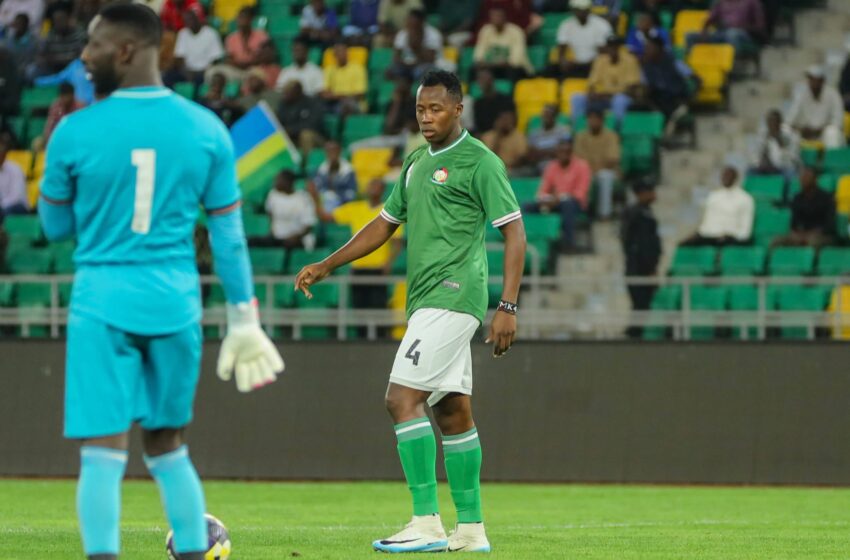
Harambee Stars. IMAGE/ FKF
Harambee Stars completed a demanding September-October international window without a victory, raising fresh questions about attacking efficiency, defensive concentration and squad depth as Kenya builds towards the 2027 Africa Cup of Nations on home soil.
Kenya opened the window with a 1-1 draw against Eritrea at Nyayo National Stadium before suffering a narrow 1-0 defeat to Guinea in Conakry in their second AFCON 2027 qualifier.
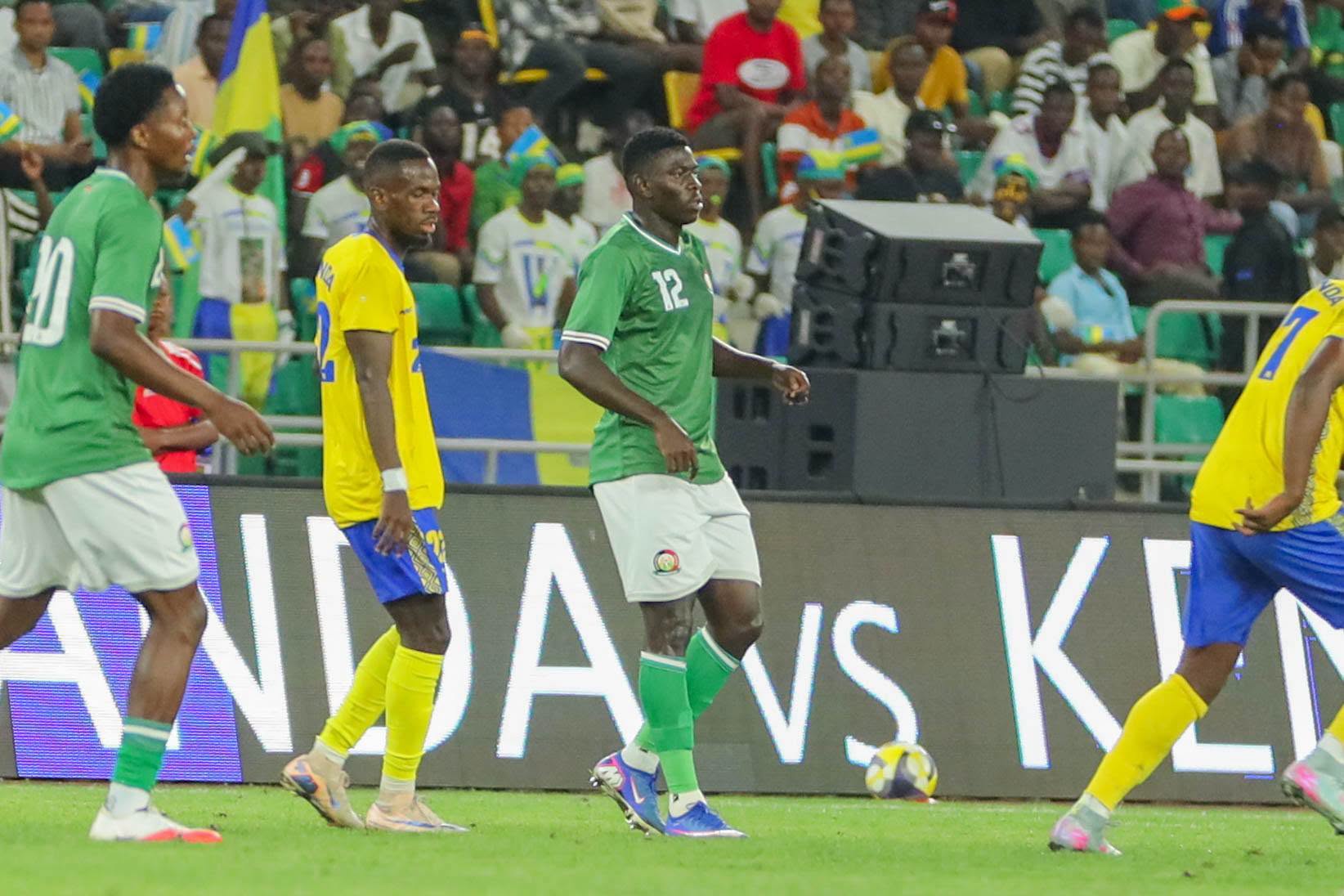
The final assignment brought another draw, this time a goalless stalemate against Rwanda at Amahoro Stadium in Kigali on October 5.
The results leave Benni McCarthy with plenty to assess before Kenya’s next competitive fixtures against South Africa in November.
Kenya’s position is unusual because the Harambee Stars are already guaranteed a place at the 2027 AFCON finals as co-hosts alongside Uganda and Tanzania. CAF’s official AFCON 2027 qualifying format confirms that the three hosts automatically qualify, while the qualifiers provide competitive preparation and determine the additional team advancing from Kenya’s group. (Confédération Africaine de Football)
Read Also: Top Comoros Official Hospitalized in Nairobi Amid Rising Tensions in Moroni
The international window therefore offered McCarthy something almost as important as points: another opportunity to identify which players can handle the demands of a major tournament.
Conakry Defeat Exposes Defensive Transition Problems
Kenya’s 1-0 defeat to Guinea in Conakry exposed a familiar problem.
The Harambee Stars were capable of maintaining their defensive structure for long periods but struggled to respond quickly when Guinea increased the tempo and attacked spaces around the Kenyan back line.
Serhou Guirassy scored the decisive goal in the 32nd minute after Guinea exploited a lapse in Kenya’s defensive organisation. CAF’s match report noted that Kenya failed to clear the danger cleanly before the Borussia Dortmund forward punished the mistake. (Confédération Africaine de Football)
The goal illustrated the fine margins separating Kenya from a stronger opponent.
Guinea did not need a sustained spell of dominance to take control of the match. A single defensive breakdown created the opening that decided the contest.
Kenya had opportunities of its own.
Micah Obiero broke through early and forced a save from goalkeeper Mohamed Camara, while Ryan Ogam was introduced after halftime and came close to an equaliser. (Confédération Africaine de Football)
The problem was converting those moments into sustained attacking pressure.
Guinea were able to protect their lead as Kenya pushed forward late in the game, leaving McCarthy with another reminder that possession and territorial pressure must eventually produce clear chances.
Kigali Provides A Different Test
Rwanda presented a different tactical challenge.
Rather than another competitive qualifier, the Kigali fixture gave McCarthy the freedom to rotate his squad and assess players who had received limited minutes in the opening matches.
The decision was reflected in the starting lineup, with five changes made from the team that faced Guinea. Younger players were also given an opportunity to make their case. (Pulse Sports Kenya)
The result was a 0-0 draw, but the scoreline did not tell the whole story.
Kenya produced some of its better moments during the opening half. Stanley Wilson came close after creating space inside the area, while Manzur Okwaro also tested the Rwandan defence.
The biggest opportunity arrived shortly before halftime when Okwaro’s effort was parried by the Rwanda goalkeeper before Ryan Ogam failed to turn the rebound towards goal. (Pulse Sports Kenya)
Kenya finished the first half with 54 percent possession, five attempts and two efforts on target, compared with Rwanda’s four attempts and two on target. (Pulse Sports Kenya)
That represented an improvement in attacking intent compared with the Guinea match.
The second half, however, belonged more to Rwanda.
The hosts created pressure around Kenya’s penalty area and forced goalkeeper Farouk Shikalo into an important save. Kenya also suffered an injury setback when captain Aboud Omar was stretchered off. (Pulse Sports Kenya)
Neither side could find the breakthrough.
The Attacking Problem Remains
The biggest concern emerging from the window is not necessarily the number of goals conceded.
It is the number of chances Kenya is failing to convert.
Harambee Stars scored once across the three matches against Eritrea, Guinea and Rwanda.
The team has shown that it can remain competitive defensively, but creating a consistent stream of high-quality opportunities remains difficult.
The Rwanda match offered some encouragement because Kenya generated better first-half openings with a rotated lineup.
Still, those opportunities need to become goals.
McCarthy’s technical team acknowledged that the Kigali friendly was partly about testing players outside their usual roles and giving opportunities to younger members of the squad. Assistant coach Vasili Manousakis described the draw as a fair result while noting that Kenya had better half-chances before halftime but created less after the break. (Pulse Sports Kenya)
That evaluation is important when judging the result.
A friendly does not always have the same objective as a qualifier.
The coaching staff needed information.
The challenge now is turning that information into a clearer first-choice team.
Group D Standings After Matchday Two
Kenya’s position in Group D needs to be understood in the context of automatic qualification.
The CAF Group D update confirmed that South Africa moved to six points after beating Guinea and Eritrea, while Guinea collected three points from their victory over Kenya. (Confédération Africaine de Football)
AFCON 2027 Group D standings
| Position | Team | Points | Status |
|---|---|---|---|
| 1 | South Africa | 6 | Fighting for the group qualification place |
| 2 | Guinea | 3 | Fighting for the group qualification place |
| 3 | Eritrea | 1 | Fighting for the group qualification place |
| 4 | Kenya | 1 | Already qualified as co-hosts |
South Africa have made the strongest start, winning both matches and scoring seven goals while conceding two.
Guinea have recovered from their opening defeat to South Africa by beating Kenya 1-0.
Eritrea remain on one point after their opening draw with Kenya and subsequent heavy defeat to South Africa.
Kenya also have one point.
Read Also: KNEC Grade 10 Assessment 2026: Guidelines, Timelines & School Requirements
The table therefore provides a useful competitive benchmark, but it does not put Kenya’s tournament qualification at risk.
CAF confirmed that Kenya’s place in the 2027 finals is already secure because of its co-host status. The remaining qualification battle in Group D concerns which of South Africa, Guinea and Eritrea will finish highest among the non-host nations. (Confédération Africaine de Football)
That distinction should shape how Kenya evaluates these matches.
Squad Depth Becomes The Bigger Question
McCarthy’s biggest task now is identifying whether Kenya have enough reliable alternatives across every position.
The coach’s initial AFCON squad selection already showed an intention to blend established internationals with emerging players. CAF’s September squad announcement listed 24 players for the opening qualifiers, including overseas-based options and younger players competing for places. (Confédération Africaine de Football)
The Rwanda friendly continued that experiment.
Stanley Wilson was one of the players to attract attention after showing confidence and attacking intent.
Manzur Okwaro also received valuable minutes, while Javan Omondi was handed his international debut against Guinea.
These opportunities matter because Kenya cannot enter a major tournament depending exclusively on a small group of established players.
Injuries, suspensions, loss of form and tactical changes can quickly expose a thin squad.
McCarthy therefore needs competition in every position.
Goalkeeping Competition
The goalkeeping department is one area where the international window offered useful information.
Byrne Omondi started against Guinea and was beaten by Guirassy for the only goal.
Farouk Shikalo then started against Rwanda and produced an important second-half save.
The competition is significant because Kenya need a goalkeeper capable of handling pressure against high-level opponents.
The coaching staff also has other options to consider.
Ian Otieno was part of the preliminary squad before being left out of the final selection for the opening qualifiers, according to CAF. (Confédération Africaine de Football)
Such competition can be beneficial if it pushes every goalkeeper to improve their consistency.
Defensive Stability Versus Attacking Balance
Kenya’s defensive structure has generally been more dependable than its attacking production during the window.
The Guinea defeat was caused by one costly lapse, while Rwanda failed to score despite having stronger moments after halftime.
That provides a foundation for McCarthy.
The next challenge is finding a system that allows the midfield and attack to contribute more without leaving the defence exposed.
A team that sits too deep can reduce the number of chances conceded but may struggle to generate enough attacking pressure.
A more aggressive approach can create opportunities but also expose spaces behind the midfield.
McCarthy’s tactical development will therefore involve finding the right balance rather than simply demanding more attacking players.
Young Players Need A Clear Path
The Rwanda match demonstrated why international friendlies are important for Kenya.
Young players need meaningful minutes rather than simply being included in squads.
A player can train alongside established internationals for weeks without showing whether he can handle the pressure of an international match.
Competitive minutes provide a different test.
The appearance of younger players during the Kigali friendly gives McCarthy additional information before the November qualifiers.
The next step should be consistency.
A young player who impresses in one friendly needs opportunities to prove that performance was not an isolated moment.
That process can gradually increase squad depth ahead of 2027.
Co-Host Preparation Cannot Depend On Home Advantage
Kenya’s automatic qualification removes one major pressure, but it increases another.
The Harambee Stars will play at a home tournament in 2027, meaning expectations will be higher.
The team cannot rely on the co-host advantage to compensate for tactical weaknesses.
The CAF roadmap for AFCON Pamoja 2027 confirms that the tournament will be staged across Kenya, Uganda and Tanzania from June 19 to July 17, 2027. (Confédération Africaine de Football)
That gives McCarthy several months to improve the squad.
The November qualifiers against South Africa will be particularly valuable.
They will provide another opportunity to measure Kenya against one of the strongest teams in the group.
The objective should not simply be avoiding defeat.
The matches should help answer specific questions about the team’s ability to defend transitions, progress the ball, create chances and manage games against technically stronger opponents.
The Road Ahead For Harambee Stars
The October international window produced mixed evidence.
Kenya showed defensive resilience but conceded a preventable goal against Guinea.
The team demonstrated promising attacking moments against Rwanda but failed to convert them.
Several players received valuable opportunities, yet the squad still lacks obvious solutions in the final third.
The three-game run of a 1-1 draw with Eritrea, 1-0 loss to Guinea and 0-0 draw with Rwanda also leaves Kenya without a win during the window. (Pulse Sports Kenya)
That record should not be viewed in isolation.
The central purpose of the current cycle is preparation for AFCON 2027.
Kenya already have their tournament place secured.
The priority now is building a squad capable of competing when the competition arrives.
That means improving attacking efficiency, reducing defensive errors, increasing competition for places and giving emerging players enough exposure to determine whether they can contribute at the highest level.
McCarthy has time, but the November fixtures will provide another important measuring stick.
The Rwanda draw did not solve Kenya’s attacking questions.
Read Also: Kenyan marathoner remanded over Ksh8 million land fraud case
The Guinea defeat exposed the cost of defensive mistakes.
Together, however, the two matches have given the technical bench another set of evidence from which to shape the Harambee Stars squad.
The real evaluation of this international window will therefore come later.
It will be measured by whether Kenya can turn these lessons into a stronger, deeper and more balanced team before AFCON 2027 begins on East African soil.