
IEBC KIEMS Tender Appeal 2026: Technical Requirements, PPARB Ruling & Court Dispute Breakdown

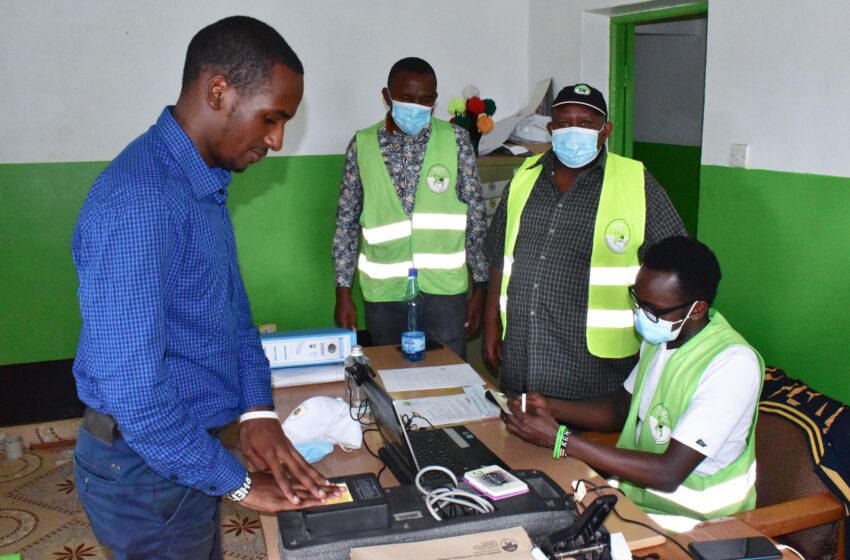
Kenya’s preparations for the 2027 General Election have entered a critical stage, with the country’s election technology procurement facing fresh scrutiny from bidders, procurement authorities and the courts.
At the centre of the latest controversy is the Independent Electoral and Boundaries Commission’s (IEBC) tender for the Integrated Elections Management System (IEMS), the technology platform expected to support several important functions during the election.
The procurement is closely linked to the technology Kenyans have become familiar with through the Kenya Integrated Elections Management System (KIEMS), which has been used for voter identification and other election-related processes.
Read Also: Pharmacy Board Looks to Shape Future of Pharmaceutical Practice
The dispute matters because election technology is not an ordinary government purchase. The systems must handle sensitive voter information, operate across thousands of polling stations and remain reliable under difficult conditions.
The IEBC has already faced a procurement challenge over the IEMS tender, prompting the Public Procurement Administrative Review Board to intervene and order changes to the tender document before the process proceeds.
What Triggered the IEBC Technology Tender Dispute?
The procurement challenge centred on aspects of the tender issued by IEBC under OIT/01/2026–2027.
The Public Procurement Administrative Review Board, commonly known as PPARB, is responsible for hearing and determining disputes arising from public tendering and asset-disposal processes.
In the IEBC case, the Board identified concerns relating to the clarity of certain technical requirements and the way some evaluation provisions had been framed.
The concerns included the identification of applicable standards, requirements affecting international bidders and aspects of the technical evaluation process.
Questions were also raised around post-qualification requirements, the qualifications expected of key personnel and provisions touching on ownership of hardware and technology.
That does not mean the procurement was declared corrupt or that the entire tender was found unlawful.
That distinction is important.
A procurement review can identify weaknesses in a tender document without establishing that a particular company was unfairly favoured.
The Board instead directed IEBC to correct and clarify the affected provisions and reissue the tender in compliance with procurement requirements. Prospective bidders would then have an opportunity to consider the amended requirements.
For IEBC, the decision creates an additional task at a time when the commission is already working against a fixed electoral deadline.
What Technical Requirements Are Under Scrutiny?
Election technology involves far more than supplying tablets or biometric equipment.
The system must operate as part of a wider digital infrastructure that includes voter identification, information management, communication and results-related functions.
Previous IEBC technology documents have included requirements around biometric voter registration, biometric voter identification and verification, as well as electronic transmission of election results.
That makes the procurement particularly sensitive.
Read Also: Top Comoros Official Hospitalized in Nairobi Amid Rising Tensions in Moroni
The equipment must be capable of working in urban polling stations with reliable connectivity as well as remote locations where power and telecommunications networks can be less dependable.
Battery performance, connectivity, security, data protection and system reliability therefore become important considerations.
Technical specifications must also be clear enough to allow bidders to understand exactly what IEBC expects.
That is one of the reasons procurement rules place significant emphasis on objective and transparent evaluation criteria.
A bidder should not have to guess which technical requirements are mandatory and which will simply earn additional points during evaluation.
The same applies to requirements concerning technical personnel.
If a tender requires particular expertise, bidders need to know how that expertise will be assessed and what evidence they must provide.
The issue becomes even more significant when the procurement involves proprietary software and hardware.
IEBC must be able to ensure that the eventual system can be supported, maintained and audited without creating unnecessary dependence on a supplier.
KIEMS Is More Than A Biometric Device
Public discussion around KIEMS often focuses on the tablet or biometric identification process seen at polling stations.
The technology ecosystem is considerably broader.
The systems support functions that are intended to help verify voters and manage election information, while associated infrastructure can support the electronic transmission of results.
That means technical failures can have consequences beyond a single polling station.
The reliability of devices, communication systems and supporting software becomes part of the overall credibility of the election.
Kenya’s previous elections have demonstrated how quickly election technology can become a national political issue.
Any questions surrounding system security, transmission, configuration or access to election data can generate suspicion among political parties and voters.
For that reason, the technical specifications need to be accompanied by clear testing and verification procedures.
IEBC will eventually have to demonstrate that the equipment works before it is deployed across the country.
That means testing should not be treated as a final administrative exercise.
Devices should be subjected to realistic field conditions, including connectivity challenges, battery requirements and the operational demands placed on election officials.
The Court Dispute Adds Another Layer
The IEMS procurement dispute should also be separated from another IEBC procurement case that has recently reached the High Court.
The distinction is important because the two tenders involve different procurement matters.
The IEMS technology tender is OIT/01/2026–2027.
The separate tender under OIT/02/2026–2027 concerns election materials, including ballot papers and other election documents.
Recent reports indicate that Oilmax Ventures has moved to the High Court challenging a PPARB decision concerning requirements attached to the latter procurement.
The company is seeking judicial review of the procurement decision, including provisions relating to bidder experience and financial capacity. The High Court dispute has therefore introduced another legal issue into IEBC’s wider procurement preparations.
That distinction should not be lost in public discussion.
It would be inaccurate to suggest that every court challenge currently involving IEBC concerns the same KIEMS or IEMS technology tender.
There are several procurement processes running alongside one another, each with its own requirements and legal questions.
What Does the Dispute Mean for 2027?
The immediate concern is time.
The 2027 General Election is scheduled for August 10, 2027, giving IEBC a fixed deadline by which its systems must be procured, configured, tested and deployed.
A procurement challenge does not automatically mean the election will be delayed.
However, every additional review, amendment, re-advertisement or court order consumes time.
Election technology cannot simply arrive shortly before polling day.
Devices must be configured and tested. Software must be installed and secured. Election officials require training. Logistics teams must distribute equipment across the country. Contingency arrangements must also be prepared.
The commission therefore needs sufficient time between the conclusion of procurement and election day to identify and fix technical problems.
The IEMS tender was advertised as a major procurement covering supply, delivery, installation, testing, commissioning, support and maintenance. The IEBC tender portal remains an important source for bidders and members of the public seeking the commission’s official procurement documents.
That makes the PPARB decision significant even if it does not stop the election process.
What IEBC Must Get Right
The biggest lesson from the dispute is that election technology procurement must begin with clarity.
Technical specifications should be precise. Evaluation criteria should be understandable. Applicable standards should be clearly identified. Requirements for local and international bidders should be consistent.
The procurement process must also leave enough room for genuine competition.
Read Also: Kenyan marathoner remanded over Ksh8 million land fraud case
That is particularly important because election technology is an area where public confidence matters almost as much as technical performance.
A system can work perfectly from an engineering perspective and still face public mistrust if the procurement process surrounding it appears unclear.
Transparency is therefore part of election technology security.
The Public Procurement Regulatory Authority provides the wider regulatory framework for Kenya’s public procurement system, including monitoring compliance with procurement law and supporting the work of the Review Board.
For IEBC, the priority now should be to address the concerns raised through the procurement review without creating unnecessary delays.
For bidders, the amended requirements will determine how they prepare their proposals.
For political parties, the process will be closely watched because election technology has direct implications for confidence in the vote.
And for voters, the question is ultimately straightforward.
Will the technology selected for 2027 be reliable, secure, independently scrutinised and ready when Kenyans go to the polls?
The answer will depend not only on the machines IEBC eventually buys, but on the procurement process used to select them.
Kenya does not simply need election technology that works.
It needs a transparent system for acquiring, testing and deploying that technology.
The current procurement disputes may be frustrating for IEBC, but they also provide an opportunity to identify weaknesses before a contract is signed.
If the commission responds by making the requirements clearer, strengthening technical safeguards and allowing genuine competition, the scrutiny could ultimately strengthen the country’s election infrastructure.
The real test will be whether IEBC can achieve that while keeping the 2027 preparations firmly on schedule.