
Is Airtel Changing Rules of Mobile Money Game?


IMAGE/ Airtel
Sometimes when a dominant player suddenly cuts prices after a rival introduces cheaper services, the move can reveal just how seriously the competition is being taken. Safaricom’s latest reduction in M-Pesa charges has therefore sparked fresh debate over whether Airtel Money is beginning to unsettle Kenya’s long-standing mobile-money hierarchy.
Safaricom announced revised tariffs for Pochi la Biashara and Lipa na M-Pesa Buy Goods and Paybill transactions on Saturday, shortly after Airtel Money launched a more aggressive pricing strategy targeting customers and businesses.
The timing has raised questions about whether Safaricom had anticipated Airtel’s move or simply reacted quickly to protect its position in a market that has become central to the company’s financial performance. Either way, the developments point to a new phase in Kenya’s mobile-money competition.
Read Also: Top Comoros Official Hospitalized in Nairobi Amid Rising Tensions in Moroni
Airtel turns up the pressure
Airtel Money has placed affordability at the centre of its latest strategy, making payments to business wallets below Sh200 free while also reducing the cost of several other mobile-money services.
The company has halved charges for services including Paybill payments, transfers to rival mobile-money networks, bank-to-wallet transfers and wallet-to-bank transactions through a 50 percent cashback arrangement.
“We expect this to be a very instrumental tool for our merchants. Of course, with the free payment to the business wallet, this will be a key driver of customers paying into this business wallet,” said Airtel Money Kenya Acting Managing Director Michael Bonke.
“Free payments to businesses have been one of our customers’ requests. We listen to the market, and if there is any other product needed, we will do it.”
The message from Airtel is straightforward: make mobile money cheaper and easier to use, then use that advantage to attract more customers and merchants.
Safaricom’s response has been equally clear.
From August 7, charges for M-Pesa tills and Paybills will be cut by half, with the maximum tariff falling to Sh54 from Sh108 for transactions between Sh45,001 and Sh250,000.
Pochi la Biashara charges will also be reduced for a three-month period running until October 31, with the highest charge set at Sh50 for transactions between Sh2,501 and Sh250,000.
For customers and businesses, the immediate attraction is obvious. Lower transaction costs mean more money remains with merchants, particularly businesses that receive or send large numbers of payments.
An illustrative customer perspective captures the commercial argument: “When the charges come down, it makes a real difference to us because every transaction costs money. If both networks keep reducing the fees, we will naturally look at which one gives us better value.”
The bigger question, however, is whether cheaper transactions will be enough to change established customer habits.
Safaricom has spent years building an enormous M-Pesa ecosystem covering individuals, businesses, banks, retailers and millions of agents. Airtel therefore has to convince customers that switching, or using both platforms, offers a meaningful advantage.
M-Pesa’s multibillion-shilling advantage
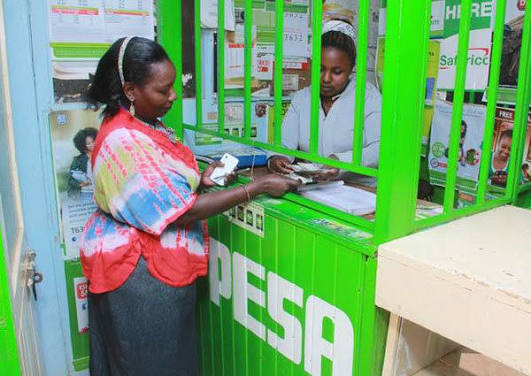
The urgency surrounding the competition becomes clearer when Safaricom’s M-Pesa numbers are examined.
M-Pesa revenues in Kenya increased by 13.4 percent to Sh182.7 billion, making the platform one of the company’s most important revenue generators as growth in traditional voice and messaging services slows.
Merchant payments have become an increasingly important part of that ecosystem.
M-Pesa Pochi generated Sh4 billion in the year to March, while Paybill and tills generated Sh9.3 billion. Combined, the three merchant-related services generated Sh13.3 billion.
That is a significant commercial operation in its own right, with the Sh13.3 billion revenue figure matching the annual revenues of numerous companies listed on the Nairobi Securities Exchange.
Pochi la Biashara has also experienced rapid growth.
The number of merchants using the platform reached 2.1 million in the financial year ended March 2026, nearly doubling from 1.1 million a year earlier.
Safaricom launched Pochi in 2020 as a way of helping small traders separate their business earnings from personal funds through a wallet linked to their M-Pesa accounts.
The service was also designed to address common problems faced by small businesses, including mixing personal and business money and frustrations surrounding customer payment reversals.
That growing merchant base is precisely what makes Airtel’s latest strategy significant.
Airtel is attempting to build an alternative ecosystem around its own mobile-money platform by making transactions cheaper while expanding the number of businesses that customers can pay.
The company says partnerships with organisations such as KCB and Naivas have helped expand its agency and merchant network.
“In a nutshell, I’d say what has got us here is listening to our customers and giving them the best experiences,” added Mr Bonke.
“The current number of merchants that an Airtel Money customer can pay into is about two million. This has been brought about by partnerships that we’ve had with the various banks and other industry players. In terms of distribution, partnerships have given us a foothold in the market and have been key to our growth.”
The results are beginning to show.
Communications Authority of Kenya data indicates that Airtel’s share of mobile-money subscriptions increased to 10.9 percent in March 2026 from 9.1 percent a year earlier.
That remains a significant distance behind Safaricom, but the growth is strategically important.
Airtel does not necessarily need to overtake M-Pesa overnight. Even a gradual increase in its share of mobile-money customers and merchant transactions could create a stronger revenue base and give the company greater leverage in Kenya’s digital economy.
For Safaricom, the challenge is protecting an ecosystem that generates hundreds of billions of shillings while ensuring that cheaper competitors do not gradually change customer behaviour.
The price reductions could therefore be viewed as more than a short-term promotional battle.
Read Also: Top 7 Most Popular Celebrities in Kenya (2026 Updated List)
They represent a contest for the future of digital payments in Kenya.
Airtel is betting that affordability, partnerships and a growing merchant network can weaken M-Pesa’s grip. Safaricom is betting that its scale, trust, distribution network and established ecosystem will keep customers loyal even as competitors become more aggressive.
For consumers and businesses, the rivalry could be beneficial if it produces lower charges and better services.
For Safaricom and Airtel, however, the stakes are much higher.
The latest tariff cuts suggest that Kenya’s mobile-money market is moving from a period of dominance to one of increasingly intense competition. Whether Airtel can turn its recent momentum into a sustained challenge will depend on more than cheaper transactions.
But Safaricom’s rapid response has already demonstrated one thing: Airtel has its attention.