
Why Safaricom Subscriber Growth Is Reshaping Kenya Telecom Market & Digital Economy

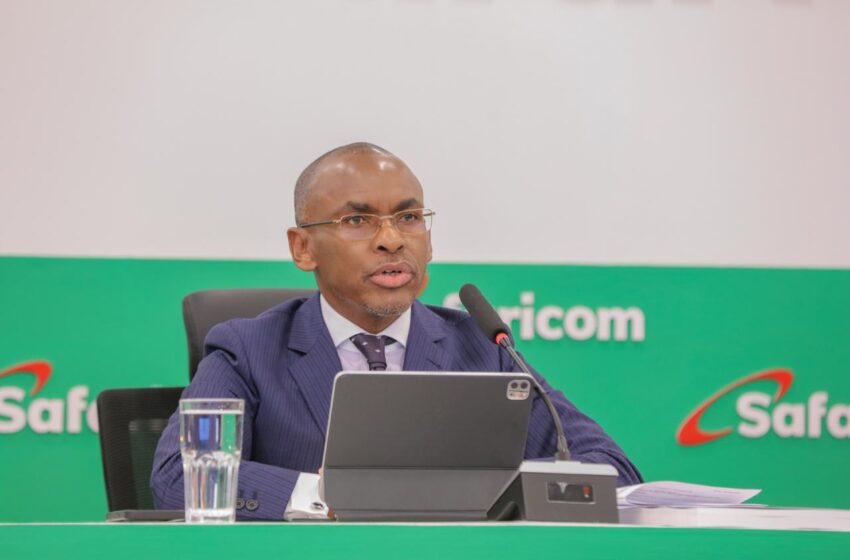
Kenya’s telecommunications sector is undergoing one of its fastest growth phases in recent years, driven by rising smartphone adoption, expanded mobile broadband access, and increased reliance on digital financial services.
At the center of this transformation is Safaricom, which has significantly expanded its subscriber base while maintaining dominance across mobile, internet, and mobile money services.
According to the latest data from the Communications Authority of Kenya, the industry has not only grown in size but also in intensity of competition, even as market leadership remains heavily concentrated.
Why Kenya Mobile Market Is Growing Rapidly In 2026
Expansion Driven By Digital Lifestyle Shift
Kenya’s mobile sector is no longer just about voice calls and SMS. It is now deeply tied to digital payments, e-commerce, remote work, and entertainment streaming.
Several key drivers are fueling this growth:
- Affordable smartphone penetration
- Expansion of 4G and 5G networks
- Growth in mobile money transactions
- Increased demand for internet connectivity in rural areas
- Competitive pricing and data bundles
These factors have pushed mobile subscriptions to record levels, far exceeding the country’s population due to multiple SIM ownership.
Also Read: ‘Kimbia na Simbu’ – Campaign Launched to Support World Marathon Champion, Nurture Next Generation of Athletes
Mobile Penetration Explained
Kenya’s mobile penetration rate has now reached more than 150 percent. This does not mean every person owns more than one phone, but rather that many users operate multiple SIM cards for different services and pricing advantages.
This behavior is common in competitive telecom markets where users switch networks for:
- Better data bundles
- Cheaper calls
- Stronger network coverage in specific regions
Why Safaricom Continues To Dominate Kenya Telecom Market
Subscriber Growth And Market Leadership
Safaricom added millions of new subscribers within a single quarter, pushing its total customer base closer to the 60 million mark.
This growth reinforces its position as the dominant telecom operator in Kenya’s highly competitive market.
Its market strength is built on:
- Strong nationwide network coverage
- Deep integration with mobile money ecosystem
- Trusted brand reputation
- Wide distribution of retail and agent networks
Market Share Comparison Table Kenya Telecom Operators
| Operator | Subscribers | Market Share | Position |
|---|---|---|---|
| Safaricom | 57.9 million | 68.9 percent | Market leader |
| Airtel Kenya | 23.2 million | 27.6 percent | Second largest |
| Equitel | 1.51 million | 1.8 percent | Niche operator |
| Faiba | 883,944 | 1.1 percent | Fixed LTE focus |
| Telkom Kenya | 584,438 | 0.7 percent | Declining share |
This table highlights the extreme concentration of Kenya’s telecom market around two major players.
Why Airtel Kenya Remains The Only Strong Challenger
Airtel Africa continues to position itself as the main competitor to Safaricom, focusing on affordability and aggressive customer acquisition strategies.
Airtel’s strengths include:
- Competitive data pricing
- Expansion of 4G infrastructure
- Focus on prepaid mobile users
- Regional integration across Africa
However, despite steady growth, the gap between Airtel and Safaricom remains significant.
Why Mobile Money Dominance Matters In Kenya Economy
Safaricom M Pesa Ecosystem Control
One of the most important aspects of Kenya’s telecom market is mobile money dominance.
Safaricom continues to control the vast majority of mobile money transactions through its M-Pesa ecosystem, which has become central to everyday financial activity.
This dominance includes:
- Payments for goods and services
- Business transactions
- Savings and lending services
- Cross-border remittances
Mobile Money Market Share Table
| Provider | Market Share | Role in Economy |
|---|---|---|
| M-Pesa (Safaricom) | 89.1 percent | National financial backbone |
| Airtel Money | Minority share | Alternative payment system |
| Other providers | Minimal | Limited ecosystem reach |
This level of dominance makes mobile money not just a telecom service, but a core financial infrastructure in Kenya.
Why Smartphone Adoption Is Transforming Internet Usage
Shift From Feature Phones To Smartphones
The Communications Authority report shows that smartphones now account for more than 60 percent of devices connected to mobile networks.
This shift is important because smartphones enable:
- Mobile banking apps
- Social media engagement
- E-commerce participation
- Streaming services
- Remote working tools
Mobile Broadband Growth Impact
Mobile broadband subscriptions have risen significantly, reflecting increased data consumption across urban and rural populations.
This growth is driven by:
- Affordable smartphones
- Expanding network coverage
- Youth-driven digital consumption
- Online education platforms
Why Safaricom Leads Internet And Fixed Broadband Too
Beyond mobile services, Safaricom also holds a strong position in fixed internet services.
Fixed Internet Market Comparison Table
| Provider | Market Share | Strength |
|---|---|---|
| Safaricom | 35.4 percent | National fiber expansion |
| Faiba | 19.5 percent | Affordable fixed LTE |
| Wananchi Group | 10.4 percent | Home internet services |
| Poa Internet | 9.7 percent | Low-cost community internet |
Safaricom’s advantage lies in its integrated ecosystem, combining mobile, broadband, and financial services under one brand.
Why Telkom Kenya Is Losing Market Share
Telkom Kenya continues to experience a decline in subscribers, reflecting challenges in competing with larger and more capitalized operators.
Key challenges include:
- Limited network expansion investment
- Strong competition from Safaricom and Airtel
- Reduced brand visibility
- Shrinking retail presence
This decline highlights the difficulty of surviving in a highly concentrated telecom market.
Why Kenya Telecom Market Is Becoming A Digital Economy Backbone
Kenya’s telecom sector is no longer just infrastructure. It is now a foundation of the digital economy.
It supports:
- Government digital services
- Financial inclusion systems
- Business digitization
- Transport and logistics platforms
- Online commerce ecosystems
The dominance of Safaricom means one company plays a central role in shaping this entire ecosystem.
Also Read: Omar Abdulkadir Artan World Cup Exclusion Raises Immigration Questions Across Global Football
Why Regulation And Competition Will Matter Going Forward
The Communications Authority of Kenya plays a critical role in ensuring fair competition and consumer protection.
Key regulatory focus areas include:
- Preventing market monopoly risks
- Encouraging infrastructure sharing
- Supporting new entrants
- Ensuring fair pricing structures
As the market continues to expand, regulatory balance will become increasingly important.
Why Safaricom Dominance Defines Kenya Digital Future
The latest subscriber data confirms a clear reality: Kenya’s telecom market is growing, but also becoming more concentrated.
Safaricom remains the dominant force across mobile subscriptions, internet services, and mobile money, while Airtel continues to compete as the strongest challenger.
However, the broader story is not just about competition. It is about how telecom infrastructure has become the backbone of Kenya’s digital economy.
From payments to communication to internet access, the sector is now central to how millions of Kenyans live and work.