
Kenya Joins Global AI Alliance as Kabogo Signs WAICO Agreement in Shanghai

Photos: CS Kabogo Facebook
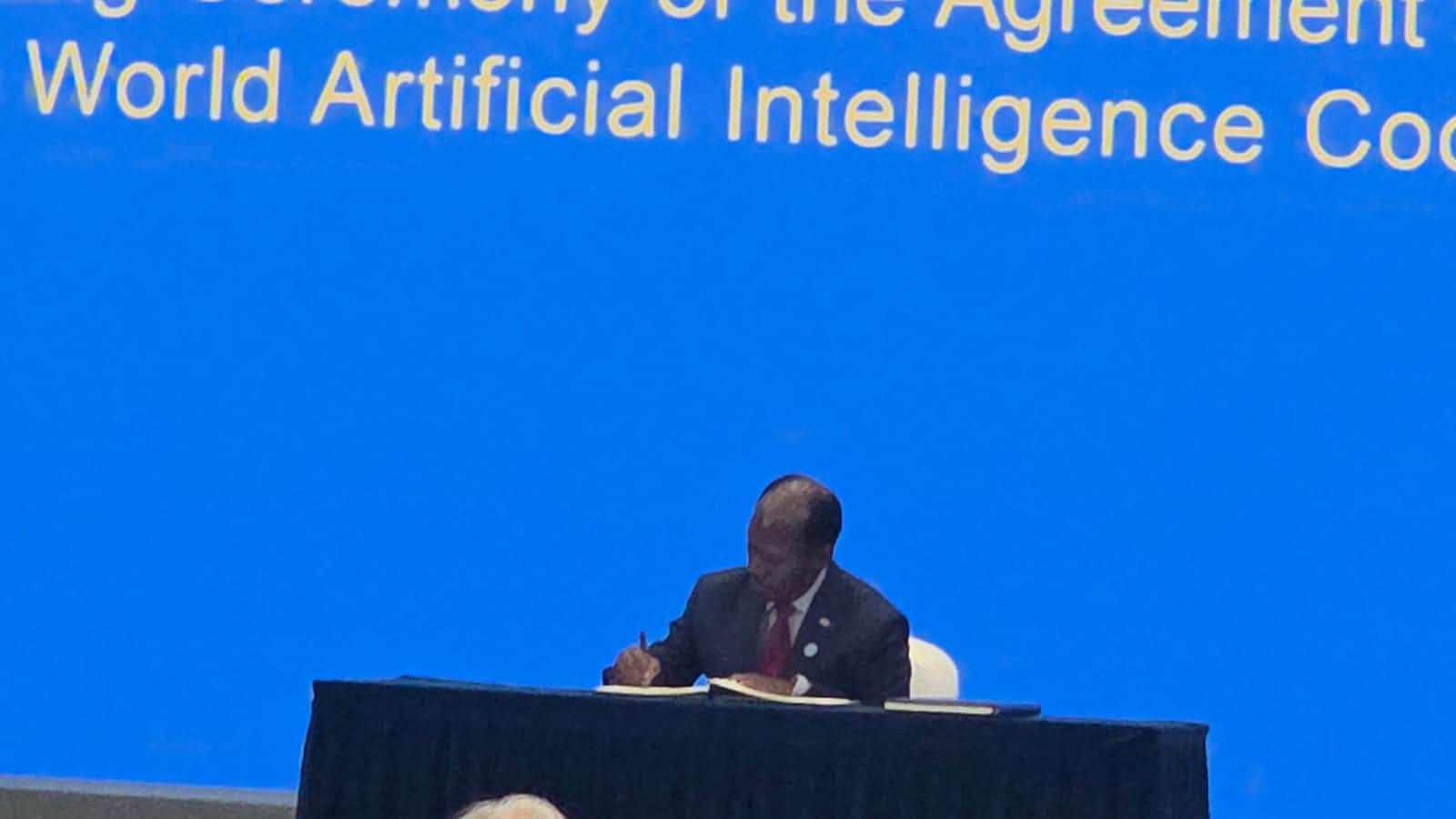
Cabinet Secretary for Information, Communications and the Digital Economy, William Kabogo Gitau, has signed, on behalf of the Republic of Kenya, the agreement establishing the World Artificial Intelligence Cooperation Organization (WAICO), marking Kenya’s entry into a new global platform dedicated to promoting international cooperation on artificial intelligence (AI).
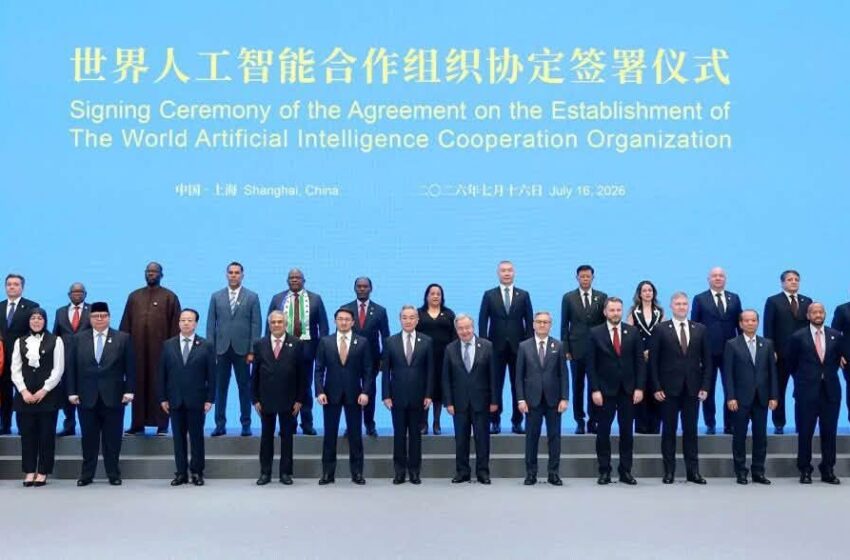
Kabogo signed the agreement on Thursday in Shanghai, China, during a ceremony attended by representatives from 29 founding member states. The move positions Kenya among countries seeking to shape the governance, development and responsible use of AI technologies at a time when artificial intelligence is rapidly transforming economies and societies across the world.
The Cabinet Secretary said Kenya joined the organization because it believes AI should serve humanity as a whole instead of benefiting only a small number of countries with advanced technological capabilities.
“Today in Shanghai, I signed, on behalf of the Republic of Kenya, the Agreement establishing the World Artificial Intelligence Cooperation Organization (WAICO). We signed because we believe artificial intelligence should be a global public good, one that reaches ordinary people and not only a few countries,” Kabogo said.
He said Kenya’s decision to become a founding member reflects the country’s commitment to ensuring emerging technologies contribute to inclusive development while creating opportunities for ordinary citizens, businesses and public institutions.
AI for Everyday Development
Kabogo said the benefits of joining WAICO go beyond international diplomacy, arguing that the partnership could accelerate the use of AI in sectors that directly affect the lives of Kenyans.
He explained that artificial intelligence has the potential to improve agricultural productivity by enabling farmers to receive localized crop advisory services in Kiswahili through their mobile phones. In healthcare, AI-powered tools could help clinics assess patients more efficiently, reducing waiting times and improving service delivery, while local software developers would gain better access to affordable computing power and advanced AI models.
“For Kenya, this is practical. It means a farmer in Nakuru getting a crop advisory in Kiswahili on the phone she already owns, a clinic in Kisumu triaging patients faster, and a young developer in Nairobi able to access compute and models at fair prices,” he said.
Kabogo noted that Kenya already has a strong foundation in digital innovation, pointing to the country’s globally recognized mobile money ecosystem and the recently launched National Artificial Intelligence Strategy, which seeks to position Kenya as Africa’s leading AI innovation hub.
“Kenya brings real experience to this work. We gave the world mobile money, and our National AI Strategy sets out a clear plan to make Kenya a leading hub for AI innovation in Africa,” he said.
The Cabinet Secretary also announced that he would represent the Global South at the “Win-Win BRICS” Forum, where he intends to advocate for partnerships that prioritize technology transfer, skills development and industrial growth rather than simply creating markets for imported technologies.
“Our position is simple. We want partnerships that train our people and grow our own industries, not arrangements that only sell to us. Kenya is ready to work with WAICO, the United Nations, and all partners who share this goal,” he said.
A New Chapter in Global AI Governance
WAICO was formally established by 29 countries during a signing ceremony attended by Chinese Foreign Minister Wang Yi and delegates from member states including Russia, Kazakhstan, Pakistan, Indonesia and Laos. Headquartered in Shanghai, the organization has been constituted as an independent international body operating under the principles of the United Nations Charter.
Its stated mission is to promote the safe, fair and inclusive development of artificial intelligence while encouraging international cooperation in AI governance, research, innovation and capacity building.
The establishment of WAICO comes amid growing competition between China and the United States over leadership in artificial intelligence and digital technologies. As countries race to develop increasingly powerful AI systems, questions surrounding regulation, ethics, security and equitable access have become central to global policy discussions.
China has increasingly positioned itself as a champion of what it describes as “sovereign AI,” advocating for open-source and affordable AI technologies that can be adopted by developing countries without depending exclusively on Western technology companies.
The launch of WAICO coincided with the World Artificial Intelligence Conference (WAIC) in Shanghai, where Chinese officials promoted international cooperation and unveiled new technological developments, including Huawei’s Atlas 950 SuperPoD—an advanced AI computing platform designed to operate independently of high-end U.S.-made semiconductors.
Chinese President Xi Jinping has previously described artificial intelligence as a transformative technology comparable to the steam engine, emphasizing that AI will become a major driver of future economic growth and industrial modernization.
The presence of United Nations Secretary-General António Guterres at the Shanghai event highlighted increasing global recognition that AI governance requires international collaboration, even as different countries pursue varying approaches to regulation and technological development.
Major U.S. technology companies were notably absent from the summit, reflecting the widening geopolitical divide over AI governance and the future of the global digital economy.
The strategy aims to strengthen AI research, improve digital infrastructure, build local talent and encourage responsible adoption of emerging technologies across sectors such as agriculture, healthcare, education, manufacturing and financial services.