
Kenya School Management: How Exam Anxiety, Rigid Testing Schedule Fuel Student Unrest

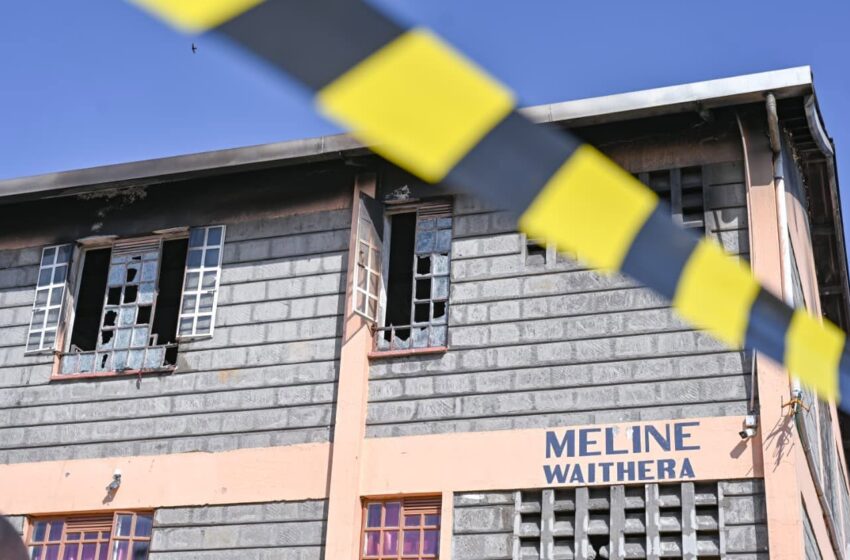
A volatile wave of student unrest has swept through dozens of secondary schools across Kenya, forcing national security teams to abandon soft-handed disciplinary measures in favor of an aggressive legal clampdown. Public administration officials, through Basic Education Principal Secretary Prof. Julius Bitok, have issued a stern warning to learners, parents, and external actors that acts of arson, vandalism, and disruption of learning will now be treated as capital offenses under criminal law.
Speaking in Bomet County, Prof. Bitok declared a zero-tolerance policy against the destruction of public property, emphasizing that state security machinery will no longer indulge premature closures or grant immunity to minors involved in criminal activities. Government officials remain resolute that the national school academic calendar will proceed uninterrupted despite rising panic among parents and education stakeholders after over 100 institutions nationwide reported incidents of unrest, strikes, and devastating dormitory fires within a remarkably brief window.
Kenya continues to invest heavily in human capital development, meaning the administration views escalating campus destruction not merely as a school discipline crisis, but as a deliberate threat to economic and infrastructural stability.
Also Read: Top Comoros Official Hospitalized in Nairobi Amid Rising Tensions in Moroni
Anatomy of the crisis: Scope and underlying triggers
Disruption metrics across the country‘s public administration have sent shockwaves through regional security committees. Central Kenya regional security officials confirmed that close to 30 schools within their jurisdiction have suffered active disruptions or outright property destruction. High-profile national schools and regional institutions alike have been caught in the fray, pointing to a synchronized or highly infectious pattern of institutional destabilization.
Security agencies and education experts have identified several immediate and systemic catalysts driving the volatile atmosphere:
-
Examination anxiety and structural stress: Recent investigations reveal that abrupt adjustments to school schedules, combined with high-stakes academic pressure, have triggered severe anxiety among learners. Pushing to meet stringent curriculum deadlines has compromised student mental well-being, turning internal assessments into flashpoints for institutional rebellion.
-
Narcotics and illicit substance infiltration: Multi-agency surveillance teams have flagged an alarming surge in the trafficking of prescription drugs, alcohol, and illicit substances into boarding schools. Local syndicates operating around secondary schools have capitalized on porous school borders to supply students with substances that lower inhibitions and fuel violent behavior.
-
External interference and incitement: Intelligence reports suggest that the unrest is not entirely spontaneous. Investigators are actively trailing adult actors—including rogue local traders, political agitators, and disaffected school staff—who are suspected of leveraging student grievances to settle local scores or manipulate school management contracts.
-
Digital networks and the mimicry effect: Rapid propagation of strike actions has been heavily amplified by peer influence. Successful forcing of a premature closure through non-cooperation or localized destruction at one institution often inspires students in neighboring districts to utilize social media networks or informal channels to replicate the tactics.
Strategic Action Plan
Ministry officials are shifting their strategy from internal administrative warnings to a robust, legally backed enforcement framework to reverse the trend. This dual approach pairs punitive deterrence with targeted institutional adjustments to stabilize learning centers.
1. Hardline legal prosecution and incarceration of offenders
Ministry of Education officials have effectively stripped the veil of immunity from students participating in arson and property destruction. Security forces will process any learner caught damaging school infrastructure under standard criminal procedures going forward. Prof. Bitok clarified that prosecutors will seek the conviction and subsequent imprisonment of suspects, regardless of their minor status, signaling an end to the era of simple suspensions and transfers.
2. Deployment of a multi-agency security apparatus
National government administrative officers, led by Regional Commissioners like Central Kenya’s Joshua Nkanatha, have formed localized multi-agency task forces. Teams integrate the National Police Service, Directorate of Criminal Investigations (DCI), Ministry of Education field officers, and school boards of management. Operations include running round-the-clock surveillance on vulnerable institutions, executing random sweeps for contraband, and monitoring external networks around school perimeters.
3. De-escalation through examination adjustments
Academic pressure remains a key emotional trigger, prompting the Ministry of Education to instruct school principals to halt all non-essential, high-pressure examinations during volatile terms. School administrators must now restructure internal assessments to reduce unnecessary panic and discouragement among learners. Field officers are monitoring compliance to ensure that test schedules do not inadvertently spark further student resistance.
4. Preservation of the academic calendar and strict anti-closure rules
State directives now ban school boards from shutting down operations prematurely or sending students home without written authorization from the Ministry. Enforcing the scheduled mid-term breaks and maintaining regular learning sessions allows the government to deny instigators the quick victories they achieve when schools close early.
| Strategic Policy Pillar | Implementing Agencies | Core Operational Objective |
| Criminalization of Arson | Judiciary, DCI, National Police Service | Arraign and prosecute student suspects in court to establish deterrence. |
| Contraband Eradication | NACADA, County Commissioners, Police | Launch targeted sweeps to cut off drug supply lines around school neighborhoods. |
| Academic De-escalation | School Principals, Quality Assurance Officers | Suspend stressful internal tests and foster open dialogue with student councils. |
| Calendar Enforcement | Ministry of Education, Regional Directors | Prevent premature school closures and maintain regular learning timetables. |
Economic and systemic stakes for the nation
Government resolve remains tied directly to the massive financial resources allocated to the education sector. State planners have committed Sh770 billion toward financing public education, covering infrastructure development, capitation grants, teacher salaries, and digital literacy programs. Financial damage from classrooms and laboratories destroyed by a small fraction of students causes significant development delays that hurt everyone.
Public resources are stretched thin, meaning that funds used to rebuild burned structures are diverted away from expanding secondary school access or upgrading equipment. Policy makers argue that letting a small percentage of disruptive students dictate terms would compromise the safety and academic futures of over three million well-behaved learners nationwide.
Kenya Frontline Editorial Takeaway
True institutional stability cannot be achieved through policing alone. Firm security measures are necessary to stop arson and protect lives, but lasting peace requires a structural shift toward open dialogue, robust guidance and counseling departments, and the complete elimination of drug networks that target young learners.
Read Also: Rio Ferdinand To Open International Doors For Arusha Through AFCON 2027
Multi-agency enforcement operations serve notice to all parties involved that public infrastructure will be protected with the full force of the law. Parents are expected to actively engage with their children and support school staff during this period, ensuring that accountability begins at home before it reaches the courtroom.