
Who Were Makindu Motors Proprietors? Kiboko Road Accident Analysis

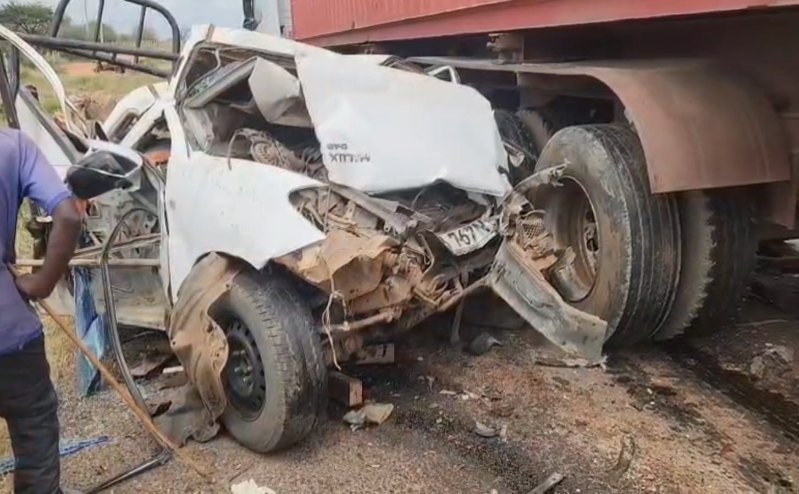
Prominent Makindu-based entrepreneurs Mzee Peter Musyoka and his wife Mama Mary Mwende, the founders and owners of Makindu Motors, tragically lost their lives in a horrific head-on collision at the Kiboko blackspot along the Nairobi–Mombasa Highway.
The fatal crash involved their private vehicle and an oncoming heavy freight truck during a late-night transit.
Local authorities cite dangerous overtaking and poor visibility as primary contributing factors, sparking national outrage and urgent calls for stricter heavy vehicle regulation along East Africa’s busiest transport corridor.
Also Read: Top Comoros Official Hospitalized in Nairobi Amid Rising Tensions in Moroni
Background of Makindu Motors and its leadership

Makindu Motors Limited has been associated with motorcycle distribution and related business operations across parts of Kenya and East Africa. The company has been linked to regional supply chains that support transport entrepreneurship and mobility services.
The proprietor, Stephen Ngei, alongside his wife Ginnaphina Mumbua, played a central role in the business operations. Their work positioned them within a growing sector that supports small transport operators and rural mobility networks.
The couple’s involvement in the motorcycle industry placed them within a wider ecosystem of traders, mechanics, and logistics providers who depend heavily on highway transport routes.
What happened along the Nairobi Mombasa Highway
The incident occurred in the Kiboko area within the larger Makindu–Kibwezi stretch of the highway. The section is known for heavy truck traffic and long-distance travel movement between Nairobi and the coastal region.
Reports indicate that the vehicle carrying the couple was moving in the direction of Nairobi when it came into contact with a trailer travelling in the opposite direction.
The impact resulted in severe damage to the smaller vehicle. Emergency responders later arrived at the scene to manage traffic flow and begin preliminary assessments.
A third occupant who was traveling with them sustained injuries and was transported for medical attention.
Why this section of the highway is high risk
The Nairobi–Mombasa Highway is one of the busiest transport corridors in the country. It serves both passenger and freight traffic, making it a high-pressure route for drivers.
Key risk factors on this highway
| Risk factor | Description | Impact |
|---|---|---|
| Heavy truck traffic | High number of long-distance trailers | Increased collision risk |
| High speed zones | Long open stretches encourage speeding | Reduced reaction time |
| Mixed traffic | Cars, buses, motorcycles, trucks share lanes | Complex road interaction |
| Fatigue driving | Long-distance travel increases driver exhaustion | Higher error probability |
These conditions make sections like Makindu, Kiboko, and Salama particularly sensitive to serious incidents.
Response from authorities
Traffic officers from regional stations responded to manage the situation and restore movement along the highway. The affected section experienced temporary disruption due to vehicle recovery and documentation procedures.
The damaged vehicles were later removed to allow traffic to resume normal flow.
Authorities have since launched an investigation to determine the exact sequence of events leading to the collision.
Economic and business impact of highway incidents
Beyond human impact, road incidents along major transport corridors often affect local businesses and supply chains.
The motorcycle and transport industry, in which Makindu Motors operated, relies heavily on predictable logistics and safe highway movement.
Possible sector effects
-
Disruption in motorcycle distribution routes
-
Delays in regional supply deliveries
-
Increased insurance and operational risks
-
Reduced investor confidence in transport logistics
These effects often extend beyond the immediate area of an incident.
Road safety concerns on Kenyan highways
Kenya continues to invest in road infrastructure, but safety challenges remain a major concern.
Highways such as Nairobi–Mombasa remain critical for trade and movement but also account for a significant share of serious road incidents.
Experts often emphasize the need for improved driver discipline, stronger enforcement of speed regulations, and better management of heavy commercial vehicles.
Community reaction and public response
News of the incident prompted reactions from business communities and transport stakeholders who recognized the couple’s role in the motorcycle industry.
Public discussions have also highlighted the need for continued awareness around road safety, especially for long-distance travel routes that connect multiple counties.
Also Read: Rio Ferdinand To Open International Doors For Arusha Through AFCON 2027
Importance of road safety reforms
Road safety remains a national priority due to its impact on economic productivity and public welfare.
Strengthening enforcement systems, improving driver training, and modernizing transport regulation are often cited as long-term solutions.
Key reform focus areas
-
Better regulation of heavy transport vehicles
-
Improved highway surveillance systems
-
Enhanced driver training programs
-
Stricter enforcement of speed limits
Final reflection on highway safety in Kenya
The Nairobi–Mombasa Highway remains a vital economic artery for the country, supporting trade, tourism, and transport industries.
Incidents along this route continue to highlight the importance of coordinated safety efforts between government agencies, transport operators, and road users.
The Makindu incident underscores how quickly conditions on major highways can change and the importance of sustained investment in road safety systems.
Understanding these risks is essential for improving future outcomes and protecting lives across Kenya’s transport network.