
Nairobi 2029 World Athletics Championships Preparations: Kasarani Stadium Upgrades, Inspection Tour Directives

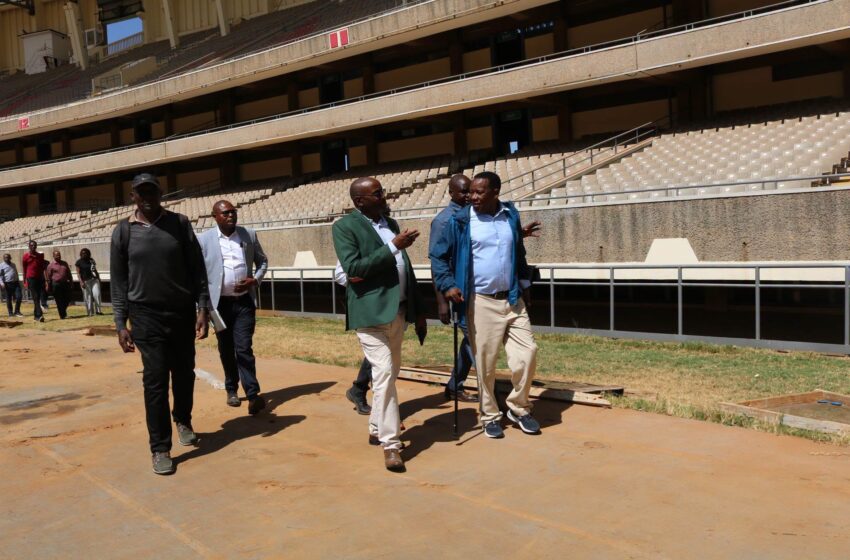
IMAGE/ Athletics Kenya
Nairobi’s preparations for the 2029 World Athletics Championships have entered a new phase after World Athletics Competition Management Director Pierce O’Callaghan inspected key venues that will form the backbone of Kenya’s hosting plan.
O’Callaghan toured Moi International Sports Centre Kasarani, Nyayo National Stadium and Ulinzi Sports Complex in the first major World Athletics inspection since Nairobi was awarded the championships in September 2026.
The visit came just weeks after the Nairobi 2029 World Athletics Championships hosting rights were confirmed, giving Kenya an early opportunity to align its infrastructure programme with the requirements of the global governing body.
World Athletics selected Nairobi on September 15, 2026, making Kenya the first African country to host the senior World Athletics Championships. The 2029 edition is scheduled for September, with Kasarani expected to serve as the main competition venue.
Read Also: Top Comoros Official Hospitalized in Nairobi Amid Rising Tensions in Moroni
The inspection is therefore more than a ceremonial visit.
It provides an early technical checkpoint as Kenya prepares to convert its successful bid into an operational championship capable of accommodating athletes, officials, spectators, broadcasters and international media.
Pierce O’Callaghan Inspection Sets Technical Agenda
O’Callaghan arrived in Kenya with officials from Athletics Kenya and the Sports Ministry before visiting Kasarani on September 30 and Nyayo Stadium and Ulinzi Sports Complex the following day.
The World Athletics official later met Sports Principal Secretary Elijah Mwangi as government officials outlined Kenya’s preparations for the 2029 championships.
The inspection is significant because Kenya already has several major infrastructure projects underway.
Kasarani is undergoing extensive renovation ahead of the 2027 Africa Cup of Nations, while Nyayo and Ulinzi have been earmarked primarily as training facilities for the 2029 championships.
Sports officials have indicated that the Athletics Kenya and World Athletics technical teams will identify additional works required at the three facilities.
That approach allows Kenya to incorporate athletics-specific requirements into projects that are already being implemented rather than waiting until the AFCON programme is complete.
The strategy is particularly important at Kasarani because the stadium has to serve multiple purposes over the next three years.
It is expected to play a role in AFCON 2027 before becoming the centrepiece of Nairobi 2029.
Kasarani Stadium Remains the Main Test
Kasarani will carry much of the responsibility for the championships.
World Athletics said Nairobi’s successful bid included a renovated Kasarani Stadium, which is undergoing a complete structural overhaul ahead of AFCON 2027. The facility has also hosted major international athletics competitions, including the 2017 World U18 Championships.
The current renovation therefore provides an opportunity to address both football and athletics requirements.
The two sports, however, do not place identical demands on a stadium.
Read Also: KNEC Grade 10 Assessment 2026: Guidelines, Timelines & School Requirements
A championship athletics venue needs a competition-standard track, field-event areas, timing systems, athlete circulation routes, call rooms, media areas, medical facilities and technical spaces.
The World Athletics facilities framework provides technical requirements governing competition facilities, equipment, track specifications and certification.
Kasarani will consequently have to be treated as a complete competition environment rather than simply a renovated spectator arena.
The running track will need to deliver consistent performance and accurate measurements.
Field-event facilities will also require appropriate runways, landing areas, throwing circles, cages and sector markings.
Long jump, triple jump, pole vault, high jump, shot put, discus, hammer and javelin competitions all have different technical requirements.
That means the final Kasarani design must accommodate a wide range of disciplines without compromising athlete safety or competition operations.
Warm-Up Facilities Will Be Critical
One of the less visible but important components of a global athletics championship is the warm-up environment.
Athletes need adequate space to prepare before entering the main competition arena.
A championship programme involving sprinting, distance running, jumps and throws creates continuous demand for warm-up facilities throughout each session.
The warm-up area must therefore support athletes without creating unnecessary congestion between teams, officials and spectators.
This is one reason the role of Nyayo Stadium and Ulinzi Sports Complex is important.
Government officials have identified the two venues as training facilities, meaning the Nairobi 2029 infrastructure plan extends beyond Kasarani itself.
The venues could provide the training capacity required for athletes during the championships while reducing pressure on the main stadium.
Their upgrades will therefore need to consider track quality, changing rooms, athlete services, medical support and access arrangements.
Nyayo, Ulinzi Face Their Own Upgrade Test
Nyayo National Stadium has extensive experience hosting international athletics competitions, but the 2029 championships will require the venue to operate within a wider training and athlete-services network.
Ulinzi Sports Complex also has a role to play.
Sports Principal Secretary Elijah Mwangi has said both venues are set for structural adjustments to align them with World Athletics parameters. Technical teams from Athletics Kenya and World Athletics are expected to make recommendations following their assessments.
That process could identify improvements ranging from track surfaces to athlete facilities and operational spaces.
Training venues may not receive the same level of attention as the main competition stadium, but their condition can directly influence the athlete experience.
Elite competitors arriving from different countries will expect predictable access to quality training facilities throughout the championship period.
Broadcast Infrastructure Will Be a Major Requirement
The modern World Athletics Championships is also a major global broadcasting operation.
Television rights holders, photographers, journalists, digital publishers and social-media teams all require dedicated working spaces and reliable connectivity.
The technical requirements therefore extend into areas that spectators may never see.
Kasarani will need suitable media facilities, interview areas, mixed zones, press workspaces and technical rooms.
Timing and results systems will also have to deliver accurate information rapidly to broadcasters and spectators.
Photo-finish technology is particularly important in sprint events, where races can be decided by fractions of a second.
World Athletics’ competition framework places significant emphasis on technical officiating, results management and competition technology.
Nairobi will therefore need to ensure that stadium construction is matched by investment in digital infrastructure.
A modern stadium can look complete while still failing an international event if its timing, data, communications or broadcast systems have not been properly tested.
Medical Response Must Match Championship Scale
Medical preparedness will also form part of the wider hosting infrastructure.
A global athletics championship involves thousands of athletes, officials, volunteers and spectators moving through competition and training facilities over several days.
Medical centres, emergency response routes, ambulances and links to referral hospitals therefore need to be integrated into the venue plan.
The requirement becomes more complicated because athletics includes events with different medical risks.
Long-distance races can involve heat stress and exhaustion, while field events carry injury risks associated with throwing implements, jumping and high-speed movement.
The championship medical system must therefore be designed around both routine treatment and emergency response.
The wider Nairobi healthcare network can provide an important foundation, but venue-level planning will determine how quickly athletes and spectators can receive assistance.
Transport, Accommodation Must Work Together
Stadium infrastructure alone cannot deliver Nairobi 2029.
Athletes will need to move between accommodation, training facilities and Kasarani.
Officials, journalists, broadcasters and spectators will follow similar routes.
That makes transport planning a central part of the hosting programme.
Nairobi already has a large hospitality industry, but a major international championship will test hotel capacity, traffic management, airport transfers and public transport.
The experience from Kenya’s AFCON 2027 stadium preparations will provide a useful operational reference.
AFCON preparations have already demonstrated that international sporting events require more than stadium construction. Transport, security, hotels, training venues, media facilities and matchday logistics all have to work together.
The same principle applies to Nairobi 2029.
Kasarani’s AFCON Role Could Provide a Testing Ground
The overlap between AFCON 2027 and the World Athletics Championships creates an unusual opportunity.
Kenya is expected to use Kasarani for the continental football tournament before preparing it for the 2029 athletics championships.
The Kasarani AFCON 2027 renovation programme has already placed the facility under intense scrutiny, including work on the playing surface, supporting facilities and stadium systems.
The experience gained from AFCON could reveal operational weaknesses before the World Athletics Championships arrive.
Crowd movement, security procedures, media operations, hospitality systems and emergency response can all be evaluated during AFCON.
The lesson is that completion should not be measured simply by whether construction workers leave the site.
A stadium becomes genuinely ready when its systems have been commissioned, tested and proven under live event conditions.
World Athletics Standards Will Shape the Final Design
Nairobi’s hosting rights come with technical obligations.
The successful bid was built around a renovated Kasarani and an operational plan designed to meet World Athletics requirements. The governing body has also emphasised Nairobi’s previous experience hosting international competitions.
Kasarani has previously been listed by World Athletics as a major athletics venue with substantial spectator, media, hospitality and athlete facilities.
The challenge now is ensuring that those existing capabilities are upgraded to match the demands of a senior World Athletics Championships.
Facility certification will be particularly important.
Read Also: Kenyan marathoner remanded over Ksh8 million land fraud case
Competition surfaces, field-event areas, technical equipment and measurement systems must meet the applicable international standards.
That places pressure on project managers to make decisions early enough to allow testing and certification before 2029.
Athletics Kenya’s Infrastructure Role
Athletics Kenya will be central to the process.
The federation brings experience from organising domestic competitions and international meetings, including the Kip Keino Classic.
Its technical officials will work alongside World Athletics representatives and government agencies as Kenya moves from bid preparation into delivery.
The federation’s role will include ensuring that athlete needs are properly represented during the infrastructure process.
This is important because stadium construction decisions made primarily from an architectural or football perspective may overlook details that are critical to athletics.
The Athletics Kenya hosting rights preparations provide the wider context for why the current inspection matters.
Kenya secured the hosting rights because its bid demonstrated the potential to combine athletics heritage with modern infrastructure.
The inspection now shifts attention from what was promised in the bid to what will actually be delivered.
Economic Impact Could Extend Beyond September 2029
The infrastructure investment also has potential consequences for Nairobi’s sports economy.
A modern Kasarani can host athletics meetings, football matches, concerts and other major events long after the World Championships.
Improved training facilities at Nyayo and Ulinzi can also serve Kenyan athletes.
Hotels, restaurants, transport operators, broadcasters, event companies and tourism businesses could benefit from the international visitors expected during the championships.
Sports tourism is another potential beneficiary.
International fans travelling to Nairobi for athletics could combine the championship with safaris, cultural tourism or trips to Kenya’s coast.
That makes the event relevant beyond the sporting calendar.
The infrastructure legacy will ultimately depend on how effectively Kenya uses the venues after the championships.
The High-Altitude Advantage Still Matters
Nairobi’s elevation is also an important part of Kenya’s athletics identity.
Kenya’s high-altitude training environment has long attracted distance runners and helped establish training hubs across the country.
The wider high-altitude training infrastructure in Kenya will remain relevant to the country’s athlete-development strategy as Nairobi prepares for 2029.
Hosting the world’s best athletes at home could create stronger connections between elite international competition and Kenya’s existing training ecosystem.
Young athletes will have the opportunity to watch global stars compete on Kenyan soil while local coaches, officials and technical personnel gain direct experience from a major championship.
The Countdown to September 2029
Nairobi now has less than three years to turn the hosting award into a fully operational championship.
The World Athletics inspection by Pierce O’Callaghan provides an early technical benchmark.
Kasarani remains the centrepiece, but Nyayo and Ulinzi will be equally important to the athlete experience.
The challenge is to ensure that track surfaces, warm-up areas, field-event facilities, medical services, media infrastructure, broadcasting technology and transport systems develop together.
World Athletics confirmed that Nairobi will make history as the first African host of the senior championships in 2029.
That historic status brings both opportunity and scrutiny.
Kenya has already proved its ability to produce world-class athletes.
The next test is proving that it can build and operate world-class championship infrastructure.
The O’Callaghan inspection marks the beginning of that next race.
The finish line is September 2029.