
Opiyo Wandayi Executive Leadership Paradigm Shifts Subnational Infrastructure Development Priorities

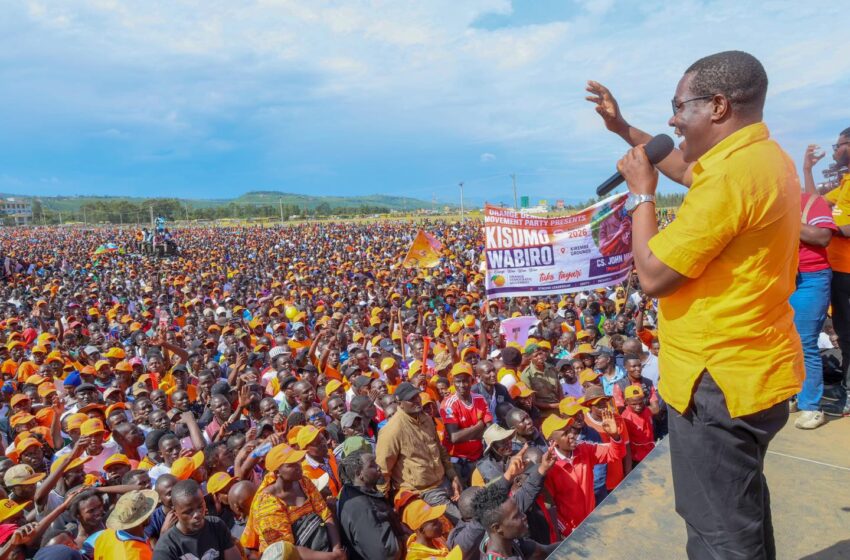
The political landscape of Western Kenya is undergoing a major structural transformation ahead of upcoming transition cycles. Subnational administrative seats, particularly the position of county governor, represent key flashpoints for socioeconomic resource allocation and development curation. Energy Cabinet Secretary Opiyo Wandayi has officially broken his political silence, signaling a calculated move to directly influence the governance trajectory of Siaya County.
Devolved governance units manage substantial exchequer allocations designed to fund basic infrastructure, agricultural value chains, and grassroots healthcare networks. The strategic direction of these units depends heavily on the alignment between the executive office and local legislative assemblies. Early mobilization by national figures like Energy Cabinet Secretary Opiyo Wandayi signals a coordinated effort to influence the selection criteria for future county chief executives.
The entry of a high-ranking national technocrat into subnational organizing fundamentally alters the local power dynamic. Local legislative assemblies hold immense sway over project approvals and budgetary allocations, making them vital allies for any executive campaign. Building early consensus with county assembly representatives represents a foundational step toward establishing local political dominance.
Strategic Alternatives for Regional Executive Leadership
| Governance Evaluation Metric | Traditional Reform-Oriented Administration | Emerging Technocratic Development Framework | Long-Term Devolved Impact |
| Policy Prioritization | Focus on legislative advocacy, civil liberties, and political reform history | Focus on heavy capital infrastructure projects and national grid integration | Transformation of agrarian county economies into high-yield industrial zones |
| National Alignment | Maintain independent opposition oversight postures to challenge executive authority | Leverage broad-based partnerships to secure multi-billion national exchequer grants | Rapid expansion of state-backed legacy investments across rural constituencies |
| Local Legislative Relations | Intermittent executive friction regarding budgetary oversight and assembly vetoes | Structured consensus building through synchronized policy coordination networks | High legislative efficiency with minimal disruption to development implementation |
| Industrial Vision | Gradual expansion of standard agricultural and smallholder market infrastructure | High-risk technological adoption including nuclear and sustainable clean energy | Massive job creation balanced against complex environmental compliance demands |
Infrastructure Monetization and Large-Scale Project Execution
Large-scale energy infrastructure represents a fundamental pillar of modern subnational development strategies. The proposed Sh500 billion nuclear power plant project planned for Siaya serves as a clear testing ground for regional industrial scaling. Managing these capital-intensive investments demands highly sophisticated technical oversight from county executives who maintain solid ties with the national energy ministry.
National alliance frameworks lead directly to capital project allocations, which require local legislative sanction before driving industrial job creation. Public debate surrounding major technological installations requires deep civic education interventions to balance economic potential against environmental safety protocols. Devolved administrations frequently struggle to manage community expectations when massive capital inputs enter rural economies.
The capacity to translate national energy policies into local industrial employment opportunities determines the ultimate viability of any executive transition strategy. Regional leaders must demonstrate an ability to shield massive development budgets from partisan interference to protect investor confidence. Securing the local perimeter for multi-billion energy grids remains a key benchmark for modern administrative capacity.
Effective economic stewardship requires a shift away from historical resistance postures toward aggressive resource mobilization. Local administrative units must position themselves to absorb complex public-private partnerships without experiencing execution delays. Failing to align local zoning and county security assets with national grid integration goals guarantees the loss of transformational economic opportunities.
Party Bureaucracy and Coalition Dynamics in Nyanza
Subnational leadership trajectories remain deeply tied to internal political party mechanisms. Regional delegative assemblies serve as primary validation grounds where policy directions are formally approved and communicated to voting blocs. Maintaining unity across diverse factions within the Orange Democratic Movement (ODM) is essential for preserving structural stability during major transition cycles.
Collaborative frameworks established between major national political figures provide unique opportunities to attract strategic development investments directly to regional hubs.
This cooperative approach helps protect the local economy from the funding bottlenecks that frequently impact areas aligned with traditional opposition movements. Embracing dialogue-driven governance enables local leaders to pivot away from historical political friction and focus strictly on securing long-term economic gains. This strategic shift demands high-level administrative competence to effectively manage complex multi-agency development programs.
Internal party realignments accelerate when national cabinet appointees actively engage with grassroots delegates. The formation of broad-based governance coalitions forces local politicians to choose between rigid partisan dogmas and pragmatic development partnerships. Managing these competing loyalties requires sophisticated communication strategies to avoid alienating core regional electorates.
Gender Mainstreaming and Inclusivity Barriers in Devolved Units
Sustainable regional growth requires the active integration of diverse perspectives into core decision-making frameworks. Women leaders continue to push for structural reforms to guarantee equitable access to high-level administrative appointments within county executive committees. Overcoming historical gender disparities in political representation is increasingly recognized as a vital prerequisite for balanced economic planning.
Legislative Gender Quota Compliance
County assemblies must implement structured representation policies to ensure diverse perspectives guide local lawmaking processes. Budgetary allocations must undergo rigorous gender-responsiveness assessments to ensure public funds effectively serve vulnerable demographic segments across all sub-counties.
Inclusive Economic Policy Integration
Developing sustainable agricultural networks and supporting smallholder enterprises requires targeted micro-credit facilities for women-led co-operatives. Future gubernatorial contenders must present clear, data-driven inclusion blueprints to secure the backing of highly organized socio-economic voting blocs.