Public Participation Extension 2026: National Assembly Timeline, 47-County Sittings & Memorandum Submission Rules

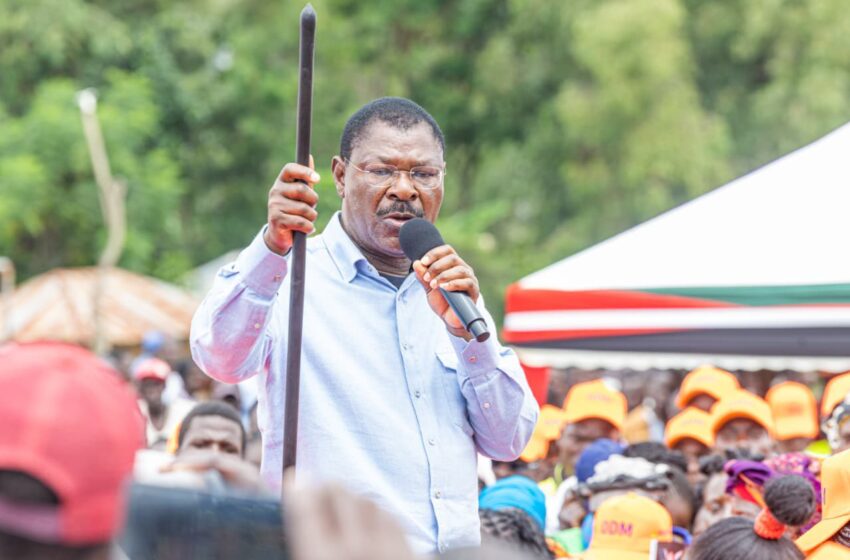
Speaker of National Assembly Moses Wetang’ula
The National Assembly has extended the public participation exercise on six proposed education reform Bills to October 2, 2026, adding 16 counties to the programme and taking the hearings to all 47 counties.
The extension by the National Assembly Departmental Committee on Education follows an initial programme that was scheduled to run from September 14 to September 25 across 31 counties.
Under the revised timetable, residents in the additional counties will have an opportunity to attend public hearings, make oral submissions or submit written memoranda on the proposed laws.
Read Also: Pharmacy Board Looks to Shape Future of Pharmaceutical Practice
The deadline for written submissions has also been moved to Friday, October 2, 2026, at 5pm, according to a notice from the Clerk of the National Assembly.
The six Bills cover major areas of Kenya’s education system, including tertiary education financing and placement, basic education, national assessments, teacher training, qualifications and curriculum development.
The expanded exercise places renewed attention on the constitutional requirement for public participation and the role of parliamentary committees in considering views received before reporting Bills back to the House.
Article 118 and Parliament’s public participation duty
The legal foundation for the exercise is Article 118 of the Constitution of Kenya.
Article 118(1)(a) requires Parliament to conduct its business openly, with sittings of Parliament and its committees open to the public. Article 118(1)(b) further requires Parliament to facilitate public participation and involvement in its legislative and other business and that of its committees.
The requirement means public participation is incorporated into Parliament’s legislative work rather than being treated simply as an additional public relations exercise.
The National Assembly Standing Orders provide another part of the framework. Standing Order 127(3) requires a committee considering a Bill to facilitate public participation and take public views and recommendations into account when preparing its report.
Kenyan courts have repeatedly considered the meaning of meaningful public participation. In one case, the High Court identified mechanisms including inviting memoranda, holding public hearings, consulting relevant stakeholders and seeking expert views on technical issues.
Courts have also stated that public participation should provide a reasonable opportunity for affected people and interested parties to understand the matter and give their views. The process does not necessarily require every individual to be heard personally, but the concerns of relevant groups should be communicated to lawmakers.
Another important provision is Article 119 of the Constitution, which gives every person the right to petition Parliament to consider a matter within its authority, including requests to enact, amend or repeal legislation.
The current education hearings therefore provide both physical and written avenues through which Kenyans can place their views before Parliament.
47 counties now covered by extended hearings
The additional hearings are scheduled between September 28 and October 2, completing the expansion from the initial 31 counties to all 47 counties.
The latest parliamentary public participation notice provides an example of how committees formally invite members of the public to attend hearings and submit written and oral views on Bills.
On Monday, September 28, hearings will be held in West Pokot, Marsabit, Mandera and Nandi.
West Pokot residents will meet at Kenya Medical Training College, Kapenguria Campus, from 9am to 12.30pm. The Marsabit hearing will take place at Kenya Medical Training College, Marsabit Campus, from 9am to 11.30am.
In Mandera, the forum is scheduled at Mandera Technical Training Institute from 2.45pm to 5.15pm, while Nandi residents will attend the hearing at Ol’lessos Technical Training Institute from 3.30pm to 6pm.
On Tuesday, September 29, the committee will move to Bungoma, Garissa, Busia and Lamu.
The Bungoma forum will be held at Kibabii University from 9am to 12.30pm. Garissa’s hearing is scheduled at Garissa University from 10am to 12.30pm.
Busia residents will have their session at Alupe University from 3pm to 6pm, while the Lamu forum will be held at Fort Hall from 3.30pm to 5.30pm.
On Wednesday, September 30, hearings will take place in Vihiga, Kitui and Siaya.
Vihiga’s forum will be held at Kaimosi Friends University from 9am to 12.30pm. Kitui residents will meet at South Eastern Kenya University from 1.30pm to 4.15pm, while the Siaya hearing will be conducted at Siaya Institute of Technology from 3pm to 6pm.
On Thursday, October 1, the committee will conduct hearings in Migori, Tharaka-Nithi and Nyamira.
The Migori forum is scheduled at Migori Teachers Training College from 9am to 12.30pm. Tharaka-Nithi residents will attend the session at Chuka University from 10am to 1.30pm, while Nyamira’s hearing will be held at Kenya Medical Training College, Nyamira Campus, from 3pm to 6pm.
The final hearings will take place on Friday, October 2, in Bomet and Samburu.
Read Also: Top Comoros Official Hospitalized in Nairobi Amid Rising Tensions in Moroni
Bomet’s forum will be held at Bomet University College from 9am to 12.30pm, while Samburu’s hearing will take place at Kenya Medical Training College, Maralal Campus, from 10.30am to 1.30pm.
The committee has divided members into teams to cover the additional counties within the extended period.
Six education Bills open for public scrutiny
The public participation exercise concerns six proposed laws.
The Tertiary Education, Placement and Funding Bill, 2026 proposes changes to the way students are placed and financed in tertiary institutions. Among the proposals is a new framework for tertiary education funding and the establishment of a Tertiary Education Funding Authority.
The Basic Education Bill, 2026 proposes a new legal framework for basic education and includes provisions dealing with the organisation and management of schools.
The Kenya National Educational Assessments Council Bill, 2026 addresses the legal framework for national educational assessments, including the functions and responsibilities of the proposed assessment body.
The Pre-Service Education and In-Service Training Bill, 2026 focuses on teacher preparation and continuing professional development.
The Kenya National Qualifications Framework (Amendment) Bill, 2026 proposes amendments dealing with the national qualifications framework and recognition of qualifications.
The Kenya Institute of Curriculum Development (Amendment) Bill, 2026 proposes changes to the governance and functions of KICD.
The six proposals therefore touch several groups, including teachers, learners, parents, universities, TVET institutions, education administrators and professional organisations.
Recent hearings have already produced different views from stakeholders.
In Turkana, education stakeholders called for increased and more equitable funding for learners in marginalised areas, stronger support for boarding schools and increased assistance for learners with disabilities. Stakeholders also presented differing positions on the management of Junior Secondary School.
The range of views demonstrates why parliamentary committees collect submissions from different parts of the country before completing their reports.
How to submit a written memorandum
People who cannot attend one of the physical hearings can still participate by submitting a written memorandum.
According to the extended notice, memoranda should be addressed to the Clerk of the National Assembly, P.O. Box 41842-00100, Nairobi.
The submissions can be hand-delivered to the Office of the Clerk at the Main Parliament Building in Nairobi or sent electronically to the parliamentary email address provided in the notice.
The deadline is October 2, 2026, at 5pm.
Copies of the Bills can be obtained from the National Assembly Table Office at Parliament Buildings and through the National Assembly website.
For people preparing memoranda, it is useful to identify the specific Bill and clause being addressed rather than submitting only general comments. A submission can explain the provision concerned, the effect it could have and the amendment or clarification being proposed.
Organisations may also use memoranda to present evidence, professional recommendations or concerns affecting their members.
The Constitution does not require every Kenyan to attend a physical hearing. Kenyan case law has recognised that public participation can take different forms, including written submissions and consultations, provided members of the public receive a reasonable opportunity to understand the issue and express their views.
What happens after the hearings?
The end of public hearings does not mean the legislative process is complete.
Once the participation period closes, the committee will consider the submissions received as it works on its report to the National Assembly.
Standing Order 127(3) is significant at this stage because it requires committees handling Bills to facilitate public participation and take the views and recommendations received into account when preparing their reports.
This creates a formal connection between what members of the public submit and the committee’s subsequent parliamentary work.
The committee may receive support for particular provisions, requests for amendments, objections to clauses or proposals for alternative wording. Stakeholders can also raise implementation concerns that lawmakers may consider during their scrutiny of the legislation.
The public views do not automatically determine what Parliament will eventually enact. The committee must consider the submissions within the broader legislative process, alongside the Bills, existing laws, evidence and parliamentary deliberations.
The committee’s report will subsequently provide the House with its findings and recommendations as the Bills progress through Parliament.
The courts have emphasised that public participation should be meaningful rather than merely procedural. In recent jurisprudence, Kenyan courts have reiterated that the public should receive a reasonable opportunity to engage before the final decision is made and that the process should allow views to have a potential bearing on the legislative outcome.
For education stakeholders, the extended timetable therefore provides another opportunity to put detailed concerns before lawmakers.
The additional 16 counties also broaden the geographical reach of the exercise, allowing communities that were not included in the initial programme to participate directly.
Read Also: Kenyan marathoner remanded over Ksh8 million land fraud case
With the final deadline set for October 2, residents who want to contribute to the debate have two main avenues: attend the scheduled county hearing or submit a written memorandum to the Clerk of the National Assembly before the deadline.
The next stage will be the committee’s consideration of the submissions and preparation of its report, after which the proposed education reforms will continue through Parliament’s legislative process.