KNEC 30-Candidate Exam Threshold 2026: Centre Mergers, SCDE Verification & Parliament’s Reform Bill Extension

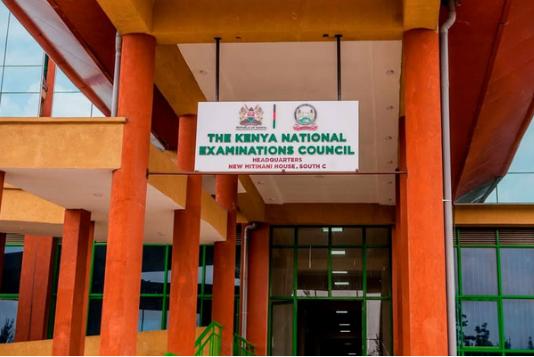
Schools with small candidate numbers are facing tighter arrangements for the 2026 national assessments and examinations, with the Kenya National Examinations Council (KNEC) requiring centres below specified thresholds to use approved hosting arrangements.
The rules affect the administration of the Kenya Primary School Education Assessment (KPSEA), Kenya Junior School Education Assessment (KJSEA) and Kenya Certificate of Secondary Education (KCSE), while placing an important verification role on Sub-County Directors of Education (SCDEs).
At the same time, Parliament has extended its nationwide public participation exercise on six proposed education reform Bills, taking the consultation process to all 47 counties.
The developments place examination administration and education policy at the centre of a wider reform agenda covering basic education governance, national assessment, teacher training, qualifications, curriculum development and tertiary student financing.
Read Also: Pharmacy Board Looks to Shape Future of Pharmaceutical Practice
KNEC 30-Candidate Threshold for 2026 Assessments
Under the KNEC guidelines for KPSEA and KJSEA, schools with fewer than 30 candidates are required to be hosted by schools with at least 30 candidates during the national assessments.
The KNEC user guide states that host and hosted schools should be located within the same zone and served by one distribution point. Special schools are exempted from the requirement. (knec.ac.ke)
The arrangement is designed to help KNEC manage assessment materials, supervision and distribution while maintaining security around national assessments.
A separate threshold applies to very small assessment centres.
Centres with fewer than five learners cannot register learners for KPSEA or KJSEA. Such centres are required to work with their respective SCDEs to identify a nearby approved assessment centre where the learners can be registered. (knec.ac.ke)
The 30-candidate requirement should therefore not be interpreted as a blanket closure of small schools.
Instead, schools falling below the relevant threshold are expected to operate through an approved hosting arrangement, while specific categories of institutions remain exempt.
KCSE Centres Face Hosting Requirements
The same principle applies to the 2026 KCSE examination, although the registration rules contain different thresholds.
According to KNEC’s 2026 KCSE registration guidelines, schools with fewer than 10 candidates are not permitted to register candidates as independent examination centres. Such schools must liaise with their SCDEs to identify an approved centre with more than 10 candidates.
The guidelines further state that examination centres with fewer than 30 candidates shall be hosted in examination centres identified by SCDEs in accordance with KNEC requirements. (knec.ac.ke)
There are exceptions.
Schools serving learners with special needs and government correctional facilities are exempted from the conditions applying to the minimum candidate thresholds. KNEC also retains powers to deregister an examination centre or transfer candidates where required under its examination regulations. (knec.ac.ke)
For schools affected by the rule, the process therefore involves coordination with education officials rather than an informal arrangement with a neighbouring institution.
SCDEs Take Centre Stage in Verification
Sub-County Directors of Education have a central administrative role in implementing the hosting arrangements.
KNEC’s 2026 procedures require SCDEs to help identify appropriate host centres and ensure that assessment and examination centres are properly aligned with collection and distribution points.
During verification of the 2026 KPSEA, KJSEA and KCSE nominal rolls, schools that had registered fewer than 10 candidates contrary to KNEC instructions were directed to liaise with their SCDEs to identify host centres where affected learners could be transferred or registered. (educationboard.co.ke)
SCDEs were also required to confirm that centres within their jurisdictions were appropriately aligned with the nearest collection or distribution points.
The role gives SCDE offices an important position between individual schools and KNEC.
For parents and school administrators, this means the choice of a host centre cannot simply be based on convenience. The centre must fit within the approved administrative and logistical framework.
Why Smaller Centres Are Being Consolidated
National assessments require secure handling of examination and assessment materials.
KNEC’s guidelines provide for centralised storage and distribution points, with SCDEs expected to ensure that assessment centres are aligned with the appropriate distribution point. (knec.ac.ke)
Consolidating smaller centres can reduce the number of locations that receive and manage examination materials.
It can also simplify supervision, distribution and coordination during the assessment period.
The arrangement, however, can have practical consequences for learners attending small schools, particularly where the designated host centre is located some distance away.
Transport, accessibility and supervision are among the issues schools and parents may need to consider.
The exemption for special schools is also significant because learners requiring specialised support may have needs that make a standard hosting arrangement unsuitable.
Read Also: Top Comoros Official Hospitalized in Nairobi Amid Rising Tensions in Moroni
Parliament Extends Public Participation to All 47 Counties
While KNEC is implementing the current examination arrangements, Parliament is considering a broader package of proposed education reforms.
The National Assembly Departmental Committee on Education began nationwide public participation on six Bills in September.
The proposals cover tertiary education funding and placement, basic education, national assessments, teacher training, qualifications and curriculum development. (kenyanews.go.ke)
The six Bills are the Tertiary Education, Placement and Funding Bill, 2026; Basic Education Bill, 2026; Kenya National Educational Assessments Council Bill, 2026; Pre-Service Education and In-Service Training Bill, 2026; Kenya National Qualifications Framework (Amendment) Bill, 2026; and Kenya Institute of Curriculum Development (Amendment) Bill, 2026. (the-star.co.ke)
The committee initially planned hearings in 31 counties between September 14 and September 25.
The timetable has now been extended.
Additional Counties Added to Consultation
Parliament announced that public participation will continue from September 28 to October 2, covering an additional 16 counties.
The counties added are West Pokot, Marsabit, Mandera, Nandi, Bungoma, Garissa, Busia, Lamu, Vihiga, Kitui, Siaya, Migori, Tharaka-Nithi, Nyamira, Bomet and Samburu.
The extension takes the public participation exercise to all 47 counties. The deadline for written memoranda has also been extended to October 2 at 5pm. (the-star.co.ke)
Parents, teachers, learners, education unions and other stakeholders therefore have another opportunity to make submissions before the Bills proceed through the legislative process.
TEFA Could Reshape Tertiary Funding
One of the most closely watched proposals is the Tertiary Education, Placement and Funding Bill, 2026.
The Bill proposes the establishment of the Tertiary Education Funding Authority (TEFA) to coordinate student financing.
Under the proposal, TEFA would replace the existing Higher Education Loans Board framework while bringing together functions currently handled by HELB, the Universities Fund and the TVET Funding Board. (pulse.co.ke)
The proposed authority would administer loans and scholarships while maintaining information relating to beneficiaries.
The Bill also links tertiary funding to student placement, with funding proposed for students placed through the relevant national placement system. (pulse.co.ke)
It is important to note that TEFA remains a proposal contained in a Bill before Parliament. It has not automatically replaced HELB or the other existing funding structures.
Its final powers, structure and relationship with existing institutions will depend on the parliamentary process and any amendments made before enactment.
Basic Education Bill Targets School Governance
The proposed Basic Education Bill, 2026 covers another major area of reform.
The Bill addresses issues including free and compulsory basic education, school management, county education boards, boards of management, special-needs education, scholarships and bursaries.
It also proposes a Kenya Education Management Information System to maintain education records and facilitate information sharing. (peopledaily.digital)
Another significant proposal concerns unauthorised charges imposed on learners.
Reports on the Bill indicate that people responsible for imposing prohibited tuition or other unauthorised charges could face penalties of up to KSh1 million, three years’ imprisonment, or both, depending on the offence and the final wording of the legislation. (cbc.co.ke)
The proposal puts school levies and financial accountability under renewed scrutiny.
For parents, the issue is closely linked to the cost of education.
For school administrators, it raises questions about which charges can lawfully be imposed, who has authority to approve them and what penalties could apply where the law is breached.
Assessment Reform and School Management
The proposed Kenya National Educational Assessments Council Bill is also relevant to the way national examinations and assessments are administered.
The Bill is intended to establish a statutory framework for national assessment aligned with competency-based education, potentially replacing the existing legal framework governing KNEC. (kenyanews.go.ke)
That makes the relationship between current KNEC procedures and the proposed legislation worth watching.
The 30-candidate hosting rule is an administrative requirement being applied under the existing KNEC framework for 2026 assessments and examinations.
The proposed legislation, meanwhile, remains subject to parliamentary consideration.
The two developments should therefore be viewed separately: one concerns the immediate administration of national assessments, while the other could eventually alter the statutory foundation of assessment management.
A Wider Reform Agenda
The education changes now unfolding cover almost every major part of the learning system.
At school level, KNEC is tightening the administration of national assessments and examinations, with smaller centres expected to use approved host institutions where applicable.
At the administrative level, SCDEs have a key role in identifying host centres, verifying registration information and ensuring centres comply with distribution arrangements.
At Parliament, public participation has been expanded to all 47 counties, giving stakeholders a wider opportunity to comment on the proposed reforms.
The tertiary sector could see the biggest institutional change if the proposed TEFA framework is eventually enacted.
Basic education could also receive stronger statutory provisions on school management, unauthorised levies and information management.
The immediate focus for schools, however, remains compliance with the existing KNEC requirements for the 2026 assessment and examination cycle.
Read Also: Kenyan marathoner remanded over Ksh8 million land fraud case
Parents and school administrators whose institutions fall below the applicable candidate thresholds should work through their SCDE offices to establish the approved hosting arrangements rather than waiting until the examination period approaches.
Meanwhile, the extended parliamentary public participation process gives education stakeholders an opportunity to comment on the proposed laws before they advance further.
The final shape of the reforms will depend on the parliamentary process, stakeholder submissions and any amendments made to the Bills.