
Safari Rally Legends Era: Shekhar Mehta Record, Local Drivers Taming Wilderness

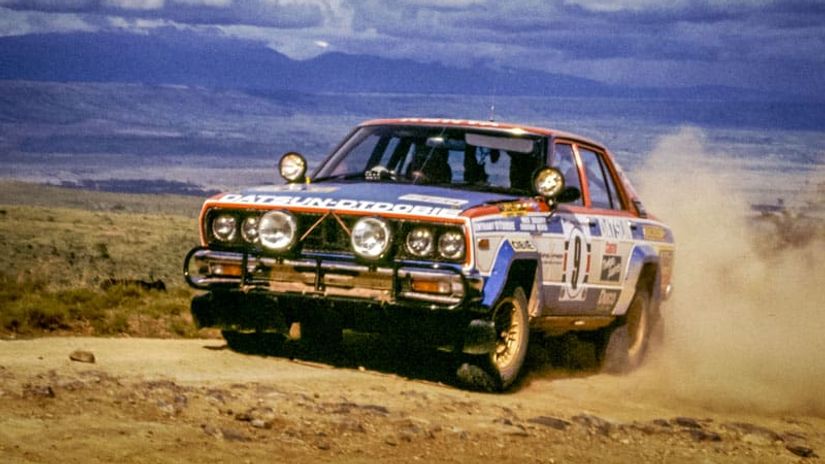
© Courtesy
Long before the Safari Rally became a modern WRC spectacle built around timed special stages, it was a survival contest that stretched across thousands of kilometres of Kenya’s roughest roads.
Crews battled dust, mud, rocks, rivers, heat and mechanical failures for days at a time, often driving through the night before reaching the next control. Finishing the rally could be an achievement in itself.
That environment created a particular type of driver.
Speed mattered, but mechanical sympathy mattered just as much. Navigation could be the difference between victory and retirement. A car that looked unbeatable on a short European stage could become a liability after hours of punishment on Kenya’s rough roads.
Read Also: Pharmacy Board Looks to Shape Future of Pharmaceutical Practice
It was during this era that Shekhar Mehta established himself as the defining figure of the Safari Rally, winning the event five times, including four consecutive victories from 1979 to 1982.
His success also coincided with one of the most remarkable periods in the history of the Datsun 160J, a production-based machine that proved durability could sometimes be more valuable than outright speed.
The story of the old Safari, however, was never only about international stars.
Kenyan drivers such as Patrick Njiru and Ian Duncan gradually showed that local knowledge, mechanical understanding and experience of the terrain could close the gap with the world’s leading crews.
Man Against the Terrain
The modern World Rally Championship was launched in 1973, but the Safari Rally had already developed a reputation as an extraordinary endurance event.
The WRC’s history of the championship describes the early championship as a collection of extremely long international events designed to test both man and machine. The Safari fitted that philosophy perhaps more dramatically than any other round.
The distances were enormous.
The 1979 Safari covered more than 5,000 kilometres, with crews confronting roads and tracks that could change dramatically depending on weather conditions. Contemporary reporting from Motor Sport Magazine’s 1979 Safari account described how the Datsun team relied heavily on its experience of the event and on cars built to survive rough roads rather than simply chase maximum speed.
That philosophy was crucial.
A rally car capable of maintaining a strong pace for hundreds of kilometres was often more valuable than a faster machine that required frequent repairs.
The Safari rewarded patience.
Drivers had to know when to attack and when to protect the car. Co-drivers had to maintain concentration over exhausting distances. Mechanics had to anticipate problems before they became failures.
It was a different form of rallying from the sprint-style competitions that dominated much of Europe.
The landscape itself became an opponent.
Dust could obscure vision. Mud could turn an apparently straightforward section into a trap. Water crossings threatened engines and electrical systems, while rocks and corrugations punished suspension components.
Even today, the modern Safari Rally’s reputation for punishing terrain remains central to its identity, with WRC reports continuing to highlight mud, deep ruts, rocks and fesh-fesh as defining challenges.
The difference is that today’s crews tackle those conditions inside a far more controlled rally structure.
The old Safari was another world.
Read Also: Kenyan marathoner remanded over Ksh8 million land fraud case
Shekhar Mehta’s Record Era
Mehta’s name became inseparable from the event.
His first Safari victory came in 1973, the inaugural year of the World Rally Championship. He then returned to the top step in 1979, 1980, 1981 and 1982.
That gives him five overall Safari victories.
A Motorsport history of the Safari Rally identifies Mehta as one of the event’s most successful drivers, with his four consecutive wins from 1979 to 1982 forming one of the great sequences in Safari history.
His 1979 victory was particularly important because it began the run that would turn Mehta from a major Kenyan competitor into the defining driver of the era.
He won that edition with Mike Doughty in a Datsun 160J.
The result was not simply about having the fastest machine.
Contemporary reporting noted that the Datsun 160J was not necessarily as quick as some of its rivals but had the strength to continue over rough roads when other cars were forced into repairs.
Mehta’s car reportedly ran almost faultlessly.
The 1979 Safari report from Motor Sport Magazine highlighted precisely that combination of reliability, preparation and Safari experience.
The following year produced another Mehta victory.
The 1980 Safari results show Mehta and Doughty winning in the Datsun 160J, finishing well ahead of another Datsun crew.
In 1981 and 1982, the winning car evolved into the Nissan Violet GT, but Mehta remained the constant.
Nissan’s own motorsport history records Mehta and Doughty’s 1979 and 1980 Safari victories in the Datsun 160J before the pair continued their winning run with the Nissan Violet GT in 1981.
Safari Rally Legends Data Matrix
| Driver Name | Era | Primary Achievement |
|---|---|---|
| Shekhar Mehta | 1970s–1980s | Five Safari Rally victories, including four consecutive wins from 1979–1982 |
| Patrick Njiru | 1980s–1990s | First African to break into the Safari Rally overall top 10 in 1990; Group N success |
| Ian Duncan | 1990s | 1994 Safari Rally overall winner with Toyota Celica Turbo 4WD |
| Joginder Singh | 1970s | Three-time Safari Rally winner, including victories in 1974 and 1976 |
| Björn Waldegård | 1970s–1990s | Multiple Safari victories across Ford, Toyota and later machinery |
Mehta’s record became part of the event’s mythology.
Even decades later, the five victories remain one of the first statistics mentioned whenever the history of the Safari is discussed. President William Ruto also referenced Mehta’s five victories in his remarks at the 2026 Safari Rally prize-giving ceremony.
Local Drivers Learn to Fight Back
The international stars brought factory support, sophisticated cars and years of experience.
Local drivers brought something different.
They understood the environment.
Kenyan competitors and mechanics knew that surviving the Safari required more than horsepower. Cars needed to withstand punishment that would destroy components on ordinary roads.
Suspension had to be strengthened. Protection underneath the car became essential. Cooling systems needed to cope with heat and dust. Crews had to think carefully about tyres, spare parts, fuel and repairs.
The most successful local teams effectively treated the Safari as an engineering problem.
Patrick Njiru became one of the strongest symbols of this generation.
His breakthrough came gradually.
During the 1987 Safari, Njiru became the first Black driver to complete the event since 1979. Three years later, he made another piece of history by becoming the first African driver to finish inside the overall top 10.
His finest Safari result came in 1994 when he finished fourth overall while winning Group N in a Subaru Impreza WRX.
The Star’s 2026 profile of Patrick Njiru records those milestones and highlights his role in the development of Kenyan rallying.
Njiru’s Group N achievements were especially significant because the category was built around production-based machinery.
Winning it required a different kind of preparation.
The cars were closer to what ordinary motorists could recognise, meaning reliability, setup and driving technique were critical.
The 1990 Safari results list Njiru as the Group N winner, while the 1992 results again record him taking the class.
His success demonstrated that Kenyan crews could compete effectively even without the resources available to the largest factory teams.
Read Also: Top Comoros Official Hospitalized in Nairobi Amid Rising Tensions in Moroni
Ian Duncan Carries the Torch
If Mehta represented the great breakthrough of the 1970s and early 1980s, Ian Duncan became one of the major Kenyan figures of the 1990s.
Duncan’s defining Safari moment came in 1994.
Driving a Toyota Celica Turbo 4WD with Dave Williamson, he won the Safari Rally outright.
The result came during an era when the event was becoming increasingly dominated by sophisticated four-wheel-drive machinery.
Duncan’s victory therefore represented more than local familiarity with the route.
It demonstrated that a Kenyan crew could still defeat some of the world’s best drivers in increasingly technical WRC machinery.
The historical Safari results list Duncan and Williamson as the 1994 winners, ahead of international competition.
Duncan remained a major presence in the event during the late 1990s. In 1997, he finished third behind Colin McRae and Richard Burns, again driving a Toyota Celica.
The 1997 Safari results show Duncan and Williamson completing the podium in a Kenyan-entered Toyota Celica.
By then, the character of the Safari was changing.
From Endurance Marathon to Modern WRC
The biggest transformation was not simply technological.
It was structural.
The old Safari’s enormous open-road endurance format gradually gave way to shorter, more tightly controlled special stages.
The evolution of the WRC itself pushed rallying towards increasingly specialised competition. The WRC historical timeline divides the championship into major technological eras, from the early years through Group B, Group A and the World Rally Car generations.
The Safari changed alongside that progression.
By the 1990s, four-wheel-drive turbocharged cars had transformed the competitive environment. Toyota’s Celica Turbo 4WD became particularly successful in the Safari, with victories from 1992 through 1995.
The rally was still brutally demanding, but the preparation was becoming more professional and the competitive stages more controlled.
Eventually, the event disappeared from the WRC calendar after 2002 before making its return in 2021.
Its comeback created another chapter in the story.
The modern Safari Rally has rebuilt its WRC identity around Naivasha-based stages, combining the championship’s modern sporting structure with the terrain that made the event famous.
The same historical thread can also be seen in Kenya’s wider rally scene. The 2026 KNRC season opener at Stoni Athi shows how local crews continue to compete across demanding gravel stages, carrying forward a culture built over generations.
The connection between eras is also visible in the people behind the cars.
The recent tribute to rally navigator Dave Williamson illustrates how co-drivers, mechanics and engineers were central to the Safari’s development, often working away from the spotlight while helping drivers survive some of the world’s most demanding rally routes.
The Legacy of the Wilderness Era
The old Safari Rally produced a particular type of hero.
Mehta became the record holder.
Njiru demonstrated how far a local driver could push a production-based car.
Duncan proved that Kenyan crews could win even as international rally technology advanced.
Behind them stood mechanics, navigators, service crews and ordinary enthusiasts who understood that the Safari could not be conquered through speed alone.
It had to be respected.
That may be the most important difference between the old Safari and the modern event.
Today’s WRC crews operate with detailed reconnaissance, sophisticated telemetry, professional service structures and precisely timed special stages. The cars are purpose-built technological machines.
The old competitors often faced uncertainty from the moment they left Nairobi.
A river could rise. A road could disappear into mud. A suspension component could fail hundreds of kilometres from the nearest service point.
The rally demanded improvisation.
That is why the legends of the era remain so powerful.
When Mehta won four times in succession between 1979 and 1982, he was not merely accumulating trophies. He was mastering an event that demanded an unusual combination of speed, patience and mechanical intelligence.
When Njiru broke into the overall top 10 in 1990 and later took fourth overall in 1994, he was showing that local knowledge could still matter in an increasingly professional WRC.
When Duncan won in 1994, he added another chapter to the story of Kenyan drivers competing successfully against international factory crews.
The machinery changed.
The roads changed.
The rules changed.
But the central idea survived.
The Safari Rally has always been about surviving long enough to let speed matter.
That philosophy connects the Datsun 160J era to today’s Toyota, Hyundai and Ford machinery.
The modern rally may be shorter, more controlled and technologically advanced, but when the rain turns a stage into mud or fesh-fesh swallows a car’s wheels, the old lesson returns.
On the Safari, the terrain always gets a vote.

