
Kipchoge Keino Mexico City Triumph 1968: The Birth of Kenya’s Distance Running Supremacy

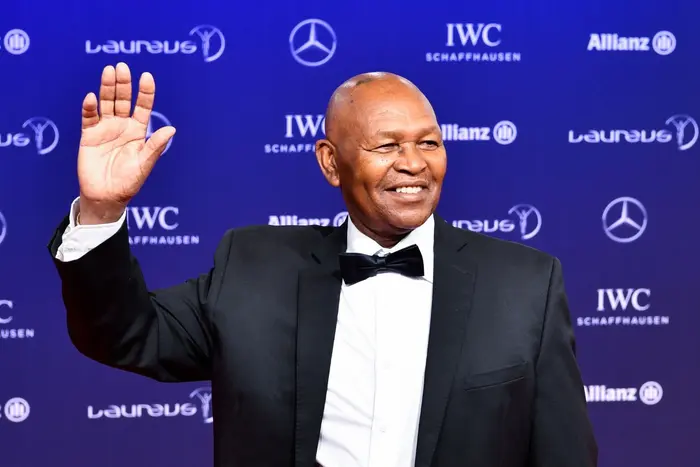
Few Olympic races have carried the weight of history quite like Kipchoge Keino’s 1,500-metre final at the 1968 Mexico City Games.
The Kenyan arrived at the Estadio Olímpico Universitario facing the American world-record holder Jim Ryun, a runner who had dominated the mile and 1,500 metres for several years. Keino, however, had something Ryun could not easily match: years of running and training in the highlands of the Rift Valley, a remarkable tolerance for altitude and a willingness to turn the race into a test of endurance rather than a final-lap sprint.
Read Also: Pharmacy Board Looks to Shape Future of Pharmaceutical Practice
What followed on October 20, 1968, became one of the defining performances in Kenya’s distance-running history.
Keino ran 3:34.91 to win Olympic gold, setting an Olympic record and beating Ryun by 2.98 seconds. The margin remains the largest victory in an Olympic men’s 1,500-metre final in the era of fully automatic timing. Olympedia’s official results for the 1968 men’s 1,500 metres record Keino’s gold, Ryun’s silver and West Germany’s Bodo Tümmler’s bronze.
The result was more than a personal triumph. It helped establish a new force in global athletics.
The Altitude Factor
Mexico City presented an unusual challenge before the first runner even stepped onto the track.
The 1968 Olympics were held at approximately 2,244 metres above sea level, making them the highest Summer Games held to that point. The reduced oxygen availability at that altitude was expected to affect endurance events particularly heavily. Olympedia’s account of the 1968 athletics programme notes the concern surrounding distance races and the effects of Mexico City’s thin air.
For Keino, however, altitude was familiar territory.
Born in Kipsamo in the Nandi Hills, the future Olympic champion grew up in an environment where running was woven into daily life. World Athletics records that Keino ran several miles to and from school and spent long periods running around the hills while herding goats. World Athletics’ feature on Keino’s early life and career provides a glimpse into the physical environment that shaped him.
An Olympic education resource similarly notes that years of running in the Nandi Hills helped Keino cope with the altitude challenge in Mexico City. The Olympic Values Education Programme’s profile of Keino highlights the connection between his upbringing and his preparation for the Games.
That does not mean altitude alone explains what happened.
Modern research has cautioned against reducing the Mexico City result to a simple highland-versus-lowland equation. Jim Ryun himself had undertaken altitude preparation before the Games, and the outcome reflected training, race tactics, individual physiology and preparation as well as geography. Research examining highland upbringing and endurance performance revisits the commonly repeated altitude explanation and points to the complexity behind the 1968 result.
Still, the setting mattered.
Keino and fellow Kenyan Ben Jipcho were accustomed to living and training at altitude. For competitors arriving from lower elevations, the thin air represented a different physiological challenge.
That experience gave Keino confidence.
It also formed part of a much bigger story that would later see athletes from Kenya’s highland regions dominate global distance running.
The Battle With Jim Ryun
Ryun entered the final as the man many expected to win.
His credentials were extraordinary. The American had run the mile in 3:51.3 in 1966 before improving the world record to 3:51.1 in 1967. In July 1967, he also ran 3:33.1 for 1,500 metres in Los Angeles, defeating Keino and setting a world record. Olympedia’s historical account of the 1968 1,500 metres details Ryun’s standing before the Olympic final.
Keino therefore knew that attempting to sit behind Ryun and wait for the final 200 metres could play directly into the American’s strengths.
The Kenyan chose another route.
Ben Jipcho was part of the plan.
Read Also: Top Comoros Official Hospitalized in Nairobi Amid Rising Tensions in Moroni
Jipcho went out aggressively, covering the opening 400 metres in about 56 seconds, with Keino close behind. At 800 metres, Keino had taken control and passed the point in approximately 1:55.3. Ryun was already well behind.
The race had been transformed from a tactical 1,500-metre contest into a brutal test of sustained pace.
The detailed race account from Olympedia’s 1968 Olympic 1,500-metre results records how Keino’s decisive move opened a large gap and left Ryun chasing rather than waiting for his customary finishing kick.
It was precisely the type of race Keino needed.
Rather than allow Ryun to remain within striking distance, he created separation early enough to make the American’s finishing speed far less useful.
At the bell, Ryun began his chase.
But the gap was already enormous.
Keino continued pushing through the final lap, eventually crossing the line in 3:34.91. Ryun followed in 3:37.89, with Tümmler taking bronze in 3:39.08.
World Athletics’ retrospective on the Mexico City Games describes Keino’s performance as an audacious front-running victory that produced an Olympic record of 3:34.9.
The victory margin was nearly three seconds.
For an Olympic 1,500-metre final, it was extraordinary.
Running Through Medical Adversity
The race itself would have been remarkable under normal circumstances.
Keino was not, however, approaching the final in normal physical condition.
Earlier in the Games, he had competed in the 10,000 metres and suffered severe stomach pain. He collapsed with two laps remaining, and the condition was later identified as a serious gallbladder infection.
The episode was serious enough for doctors to advise him to withdraw.
Keino continued.
The official Olympic retrospective from World Athletics on Keino’s Mexico City campaign records that he collapsed during the 10,000 metres after developing acute stomach pains that were later attributed to a severe gallbladder infection.
Four days before the 1,500-metre final, Keino had won silver in the 5,000 metres behind Tunisia’s Mohamed Gammoudi.
He was therefore carrying not only a medical problem but also the workload of multiple Olympic races.
Then came another obstacle.
Traffic delayed his journey to the stadium on the afternoon of the 1,500-metre final. According to World Athletics, Keino eventually had to run the final mile to reach the venue in time for the race. World Athletics’ account of the extraordinary journey to the stadium recounts the incident.
It was a fittingly chaotic prelude to one of the most controlled races of his career.
Once the starting gun sounded, the distractions disappeared.
Keino’s strategy was simple: make the race hard early, establish a decisive lead and force Ryun to chase.
It worked.
A Moment That Changed Kenyan Athletics
Keino’s victory was not an isolated Kenyan success.
Naftali Temu won the 10,000 metres and Amos Biwott captured the 3,000-metre steeplechase in Mexico City, giving Kenya three athletics gold medals at the Games.
Yet Keino’s 1,500-metre triumph carried a particular significance because of the stature of the opponent and the manner of the victory.
World Athletics’ 50th-anniversary retrospective on Mexico City 1968 describes the Games as the beginning of Kenya’s gold-medal surge at global level and identifies the performances of Keino, Temu and Biwott as a defining moment in the country’s emergence as an athletics power.
The significance became clearer in the decades that followed.
Kenya produced generations of runners capable of competing at the highest level over 800 metres, 1,500 metres, 5,000 metres, 10,000 metres, steeplechase and marathon distances.
Keino became one of the first symbols of that movement.
His career did not end in Mexico City. Four years later, at the 1972 Munich Olympics, he won gold in the 3,000-metre steeplechase and silver in the 1,500 metres. World Athletics’ profile of Keino records his two Olympic titles and four Olympic medals.
That longevity helped establish him not simply as a champion but as a bridge between the pioneers of Kenyan athletics and the generations that followed.
From Keino to the Modern Marathon Era
The modern image of Kenyan distance running is often associated with marathon stars such as Eliud Kipchoge, but the foundations were laid decades earlier.
The connection is not that Keino directly created every later champion. Rather, his generation demonstrated that Kenyan athletes could compete with and defeat the world’s established distance-running powers.
The success created belief.
Training centres later emerged around the Rift Valley, while running became increasingly attractive to young athletes seeking sporting opportunities. The highlands around Eldoret, Iten and the Nandi region developed reputations for producing elite runners.
Keino himself eventually became part of that infrastructure.
The Kip Keino High Performance Training Centre, established after his competitive career, became part of his wider contribution to developing young athletes and providing opportunities beyond his own racing achievements.
The influence of the first generation was therefore not limited to medals.
It extended into coaching, training culture, facilities and the idea that a young runner from rural Kenya could eventually stand on an Olympic podium.
That idea became increasingly powerful.
From Keino’s generation came runners such as Henry Rono, John Walker’s Kenyan contemporaries, Paul Tergat and later generations of marathon specialists. Eventually, athletes including Catherine Ndereba, David Rudisha, Vivian Cheruiyot and Eliud Kipchoge would build on the international reputation established by the pioneers.
The Legacy of Mexico City
Looking back at the 1968 final, it is tempting to remember only the image of Keino disappearing into the distance as Ryun attempted to close the gap.
The deeper story is more complicated.
Read Also: Kenyan marathoner remanded over Ksh8 million land fraud case
There was altitude, but there was also preparation.
There was illness, but there was also race strategy.
There was an American world-record holder, but there was also a Kenyan runner who understood that allowing the race to develop on his opponent’s terms could be dangerous.
And there was a young athletics nation beginning to discover what was possible.
Keino’s 1968 Mexico City Olympic gold did not single-handedly create Kenya’s distance-running supremacy. Kenyan athletics had produced notable performers before him, and many social, geographical, sporting and institutional factors later shaped the country’s success.
But the victory became a powerful turning point.
Keino showed that a Kenyan runner could defeat the world’s most celebrated middle-distance athlete on the biggest stage and do so in a race that demanded courage, endurance and tactical intelligence.
More than half a century later, the 3:34.91 remains attached to that moment.
The record eventually fell. Other champions came and went.
But the image of Keino driving away from Ryun in the thin air of Mexico City has endured.
It was the moment when a runner from the Nandi highlands announced himself to the world — and when Kenya’s long relationship with Olympic distance-running glory entered a new chapter.