
Schools Shut as Nairobi Fuel Price Protests Disrupt Learning Across City

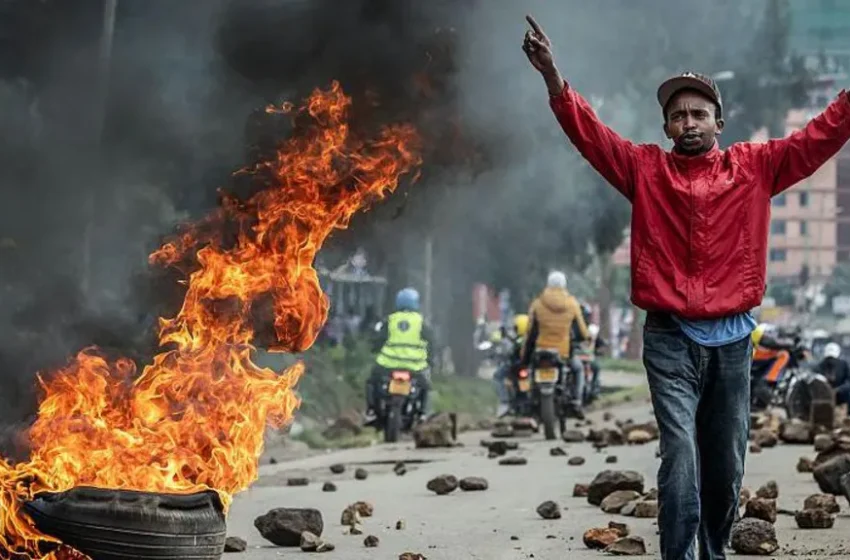
Private schools across Nairobi on Monday remained closed as demonstrations over rising fuel prices disrupted transport and learning across the city, paralysing movement in several estates and major roads as protesters blocked routes with stones and bonfires.
The protests, which spread rapidly in the morning, forced commuters to change routes and left many students unable to access schools safely. Movement in and out of the city centre was significantly affected as tension escalated in multiple neighbourhoods.
Transport disruptions affected both public and private systems, with school buses grounded after drivers expressed fear of insecurity. Several roads were rendered impassable as demonstrators occupied streets, while some areas reported attacks on vehicles and heavy congestion as motorists avoided hotspots. The chaos significantly slowed down movement across Nairobi, especially during peak morning hours.
Read Also: 5 Things You Should Know About Miss Universe Kenya 2026
Many private schools issued early morning notices to parents advising them not to bring children to school due to safety concerns and transport breakdown. Administrators said the decision was necessary after transport providers withdrew services and access routes became unsafe. Parents reported receiving text messages instructing them to keep learners at home until conditions improved.
“I could not send my children to school after I was informed that the school bus would not operate Monday due to the demos,” said Vincent Kamau, a parent at a private school in Embakasi as per Citizen Digital.
The disruption also affected parents who rely on daily transport services, leaving many stranded as schools remained uncertain about opening schedules. Fear of possible clashes along major roads further discouraged movement, with many families opting to remain indoors until conditions stabilised.
How did rising fuel prices trigger transport disruptions?
The protests were largely driven by public anger over rising fuel prices, which demonstrators linked to the increasing cost of living. As groups took to the streets, transport networks quickly broke down, making it difficult for school buses and public service vehicles to operate. The resulting gridlock worsened as more roads were blocked, amplifying the impact on daily commuting.
Despite the tension, some parents supported the precautionary closures by schools, citing safety concerns. “I thank the school for choosing to be cautious, because the roads may not safe during such demonstrations,” said Kiragu.
Why did schools prioritize safety over learning continuity?
School administrators across Nairobi said the decision to suspend learning was guided primarily by the need to protect learners and staff from potential harm. With transport operators pulling vehicles off the roads, most institutions had no reliable means of ensuring safe travel for students.
A school bus driver, Victor Musyoka, said many drivers feared getting caught in the demonstrations. “The demos left streets and roads inaccessible with reports of vehicles being attacked,” said Musyoka.
Administrators added that the closures were not permanent but precautionary, depending on how quickly normalcy returned. A private school administrator told Wananchi Reporting the decision was taken purely as a safety precaution after transport services were heavily disrupted.
Many parents with children in both private and public schools were similarly affected, especially those dependent on hired transport. Several transporters suspended operations entirely, citing insecurity risks and uncertainty over road safety.
By Monday afternoon, parts of Nairobi remained tense as security agencies worked to restore order and clear blocked roads. Schools indicated that learning would resume once transport systems stabilise and safety across major routes improves.