
Talanta Stadium: Why 91% Completion Mark Signals Massive Leap Forward for AFCON 2027

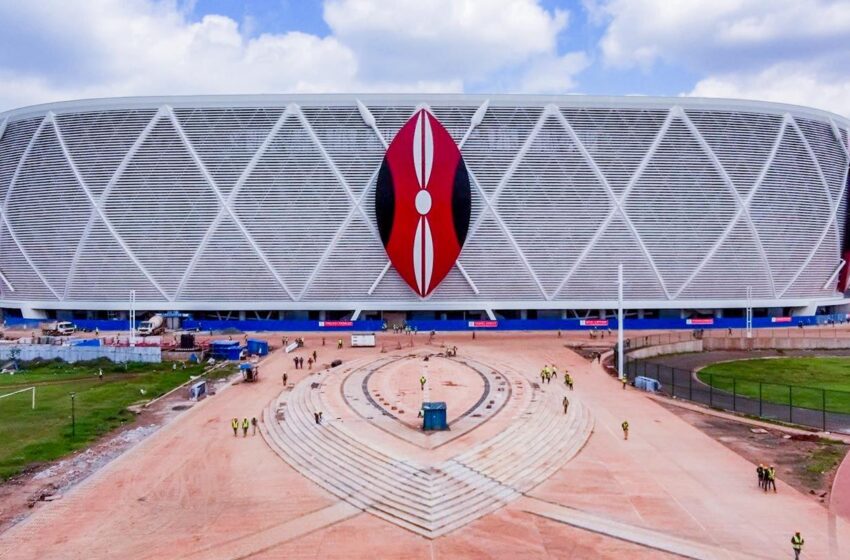
Sports Cabinet Secretary Salim Mvurya has officially confirmed that the construction of the landmark Talanta Stadium is entering its final stretch.
The facility, which is also known as Raila Odinga International Stadium represents a massive leap forward for East African athletic infrastructure, signaling the country’s readiness to join the global elite of sports hosting. Located along Ngong Road in the Jamhuri area of Nairobi, the multi-billion shilling facility is designed to serve as a crown jewel for the nation’s sporting future. Recent evaluation tours show that engineering teams are working around the clock to meet strict international timelines.
The modern arena boasts a planned seating capacity of 60,000, making it one of the largest and most technologically advanced stadiums in the region. Unlike traditional multi-purpose stadiums in Kenya, this facility is specifically engineered for football and rugby, ensuring an intimate, high-energy atmosphere for fans and optimal playing conditions for athletes. The national government has committed substantial financial resources to this flagship project, with total expenditures estimated at over KSh 30 billion for the broader sports infrastructure upgrade program. This significant capital injection reflects a deliberate strategy to position the capital city as a premier hub for international sports tourism.
Can Financial Commitments Match Continental Expectations?
Progress on the primary structure has reached an impressive milestone, with overall construction hitting the 91 percent completion mark. Work on the surrounding complex is moving at an equally frantic pace to ensure a comprehensive rollout of the entire sports ecosystem. The three accompanying training pitches are currently standing at 87 percent completion, offering world-class practice environments for visiting squads. Critical final-phase operations including extensive landscaping, advanced stadium lighting systems, secure perimeter fencing, and high-capacity main power grid connectivity are progressing steadily across the site.
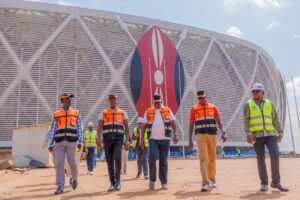
“I have conducted an inspection visit to asses the progress of construction works at the Raila Odinga International Stadium at the Talanta Sports City, currently at 91% complete, with the Government firmly on course to deliver the facility by the end of July,” wrote Sports Cabinet Secretary Salim Mvurya.
This rapid development coincides with strict adherence to global football governance standards. Every piece of the construction layout has been meticulously adapted to satisfy the stringent regulations set out by the Confederation of African Football. All CAF requirements and inspection recommendations continue to be incorporated concurrently throughout construction to guarantee compliance with international standards. This proactive approach eliminates the risk of post-construction adjustments, ensuring that the venue receives immediate certification for high-profile continental matches.
How Will Infrastructure Transform the Future of Harambee Stars?
Simultaneously, the state is executing a massive renovation framework at the Moi International Sports Centre, Kasarani, to ensure multiple world-class venues are available. Renovation works are also on course, with irrigation installation and grass planting currently underway to restore the historic pitch to pristine condition. These twin infrastructural developments form the bedrock of the country’s preparation frameworks for the upcoming Africa Cup of Nations tournament. Kenya is co-hosting the prestigious AFCON 2027 tournament alongside its East African neighbors Uganda and Tanzania under the Pamoja Bid framework.
Football administrators are leveraging this infrastructural revolution to revamp the technical aspects of the game. Elite training camps and international friendly fixtures are being lined up to ensure the squad transitions seamlessly into a formidable force capable of challenging the continent’s football powerhouses.
The long-term vision extends far beyond the final whistle of the tournament. Beyond hosting a successful tournament, Kenya is determined to showcase its football talent, national pride, and sporting excellence to the continent and the world. This infrastructure will leave an enduring legacy, providing future generations of Kenyan athletes with the world-class facilities they need to hone their skills and dominate the global stage.