
The Little Duckling That Taught Us to Look Again

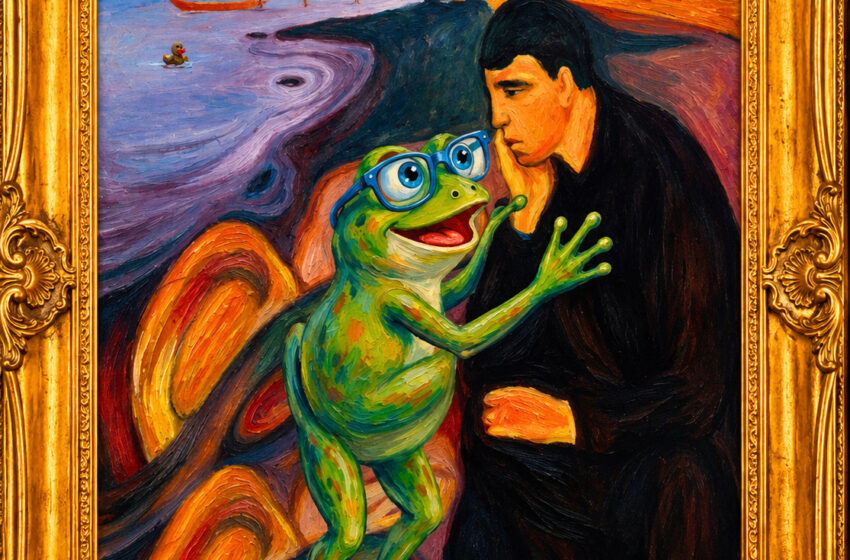
By Renato Basteri | Artist: René VANFROG | Massa, Tuscany, Italy
The question that started a dream
I remember watching pupils move through a museum. In front of a beautiful painting, some would stop for barely a moment. A quick glance, perhaps a polite “It’s nice,” and then their attention would slip away. They could spend hours absorbed in a game on a phone, yet a masterpiece that had survived for centuries sometimes held their gaze for only a few seconds. I could not stop asking myself why.
I am an artist, but I am also a support teacher at the I.C. “Alfieri Bertagnini” school in Massa, Tuscany. I have seen how deeply today’s young people inhabit the digital world. They want answers quickly; their eyes are accustomed to moving at the speed of a screen. I did not want to scold them for being part of their time. I wanted to find a doorway into the art that means so much to me.
The answer, unexpectedly, came from a game. What if the reason to look at a painting were not a lecture, a test, or the pressure to know an artist’s name? What if it were a tiny, shy duckling who needed to be found?
René, Julie and the secret hidden in a painting
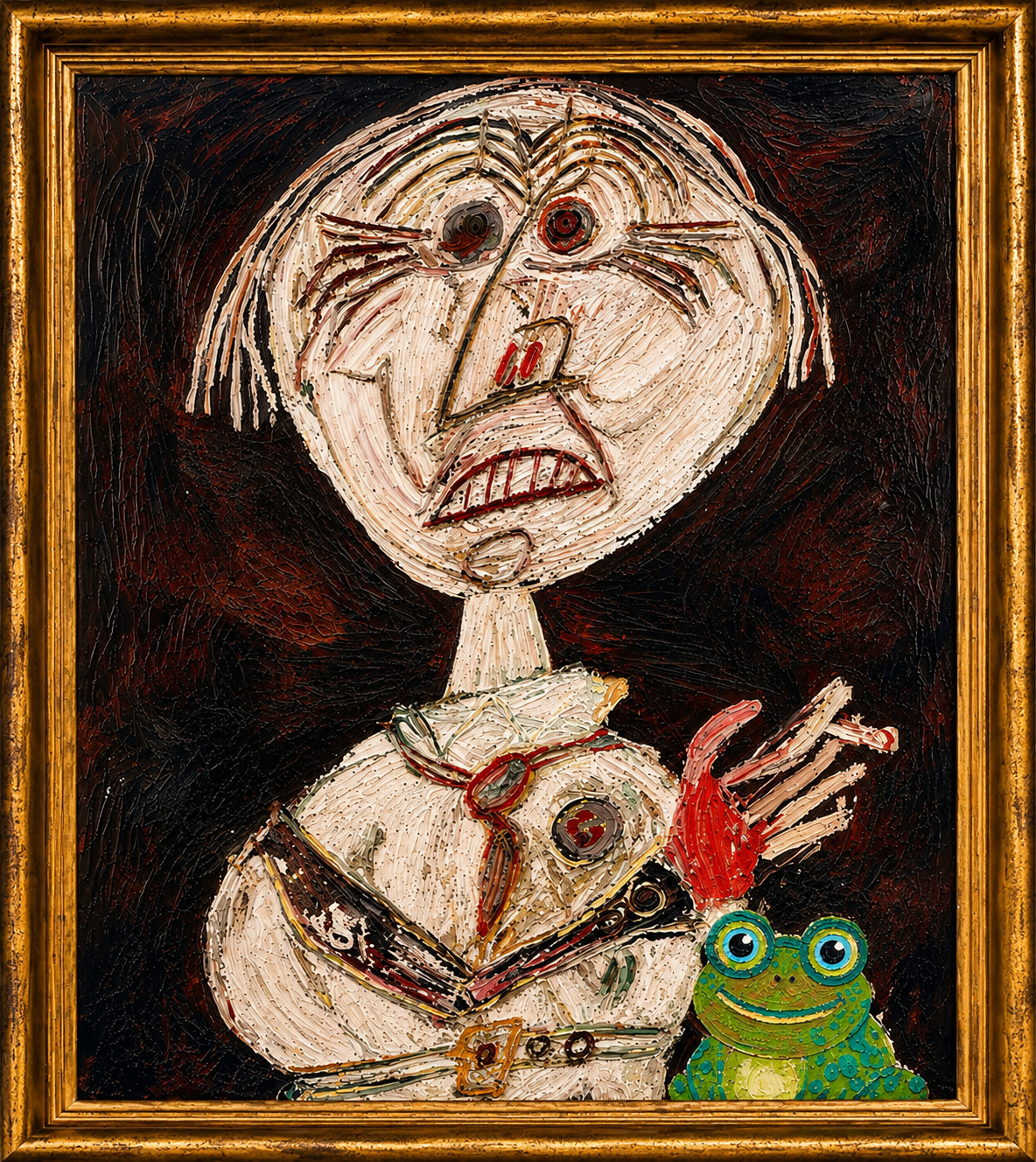
That is how VANFROG.ART began. René is a bright-green frog, with blue eyes and blue glasses. His name is an affectionate transformation of my own, Renato; he is, in many ways, my alter ego. Julie is a little dark-grey duckling with a tuft of feathers, black eyes, soft red cheeks and a shy heart. René adores her. Julie feels the emotion but is too timid to face it, so she hides inside a work of art.
Every day, René enters another painting to search for her. He never seems to find her by himself, so he asks the audience for help. The first person to identify Julie’s hiding place correctly in the comments wins a small but meaningful prize: the right to choose between two paintings for the following day’s game. The viewers become participants, and the story moves forward because they take part.
What amazes me is not only how quickly people now respond — sometimes before I have even published the accompanying story — but how carefully they look. To find Julie they zoom in. They search under a table, study a necklace, follow the folds of a dress, examine the reflection in a mirror. Someone may notice a tiny dog, a cameo, an earring, or a detail in the background that would otherwise have passed unseen. A simple search changes the way the painting is experienced.
If I had merely placed a frog and a duckling beside each other in a famous picture, it might have been an amusing image and nothing more. The mystery is what invites people to stay. For a few moments, the habit of scrolling is replaced by the joy of discovering. That is the small reversal I dreamed of creating.
From 200 followers to a community around the world
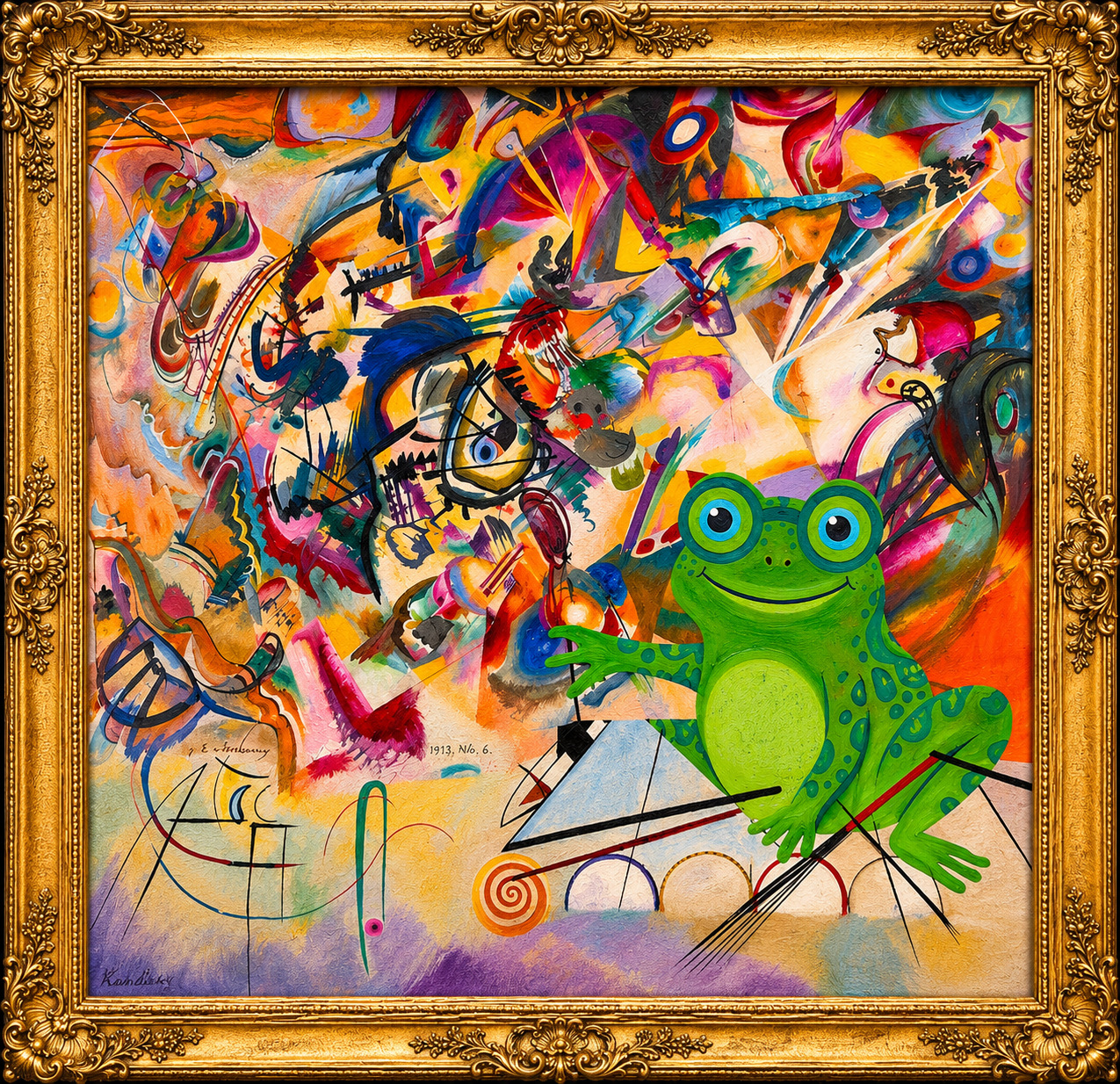
When I began, about 200 people followed the project. I did not imagine how far this little adventure might travel. By November 2026, VANFROG.ART had grown to more than 8,900 followers on Instagram — almost 9,000 — with more than 164,000 views over a recent 30-day period. Those numbers still move me because, behind each one, I imagine a person stopping to look at a painting.
The adventure has also travelled into galleries and exhibitions. My work has appeared on a screen in New York’s Times Square and in an exhibition in Milan; it has reached Tokyo, London and Amsterdam. Madrid is part of the journey in November 2026, and an exhibition in Paris is planned for January 2027. Each new destination feels like another chapter in a dream I once scarcely dared to imagine.
But the greatest reward is not a screen in a famous city. It is the thought of someone sitting at the dinner table and saying, “Did you know that painter had this extraordinary habit?” It is the possibility that art returns to everyday conversation. In cafés long ago, people discussed painting and ideas. I love imagining that René and Julie might help start those conversations again, one small curiosity at a time.
Beneath the images, I share what I call “The Professor’s Corner”: a short, accessible glimpse of the artist, the movement, the technique or an unusual historical detail. The game opens the door; curiosity invites people farther inside.
An inclusive classroom, with a pencil before a prompt
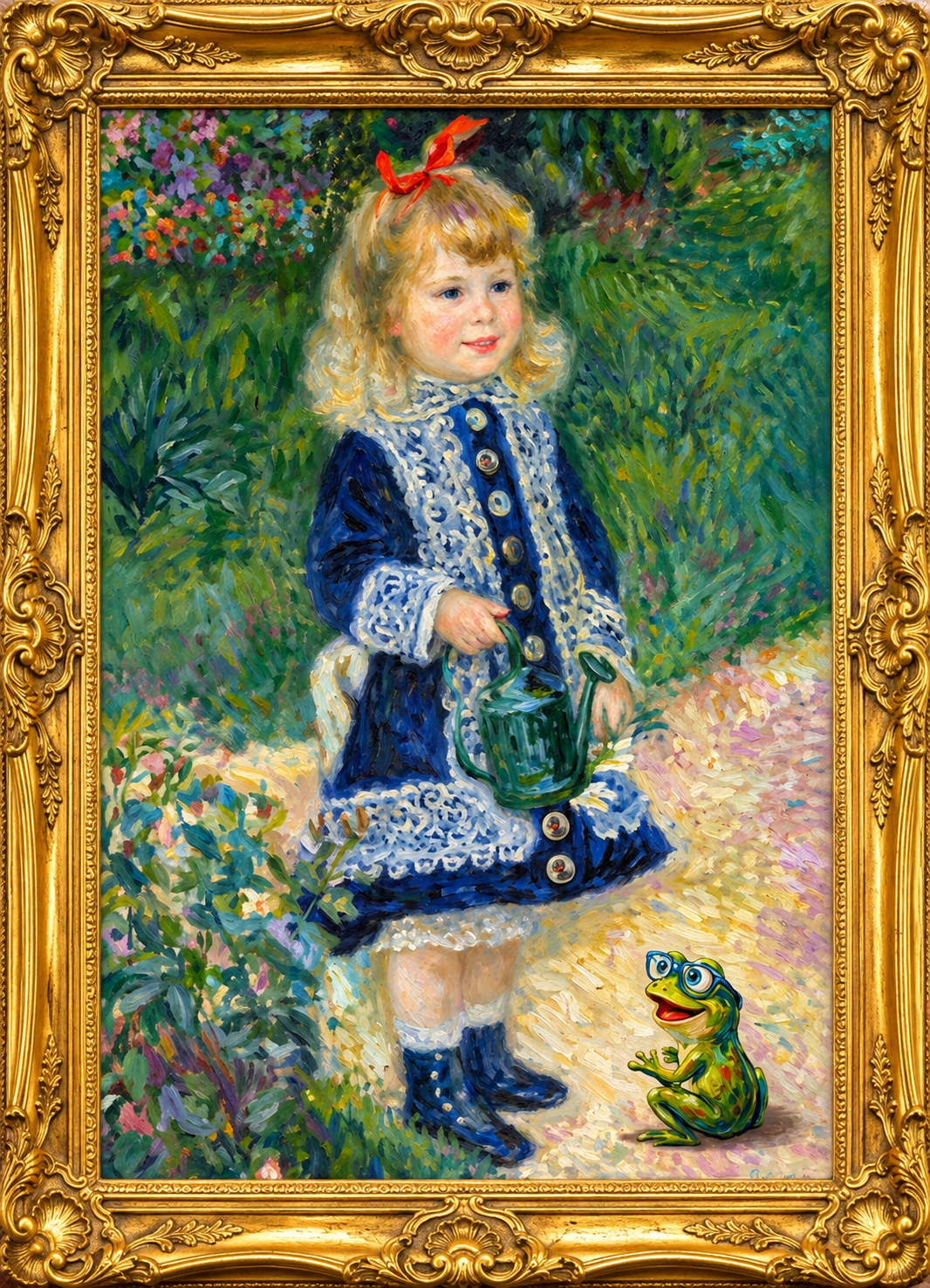
The project is not separate from my life as a teacher. In school art workshops, I begin with something very simple: a sheet of paper and a pencil. If a pupil tells me they have forgotten their pencil, I say, “Use a pen. What matters is that the idea is yours.” Before any technology, there must be a human idea.
Only after the pupils have drawn do we bring their creations onto the classroom’s digital board. Using the same original drawing and the same written instruction — or prompt — I show them how two tools I know, ChatGPT and Gemini, can produce strikingly different images. We look at the strengths, the mistakes and the unexpected results. A flat drawing can become a three-dimensional-looking character, change expression or appear in different settings. The class learns that technology can transform an idea, but does not understand or protect that idea for us.
For pupils with disabilities, I have seen this become a particularly joyful experience. A drawing that began with uneven lines and modest details may suddenly appear vibrant, colourful and full of life. At that moment, I often find myself watching the child’s face rather than the large screen. That expression — surprise giving way to a huge smile — is the real magic of the lesson. Everyone begins with their own contribution, and everyone deserves the chance to feel proud of it.
I do not claim that one classroom activity can prove a scientific effect on attention or inclusion. I can, however, describe the engagement and emotion I have personally observed. I have submitted a related educational manuscript to the Italian journal Quaderni di pedagogia e pratiche educative; as of November 2026, it is undergoing external review. I would welcome collaboration with researchers who could explore what makes a visual game persuade people to stop scrolling and begin looking closely.
A digital paintbrush — never a replacement for imagination
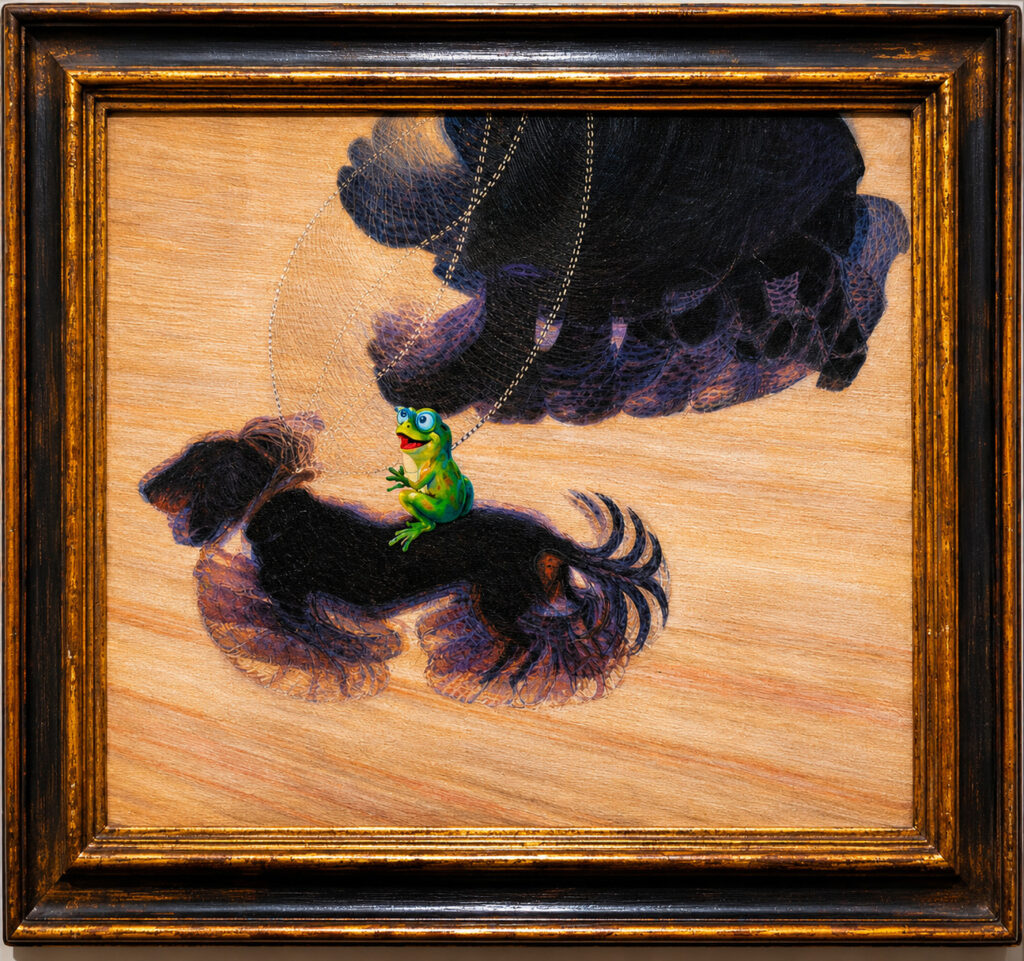
For me, artificial intelligence is a digital paintbrush. Like a traditional brush, it is a means, not the origin of the dream. I choose the painting; I invent the encounter; I decide how René should behave, where Julie might hide, and whether the result respects the spirit of the original work. I check, correct and sometimes begin again. The human imagination must remain the art director.
That is also the lesson I want young people to remember. AI can help them understand a difficult topic, compare possibilities and express ideas. It must not become a machine that completes every school assignment while their own thinking stands still. Learning needs curiosity, effort, conversation, manual practice and teamwork. A beautiful result means little if the pupil has not taken part in creating it.
And art itself has never stopped changing. The Impressionists once provoked resistance; Lucio Fontana cut and pierced the canvas to explore a space beyond it; Alberto Burri made powerful work from materials other painters might have rejected. I do not suggest that my work is the same as theirs. I simply believe every era gives artists new tools and new questions. The world around us is changing, and I want my art to respond to that change while remaining unmistakably human at its heart.
An endless museum, and a reason to look again
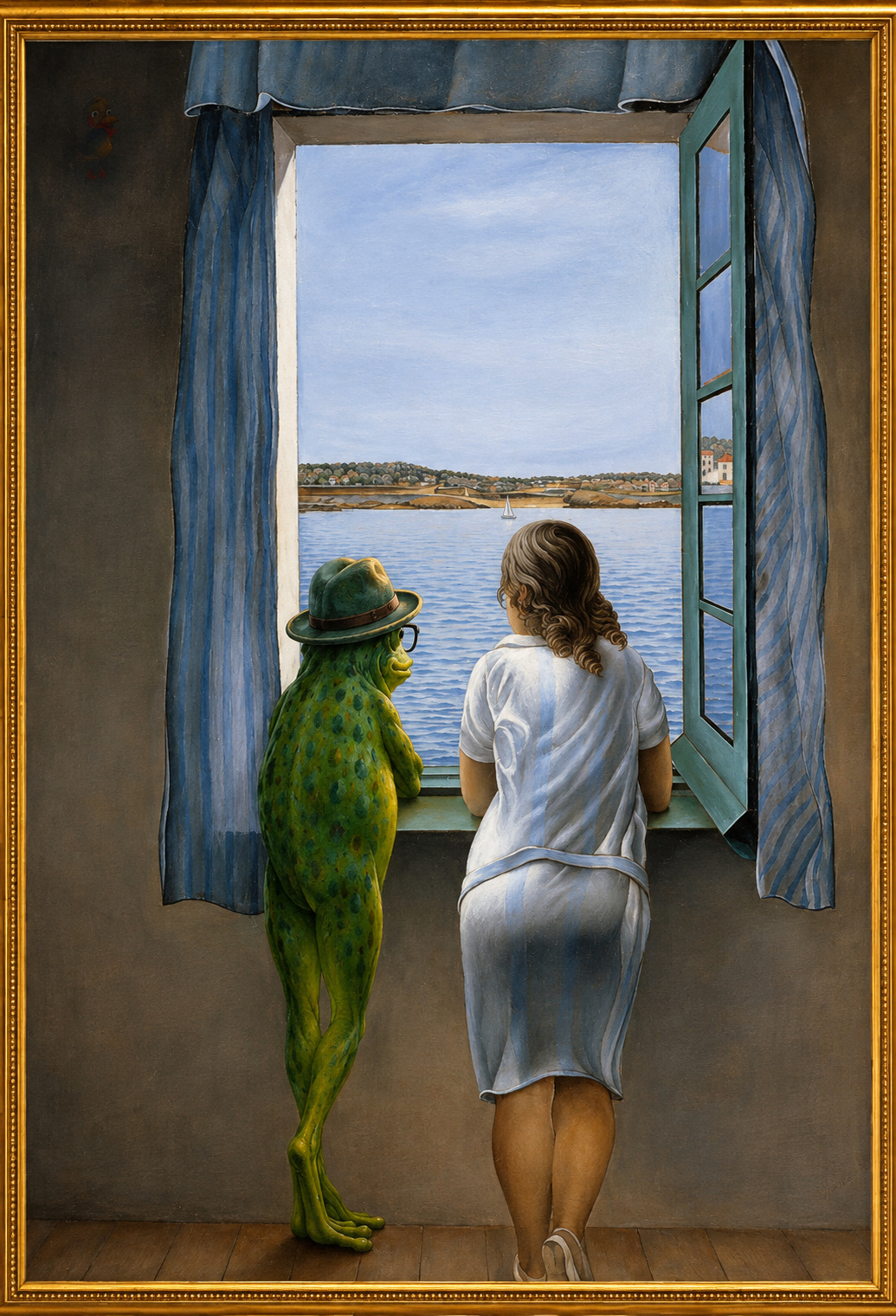
I travel across the whole history of art rather than staying with a single period. Some paintings welcome the characters easily: Julie can become the detail in an earring, a brooch or a flower vase; her head might appear between leaves. Pure abstraction is more difficult. When I work with the strict geometry of a Mondrian, for example, finding a place for my shy duckling becomes a puzzle for me too. Every artwork asks for a new solution, and I enjoy that challenge.
I also think of each image as two stories living together. There is the story the original painter created, and there is the parallel, gentle story of a frog searching for someone he loves. Then there is a third element: music. On social platforms I can choose a soundtrack that deepens the mood of the encounter. Image, story and sound come together to invite an emotion — and, I hope, a closer look at the artwork itself.
The adventure now exists in a bilingual Italian–English book, too: Where Is the Shy Duckling Hiding? Find It in the Paintings. On paper, readers can turn the pages and search at their own pace. I am happy that the dream has found both a digital home and a quieter one.
Sometimes I think back to those hurried moments in museums. I still cannot make everyone fall in love with art. Not every person who finds Julie will want to learn more about the painting. But if even a few people stop for longer, discover a previously unnoticed detail and begin to feel something, then René and Julie have already given me an extraordinary gift. A little duckling has reminded us how to look. And for an artist, that is a dream worth following.

