
FIFA World Cup: What Went Wrong for Tunisia in Crushing Defeat to Japan

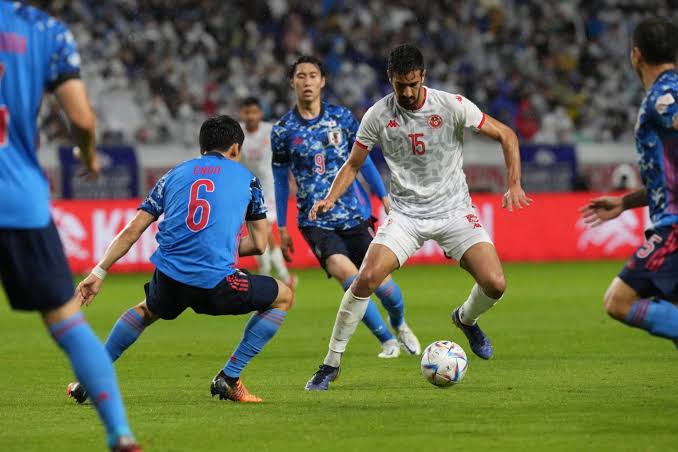
Tunisia’s elimination from the World Cup against Japan was not a single-match failure but the culmination of structural weaknesses, tactical instability, and psychological collapse that had been building throughout a turbulent tournament campaign.
The 4–0 defeat in Mexico highlighted a widening gap between modern, high-tempo international football and Tunisia’s struggling adaptation to elite-level demands. Japan’s disciplined performance simply accelerated what already looked like an inevitable group-stage exit.
Also Read: Top Comoros Official Hospitalized in Nairobi Amid Rising Tensions in Moroni
Tournament Context Tunisia Entered Under Pressure and Instability
Tunisia’s World Cup campaign was already unstable before kickoff in Guadalajara. A heavy opening defeat against Sweden triggered immediate internal crisis, exposing defensive disorganisation and lack of attacking structure.
The situation escalated rapidly with the dismissal of head coach Sabri Lamouchi, followed by the rushed appointment of Hervé Renard. Such abrupt managerial changes rarely produce instant stability in tournament football.
Instead of resetting the squad, the transition deepened confusion in tactical identity, leaving players uncertain in both defensive shape and attacking transitions.
Key pre match issues affecting Tunisia
| Area | Problem | Impact |
|---|---|---|
| Coaching stability | Mid tournament managerial change | Lack of tactical continuity |
| Defensive structure | High number of individual errors | Early goals conceded |
| Midfield control | Weak ball progression | Reduced attacking threat |
| Psychological state | Low confidence after heavy defeat | Poor match intensity |
Early Breakdown Japan Strike Inside Opening Minutes
The match effectively ended before Tunisia could settle. Japan’s opening goal arrived in under four minutes, immediately shifting momentum and forcing Tunisia into reactive mode.
The goal came from a sharp counter attacking sequence, showcasing Japan’s ability to transition from defense to attack with speed and precision. Daichi Kamada finished clinically from close range after exploiting gaps in Tunisia’s back line.
This early concession had a damaging psychological effect. Tunisia were forced to chase the game without an established structure, something they had already struggled with throughout the tournament.
Japan Tactical Superiority High Press and Fast Transitions
Japan’s performance was built on clarity of identity. Their system emphasized compact defensive spacing, quick vertical transitions, and intelligent movement in the final third.
Tunisia struggled particularly against Japan’s off ball movement, which constantly pulled defenders out of position and created space between the lines.
Ayase Ueda’s second goal illustrated this perfectly. Positioned at the edge of the box, he received space, turned quickly, and finished with precision through traffic.
Japan’s tactical discipline ensured they remained in control even when not in possession.
Tunisia Defensive Collapse Repeated Structural Failures
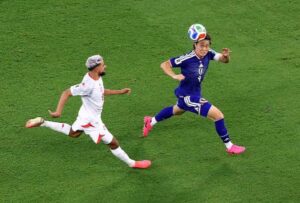
Tunisia’s defensive problems were not isolated incidents but recurring issues throughout the match. The back line repeatedly failed to track runners, maintain compact spacing, or anticipate final passes.
Japan exploited these weaknesses repeatedly with simple but effective attacking patterns.
Defensive weaknesses exposed
| Defensive Issue | Match Evidence | Outcome |
|---|---|---|
| Poor marking | Untracked runs in box | Multiple clear chances |
| Slow recovery | Late reaction to counters | Early and repeated goals |
| Lack of coordination | Gaps between defenders | Easy through balls |
| Goalkeeper isolation | One on one situations | High conversion rate |
Junya Ito’s goal highlighted Tunisia’s inability to manage central channels, as he was allowed to run through unchallenged before calmly finishing past the goalkeeper.
Midfield Failure Tunisia Could Not Control Possession
One of Tunisia’s most damaging weaknesses was their inability to control midfield phases of play. Japan dictated tempo, cycling possession efficiently and preventing Tunisia from building sustained attacks.
Tunisia’s midfield lacked both creativity and defensive protection. As a result, Japan repeatedly regained possession in dangerous areas and launched quick attacks before Tunisia could reorganize.
This imbalance forced Tunisia into long periods without meaningful possession, increasing defensive pressure and accelerating fatigue.
Psychological Decline After Early Goals
Once Japan took control, Tunisia’s response lacked urgency and structure. Instead of reorganizing into a compact defensive block, they became increasingly stretched.
Conceding early often forces teams into desperation mode, and Tunisia’s body language reflected a loss of confidence.
The inability to respond after the first two goals indicated a deeper psychological issue that had already been visible in earlier matches.
Also Read: Rio Ferdinand To Open International Doors For Arusha Through AFCON 2027
Japan Clinical Finishing and Game Management
Japan’s attacking efficiency was a key difference. They did not waste chances and consistently converted opportunities with composure.
Ayase Ueda’s second goal, a looping header into the far corner, symbolized their dominance in both set piece awareness and attacking timing.
Unlike Tunisia, Japan showed balance between attacking ambition and defensive discipline, ensuring they remained in control throughout the match.
Tactical Comparison Tunisia vs Japan
| Aspect | Tunisia | Japan |
|---|---|---|
| Playing style | Reactive and fragmented | Structured and fluid |
| Defensive shape | Disorganised under pressure | Compact and coordinated |
| Attack creation | Limited and predictable | Dynamic and varied |
| Transitions | Slow and exposed | Fast and efficient |
| Game control | Minimal possession | Dominant control |
Group Stage Implications Tunisia Exit Confirmed Early
The defeat mathematically confirmed Tunisia’s inability to progress from the group stage. With no points gained from the match and prior heavy defeat already damaging their goal difference, qualification became impossible.
Japan, on the other hand, strengthened their position in the group and moved closer to qualification, depending on their final fixture against Sweden.
Tunisia’s final match against the Netherlands carried little significance beyond pride, as top position and advancement were already out of reach.
Broader Lessons from Tunisia World Cup Exit
Tunisia’s elimination reflects broader challenges facing several emerging football nations at World Cup level. While defensive discipline has traditionally been a strength, modern football demands adaptability, midfield control, and high tempo transitions.
Without these elements, teams struggle against technically efficient sides like Japan.
Key takeaways from Tunisia campaign
-
Tactical instability undermines tournament performance
-
Early goals drastically shift match dynamics
-
Midfield control is essential at elite level
-
Defensive errors are punished immediately
-
Coaching continuity is critical in short competitions
Tunisia Need Structural Rebuild After Early Exit
Tunisia’s World Cup exit against Japan was not simply a defeat but a reflection of systemic shortcomings exposed under elite competition pressure.
Japan’s structured, fast, and intelligent football highlighted the gap in preparation, execution, and tactical clarity.
For Tunisia, the focus now shifts to long term rebuilding, strengthening tactical identity, and developing consistency capable of competing against world class opposition in future tournaments.