
Gor Mahia Get Clarity As FKF Confirms Premier League Roadmap

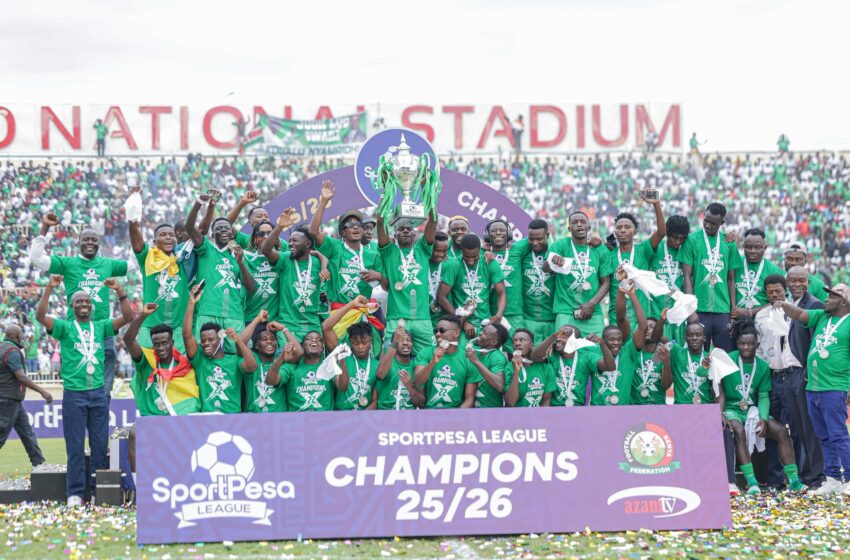
Kenyan football enters another pivotal chapter as Gor Mahia FC prepares to defend its domestic crown while chasing greater success on the continental stage. The 2026 /2027 SportPesa Premier League season is fast approaching as the club faces heightened expectations that extend far beyond winning another championship.
The upcoming campaign represents more than a race for trophies but it also reflects the growing professionalism of Kenyan football, increased commercial investment, evolving governance, and the importance of strategic planning for clubs competing both locally and across Africa.
SportPesa Premier League 2026 Season Signals Fresh Opportunities
The confirmation of the league calendar provides clubs with certainty for recruitment, preseason planning, licensing, and player registration. Early scheduling reduces administrative uncertainty and enables teams to organize finances and technical preparations well before kickoff.
For supporters, sponsors, and broadcasters, predictable calendars improve engagement while creating a more stable football ecosystem.
Why Early Planning Matters for Football Clubs
Successful clubs increasingly treat preseason as a business operation rather than merely a training period. Recruitment decisions, medical assessments, contract renewals, and tactical preparation all require significant lead time.
A well-managed offseason often determines whether a team can sustain consistency throughout a demanding campaign.
| Area | Benefit to Clubs | Long Term Impact |
|---|---|---|
| Early player registration | Faster squad integration | Improved team chemistry |
| Advance scheduling | Better logistical planning | Reduced operational costs |
| Licensing compliance | Eligibility for competitions | Professional governance |
| Commercial preparation | Stronger sponsor activation | Higher club revenues |
Gor Mahia FC Continues Setting Standards in Kenyan Football
Winning another league championship reinforces Gor Mahia’s reputation as one of Kenya’s most successful football institutions. Sustained dominance is rarely accidental and often reflects investment in coaching, recruitment, administration, and supporter engagement.
Maintaining success, however, presents a different challenge from achieving it. Rival clubs spend months studying the champions’ tactical approach while strengthening their own squads in pursuit of dethroning them.
That dynamic makes every title defense more difficult than the last.
CAF Champions League Participation Raises Expectations
Competing in continental tournaments introduces a completely different level of complexity. Clubs must handle increased travel demands, fixture congestion, and stronger opponents from across Africa.
This requires greater squad depth rather than relying solely on a preferred starting eleven.
Challenges Facing Kenyan Representatives
Success in continental competitions depends on multiple factors beyond technical quality.
These include financial stability, sports science support, travel logistics, player recovery, and administrative efficiency.
| Domestic Competition | Continental Competition |
|---|---|
| Familiar opponents | Diverse playing styles |
| Limited travel | Extensive international travel |
| Predictable scheduling | Congested fixture lists |
| Lower operational costs | Increased expenses and logistics |
Squad Depth Could Define Gor Mahia Success
Modern football rewards clubs capable of rotating players without sacrificing performance.
Injuries, suspensions, and fatigue become more common when teams compete across multiple tournaments simultaneously.
Strengthening key positions therefore becomes less about replacing starters and more about building resilience over an entire season.
Recruitment strategies that focus on youth development alongside experienced professionals can also create long-term sustainability while reducing transfer expenditure.
Football Sponsorship Growth Benefits Kenyan Clubs
Commercial partnerships have become essential revenue streams across global football.
For Kenyan clubs, sponsorship agreements provide resources for infrastructure improvements, player welfare, academy development, and competitive salaries.
Diversifying income also reduces dependence on ticket sales alone.
Revenue Sources Modern Football Clubs Pursue
The strongest football organizations increasingly combine sporting performance with sound business practices.
| Revenue Source | Strategic Value |
|---|---|
| Corporate sponsorships | Stable financial backing |
| Merchandise sales | Brand expansion |
| Matchday income | Fan engagement |
| Media rights | Long-term sustainability |
| Digital partnerships | New commercial audiences |
Financial discipline can ultimately translate into stronger performances on the pitch by enabling investment in facilities and talent acquisition.
Importance of Player Registration Windows
Transfer and registration deadlines exist to preserve competitive integrity while allowing clubs to finalize squads before competition begins.
Well-managed registration periods reduce disputes over eligibility and improve transparency throughout the league.
For coaches, timely registrations ensure players can participate fully in preseason tactical systems instead of joining midway through preparations.
Kenyan Football Governance Continues Evolving

Administrative reforms within domestic football increasingly emphasize professionalism and regulatory compliance.
Structured competition calendars provide confidence for investors and commercial partners while improving planning for clubs across all divisions.
These measures also strengthen credibility among broadcasters and international football stakeholders.
National Super League and Division One Remain Critical Development Pathways
While top-flight football receives the greatest attention, lower divisions remain essential for nurturing future stars.
Competitive second-tier and third-tier structures give emerging players opportunities to gain experience before progressing to elite competition.
Strong development pathways also reduce the need for clubs to rely exclusively on expensive transfers.
Women’s Football Expansion Reflects Positive Momentum
The scheduling of women’s competitions demonstrates growing recognition of gender inclusivity within Kenyan football.
Expanding opportunities for female athletes strengthens grassroots participation while attracting new audiences and commercial interest.
Investment in women’s leagues may also encourage improved youth academies and coaching standards nationwide.
Why Women’s Football Matters Economically
Women’s competitions create value beyond sporting achievement by supporting employment, sponsorship activation, community outreach, and media rights expansion.
As participation increases, clubs can build broader supporter bases while creating additional revenue opportunities.
Coaching Stability Supports Long Term Performance
Continuity within technical departments often produces better results than frequent managerial changes.
Stable coaching environments allow tactical philosophies to mature while enabling young players to develop under consistent guidance.
Preseason periods become especially valuable because coaching staffs can refine systems before competitive matches begin.
Supporters Remain the Foundation of Club Success
No football institution thrives without passionate supporters.
Fans contribute through ticket purchases, merchandise, digital engagement, and sponsorship attractiveness. Their loyalty creates the atmosphere that motivates players while increasing commercial appeal for potential investors.
As clubs modernize operations, maintaining strong relationships with supporters remains essential.
Future Outlook for Kenyan Football
The coming season offers an opportunity to demonstrate continued progress across sporting and commercial dimensions.
Improved governance, better financial planning, expanding sponsorships, and stronger competition structures all indicate positive momentum for the domestic game.
For Gor Mahia, expectations extend beyond defending a league title. Success will also be measured by performances in continental football, squad development, and the club’s ability to build sustainable long-term growth.
Ultimately, the 2026 and 2027 campaign represents more than another season on the calendar. It symbolizes the broader evolution of Kenyan football into a more competitive, professionally managed, and commercially attractive sporting industry capable of strengthening its position within African football.