
UASU, UoN Backs Moi University Lecturers After Acting VC’s Remarks

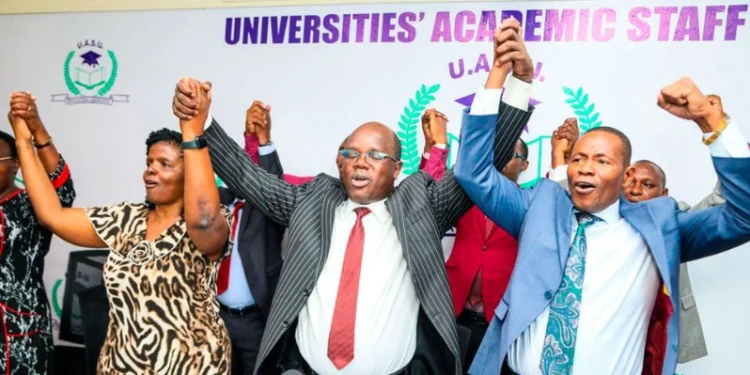
The Universities’ Academic Staff Union (UASU) University of Nairobi Chapter has thrown its weight behind lecturers at Moi University following controversial remarks allegedly made by the institution’s Acting Vice-Chancellor during a recent appearance before Parliament.
In a solidarity statement addressed to the UASU Moi University Chapter, the University of Nairobi lecturers’ union criticized comments reportedly made by Acting Vice-Chancellor Prof. Kiplagat Kotut on July 2, 2026, saying the remarks unfairly targeted academic staff and failed to reflect the realities facing public universities.
The union claimed the acting vice-chancellor described lecturers as “parasites living off the work of others,” a characterization it termed insulting, misleading and detrimental to the image of academic professionals working in Kenya’s higher education institutions.
UASU University of Nairobi Chapter Secretary Prof. George Osanjo said lecturers continue to shoulder enormous teaching, research and supervision responsibilities despite chronic staff shortages, inadequate funding and deteriorating working conditions across public universities.
According to the union, the comments overlooked the dedication of lecturers who continue to sustain academic programmes despite growing pressure caused by rising student enrolment and limited recruitment of new teaching staff.
“We stand firmly with UASU Moi University Chapter in rejecting these deeply offensive remarks. Lecturers remain among the most overworked and under-resourced professionals in Kenya’s public universities, and such statements only undermine their contribution to higher education,” said UASU University of Nairobi Chapter Secretary Prof. George Osanjo.
Lecturers Cite Worsening Staffing Crisis

The University of Nairobi chapter argued that the staffing crisis affecting Kenyan universities has been highlighted repeatedly by education stakeholders, professional bodies and quality assurance agencies, yet little progress has been made in addressing the shortage of academic personnel.
It noted that concerns recently raised by lecturers at Moi University over severe understaffing in the institution’s Medical School are not unique, saying similar challenges continue to affect the University of Nairobi and many other public universities across the country.
The union further observed that the UASU National Office has consistently urged the Commission for University Education (CUE) to facilitate increased recruitment of academic staff in order to improve lecturer-to-student ratios and maintain teaching standards. It added that the Ministry of Education has also directed CUE to undertake quality audits in selected public universities amid growing concerns over declining staffing levels and the pressure placed on existing lecturers.
“If, as some Vice-Chancellors unreasonably argue, all university staff are paid for by the students they teach, then the question begs: how many students are taught in the Vice-Chancellor’s office?“ the statement posed.
Union Questions University Leadership
The University of Nairobi chapter said university leaders should equally account for their own administrative and academic responsibilities instead of attributing institutional challenges to lecturers. It argued that public criticism directed at teaching staff ignores the broader governance and funding issues affecting higher education institutions.
According to the statement, lecturers continue to perform multiple roles beyond classroom teaching, including supervising postgraduate research, conducting scholarly research, publishing academic work, mentoring students and participating in community engagement activities. These responsibilities, the union said, have continued to expand despite limited recruitment and constrained financial resources.
The chapter further accused some university administrations of shifting responsibility for systemic failures onto lecturers rather than addressing long-standing challenges such as delayed government funding, inadequate infrastructure and increasing student populations.
It maintained that sustainable reforms in higher education require collaborative leadership involving university management, government agencies, lecturers and other stakeholders instead of public exchanges that risk damaging institutional morale.
The union also referenced the late Nigerian author Chinua Achebe, saying Kenya’s public universities continue to struggle primarily because of leadership shortcomings and insufficient exchequer funding rather than a lack of commitment from academic staff.
UASU University of Nairobi warned that remarks perceived as attacking lecturers could further demoralize already overstretched academic staff and negatively affect the reputation of public universities at a time when institutions are working to improve the quality of teaching and research.
The chapter said restoring confidence in Kenya’s higher education sector requires adequate staffing, predictable government funding, improved working conditions and constructive engagement between university councils, management and staff unions.
It concluded by assuring lecturers at Moi University of its continued solidarity during the ongoing dispute, expressing hope that dialogue and mutual respect would guide efforts to resolve the issues while safeguarding the integrity of public universities and protecting the welfare of academic staff across the country.

