
FKF Leadership Under Scrutiny Amid CHAN 2024 Insurance Allegations

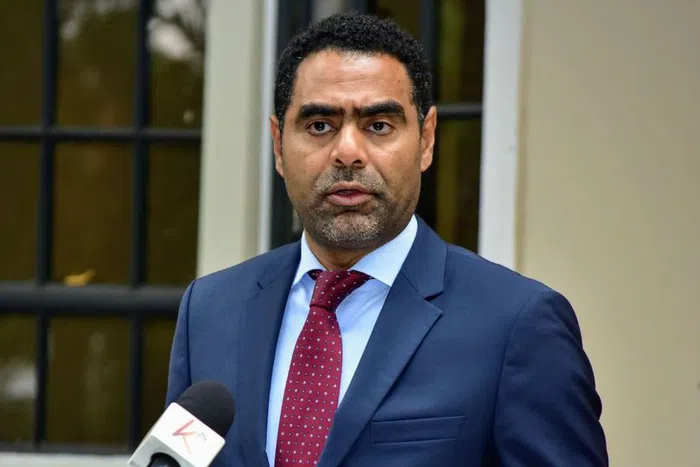
FKF President Hussein Mohammed. Photo. File
One of the most defining challenges in sports administration is that leadership is often judged not only by results, but also by perception. When reforms are introduced in long-standing institutions, even routine administrative matters can quickly become the subject of public debate.
This has been the case following recent allegations surrounding Football Kenya Federation (FKF) President Hussein Mohammed and reported concerns linked to CHAN 2024 insurance payments. The issue has generated discussion across media platforms, with some stakeholders calling for further clarification and accountability.
At the same time, others argue that the matter should be viewed within the broader context of ongoing reforms within Kenyan football governance.
Growing Attention on Governance and Transparency
Since assuming office, FKF leadership under Hussein Mohammed has emphasized governance reforms, transparency, and structural improvement within Kenyan football. These reforms have included efforts to professionalize operations, strengthen oversight mechanisms, and improve the management of football programs across different levels.
Such changes are often welcomed in principle, but they can also attract heightened scrutiny, particularly in environments where sports institutions have historically faced governance challenges.
As a result, any allegation involving financial management or procurement processes tends to draw significant public attention, regardless of whether investigations are ongoing or conclusions have been reached.
Also Read: Top Comoros Official Hospitalized in Nairobi Amid Rising Tensions in Moroni
The Importance of Due Process
In matters involving public institutions and national sports bodies, due process remains essential. Allegations related to financial irregularities require proper review through established governance and audit structures before conclusions can be made.
At this stage, publicly available information regarding the CHAN 2024 insurance claims remains limited, and different interpretations have emerged across stakeholders.
It is therefore important for discussions to remain grounded in verified facts rather than speculation, especially when reputations and institutional trust are involved.
Balancing Accountability and Reform in Kenyan Football
Kenyan football continues to undergo a period of transition, with increased focus on development, competitiveness, and institutional stability. Efforts to strengthen women’s football, youth development systems, and international competitiveness form part of this broader agenda.
However, reform processes often come with resistance and competing narratives. While some view increased scrutiny as a necessary part of accountability, others see it as a potential distraction from ongoing progress.
Both perspectives highlight an important reality: institutional change requires both transparency and stability to succeed.
Communication and Public Confidence
In moments of controversy, communication from leadership plays a critical role in shaping public trust. Clear and transparent updates help ensure that stakeholders remain informed and reduce the spread of misinformation.
Where concerns have been raised, it is expected that relevant authorities will provide appropriate clarification once internal reviews or investigations are concluded.
Maintaining public confidence in sports governance depends not only on reforms being implemented, but also on how transparently challenges are addressed.
Also Read: Rio Ferdinand To Open International Doors For Arusha Through AFCON 2027
Kenyan Football at a Transitional Stage
Kenyan football is currently in a transitional phase, marked by both reform efforts and increased scrutiny of governance practices. The outcome of this period will depend largely on how effectively institutions balance accountability with ongoing development goals.
As discussions around FKF leadership and CHAN 2024 continue, stakeholders remain focused on ensuring that Kenyan football develops on a foundation of transparency, professionalism, and long-term stability.

