
Why Competition Authority Cleared Safaricom After Airtel’s Predatory Pricing Complaint

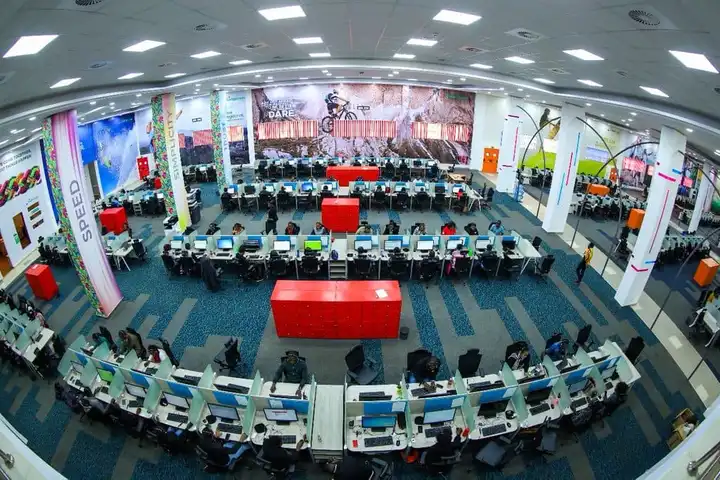
A section of Safaricom call centre. Photo: Safaricom Source: UGC
Airtel Kenya has suffered a setback after the Competition Authority of Kenya (CAK) dismissed its complaint accusing rival Safaricom of unfairly pricing voice calls below industry rates, ruling that the telco had not breached competition laws.
The complaint centered on Safaricom’s discounted voice call promotions, which Airtel argued amounted to predatory pricing because customers were paying as little as Sh0.10 per minute—well below the industry’s mobile termination rate (MTR) of Sh0.41 per minute.
Airtel maintained that such pricing disadvantaged smaller operators and distorted competition in Kenya’s telecommunications sector.
Follow Kenya Frontline X account for more updates.
The dispute highlights the fierce battle for market share between Kenya’s two largest mobile network operators, with Airtel steadily challenging Safaricom’s long-held dominance through aggressive pricing and network expansion.
“It was established that the promotion was restricted to a maximum of 90 days as provided under the Kenya Information and Communication Act and Regulations and could be repeated after at least three months to safeguard any negative impact on competition. The matter was therefore closed,” the Competition Authority of Kenya said as per Business Daily.
According to disclosures by the competition watchdog, Airtel alleged that Safaricom’s promotional offers charged customers between Sh0.10 and Sh0.30 per minute, below the prevailing MTR of Sh0.41 per minute. Airtel argued that such pricing amounted to exclusionary abuse and predatory behaviour designed to squeeze competitors out of the market.
Predatory pricing refers to a strategy where a company deliberately sells products or services below cost in an attempt to eliminate or weaken competitors before eventually raising prices once competition has been reduced.
CAK finds Safaricom acted within the law

The CAK, however, concluded that Safaricom’s promotions complied with existing regulations governing promotional tariffs in the telecommunications industry.
The regulator noted that the Kenya Information and Communications (Tariff) Regulations allow operators to offer discounted promotions for a maximum period of 90 days, after which they must wait at least three months before reintroducing similar offers.
Because Safaricom’s promotion complied with the prescribed duration, the authority found no legal basis to pursue enforcement action against the company.
“Airtel Networks Kenya Limited alleged that Safaricom Plc had been running a promotion in which they offered voice prices that were below the current MTR of Sh0.41 per minute. Specifically, the allegations related to an offer dubbed ‘Ofa Moto’,” the CAK said in its findings.
The complaint referenced Safaricom’s popular Tunukiwa promotional offers, which allowed subscribers to purchase 100 minutes of talk time for Sh10 valid until midnight, 30 minutes for Sh10, 60 minutes for Sh20, and even unlimited calls for one hour at Sh20.
Airtel argued that these offers effectively translated to voice charges below the interconnection rate paid between mobile operators, thereby giving Safaricom an unfair competitive advantage.
Globally, mobile termination rates are generally considered the minimum cost benchmark for voice calls between different networks, making tariffs below that threshold a sensitive competition issue.
Instead of filing the matter before the Communications Authority of Kenya (CA), Airtel chose to lodge its complaint with the Competition Authority because it believed the issue constituted anti-competitive conduct.
Rivalry between telecom giants intensifies
Although the complaint was dismissed, the case underscores the increasingly fierce rivalry between Safaricom and Airtel as both firms compete for subscribers, voice traffic, mobile money users and internet customers.
The two operators have previously clashed over mobile termination rates, market dominance and competition policy, with Airtel repeatedly calling for tougher regulatory intervention against Safaricom.
Earlier, the CAK also dismissed calls to impose price controls or other regulatory measures on Safaricom, saying investigations had not found evidence that the company was abusing its dominant market position.
Similarly, the Communications Authority has never formally declared Safaricom a dominant player under Kenya’s telecommunications regulations, despite its commanding market presence.
Safaricom has consistently defended its business practices, arguing that competition in Kenya’s telecommunications sector remains vibrant and that rival operators can grow through investment, innovation and improved customer service rather than regulatory intervention.
“Competition in the industry is healthy, and other players can build their market share through investment and innovation,” Safaricom told the Senate during previous hearings on allegations that it was abusing its market position.
Recent industry data nonetheless shows that Safaricom’s grip on the market has gradually weakened over the years. The company’s subscriber market share has declined from 72.6 percent in June 2017 to 66.8 percent as of December, reflecting Airtel’s steady growth.
However, Safaricom continues to dominate voice services, with its share of voice traffic rising slightly to 62.2 percent from 61.1 percent recorded in September 2025. Airtel’s share of voice traffic, on the other hand, eased marginally from 38.5 percent to 37.5 percent over the same period.
The latest ruling is therefore likely to reinforce Safaricom’s ability to continue using short-term promotional pricing within the limits allowed by law, while signalling that competition authorities remain unconvinced that such offers amount to abuse of market power.

