
Why FIFA Faces Growing Fair Play Dispute Over Iran 2026 World Cup Travel Restrictions

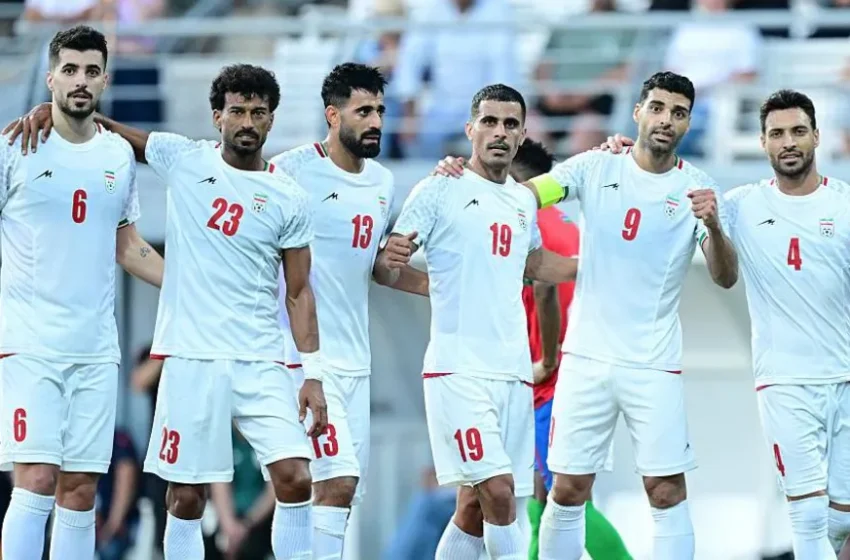
The 2026 FIFA World Cup has already sparked controversy off the pitch, with Iran’s national football team raising concerns over travel restrictions that they believe may affect competitive fairness during the tournament.
Iran has announced plans to formally complain to FIFA over visa and travel rules that require the team to enter the United States only shortly before matches and leave immediately after games. Since the United States is one of the three co-hosts alongside Canada and Mexico, these restrictions apply only to matches played on US soil.
The issue has triggered wider debate about whether all participating teams are being given equal preparation conditions at the world’s biggest sporting event.
Also Read: World Cup 2026 Coaching Salaries Football Managers Pay Explained
What are Iran’s travel restrictions?
Iran’s main concern is the limited time they are allowed to remain in the United States during the tournament.
Under the current arrangements, the team is permitted to arrive just one day before each match and must depart on the same day after the game ends. This rule applies specifically to matches hosted in the United States.
From Iran’s perspective, this creates an unusual logistical disadvantage compared to other teams that are able to settle in host countries for longer periods during tournaments.
The Football Federation of Iran (FFIRI) argues that this limits preparation time and disrupts normal training routines.
Why does preparation time matter in football?
In modern international football, preparation is considered a key part of performance. Teams typically arrive days or weeks before matches to:
-
Adapt to climate and weather conditions
-
Recover from long-distance travel
-
Complete tactical and technical training sessions
-
Adjust to time zones
-
Build consistency in match preparation routines
Iran argues that the restricted travel window reduces their ability to prepare effectively for matches played in the United States.
Head coach Amir Ghalenoei has described the situation as particularly difficult for his squad, stating that the team feels at a disadvantage compared to other participating nations.
Iran’s planned complaint to FIFA

The Football Federation of Iran has confirmed that it intends to file an official complaint with FIFA through formal channels.
The federation claims that the current arrangements are inconsistent with the principle of equal conditions for all participating teams.
It argues that if preparation conditions differ significantly between teams, the fairness of competition could be affected.
Iran has also called on FIFA to uphold neutrality and ensure that all teams are treated equally under tournament regulations.
Why are these restrictions in place?
The United States Department of Homeland Security has stated that Iran was informed of the travel conditions before the tournament.
Officials say the arrangement is part of broader visa and security policies applied during major international events.
According to US authorities, teams are allowed to enter the country one day before matches and are expected to leave after games conclude.
Supporters of the policy argue that it is necessary for logistical and security coordination across a multi-host tournament.
Political tensions surrounding Iran’s participation
Iran’s involvement in the 2026 World Cup has been influenced by broader geopolitical tensions.
Reports indicate that some members of Iran’s backroom staff faced visa challenges, while administrative issues have also affected ticket allocations and travel arrangements.
Despite these difficulties, FIFA leadership has engaged with the Iranian team during the tournament, emphasizing the organization’s neutral role in global football.
The situation highlights how international sport can sometimes intersect with political realities.
Iran’s World Cup schedule
Iran began their tournament campaign with a competitive group-stage match against New Zealand in Los Angeles, which ended in a 2–2 draw.
The team still has two remaining group matches, both scheduled to take place in the United States. These fixtures are crucial for their chances of advancing to the knockout stage.
However, travel restrictions remain a concern as they prepare for these upcoming games.
Why FIFA is under pressure
FIFA is responsible for ensuring that all participating teams compete under fair and consistent conditions.
Iran’s complaint raises an important question: do differing travel and visa arrangements create an uneven playing field in a global tournament?
While FIFA does not directly control immigration laws in host countries, it is responsible for overall tournament regulations and team welfare standards.
This makes the situation complex, as it sits between sports governance and national policy.
Challenges of a three-country World Cup
The 2026 tournament is the first World Cup hosted across three countries: the United States, Canada, and Mexico.
While this format increases global reach and infrastructure capacity, it also introduces logistical challenges for teams.
Different visa systems, security policies, and travel regulations can create inconsistencies in team movement and preparation.
Iran’s case highlights how these differences can become more visible when teams face varying entry conditions.
Also Read: Rio Ferdinand To Open International Doors For Arusha Through AFCON 2027
What happens next?
Iran is expected to submit its official complaint to FIFA for review. The governing body will assess whether the current arrangements violate any tournament principles or regulations.
For now, Iran must continue preparing under existing conditions while awaiting a response.
The outcome of this case could influence how future international tournaments manage travel and visa arrangements for participating teams.
The bigger picture
Beyond the controversy, the 2026 World Cup remains one of the most anticipated sporting events in history, bringing together nations from around the world on a shared stage.
However, Iran’s concerns highlight a broader issue in global sport: balancing security, logistics, and fairness in multi-country tournaments.
As FIFA navigates these challenges, the discussion around equal preparation conditions is likely to continue well beyond 2026.