
Usain Bolt Sprinting Limits Why Fastest Man Alive Never Trained for Endurance Running Events

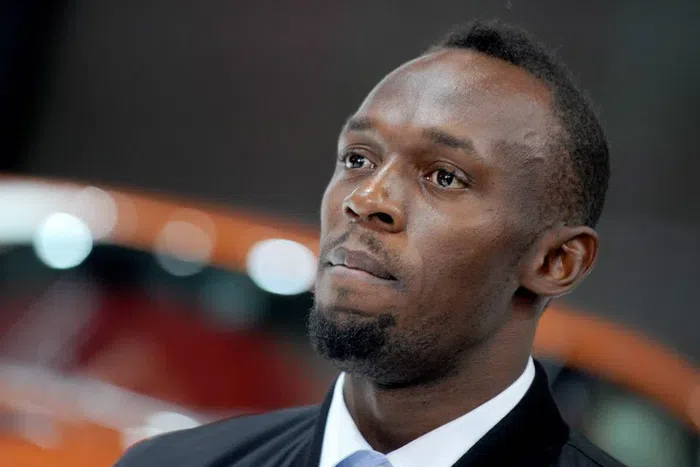
Usain Bolt is widely regarded as the greatest sprinter of all time, but his dominance in athletics was built on a very specific and highly specialised training philosophy.
Rather than pursuing all-round athletic ability, Bolt’s entire career was shaped around short bursts of maximum speed, particularly in the 100m and 200m events where he set world records that still stand as benchmarks in modern athletics.
His approach highlights a key truth in elite sport: success at the highest level often comes from extreme specialization rather than versatility.
While fans often admire his effortless stride and relaxed racing style, what is less discussed is how narrowly defined his training limits were throughout his professional career.
Also Read: Top Comoros Official Hospitalized in Nairobi Amid Rising Tensions in Moroni
Why Usain Bolt Never Trained for Long Distance Running
Unlike endurance athletes such as marathon runners or long-distance track specialists, Bolt’s training never extended into extended aerobic conditioning sessions.
His workouts were built around explosive acceleration, reaction time, and maintaining top speed over very short distances.
Typical sprint training structure compared to endurance running
| Category | Sprint training (Bolt style) | Endurance training (marathon style) |
|---|---|---|
| Primary goal | Maximum speed | Sustained stamina |
| Training distance | 60m to 400m repetitions | 5km to 30km runs |
| Energy system | Anaerobic power | Aerobic endurance |
| Recovery style | Long rest intervals | Continuous effort |
| Race focus | Seconds | Hours |
This contrast explains why elite sprinters and marathon runners are rarely interchangeable in performance capabilities.
Bolt himself has consistently emphasized that sprinting and endurance running require completely different physiological systems.
Usain Bolt Explains the Science of Sprinting Performance
Bolt has often described sprinting as a discipline built entirely around short bursts of energy rather than prolonged exertion.
In interviews, he has explained that sprint athletes train to generate maximum force over minimal time, making endurance running incompatible with their conditioning.
He has also noted that even training beyond certain distances becomes counterproductive for sprinters.
According to Bolt, most of his professional training sessions involved repeated short sprints, often under 400 metres, followed by long recovery periods to allow full muscle regeneration.
This training structure is designed to maximize speed output while minimizing fatigue accumulation.
The Longest Distance Usain Bolt Has Ever Run
Although known for explosive speed, Bolt has occasionally taken part in light endurance activity outside competitive training.
He once participated in a charity event where he completed a 5-kilometre jog, marking the longest distance he has publicly acknowledged running.
However, he has repeatedly clarified that this was not part of structured athletic preparation and should not be interpreted as part of his sprinting development.
Usain Bolt running capability overview
| Activity type | Distance | Purpose |
|---|---|---|
| Competitive sprinting | 100m–200m | World record events |
| Training repetitions | 60m–400m | Speed development |
| Rare endurance jog | ~5km | Charity participation |
| Marathon running | 42.2km | Not part of training |
This reinforces how narrowly focused his athletic specialization was during his career.
Why Sprinting and Marathon Running Are Completely Different Sports
A common misconception in athletics is that all running disciplines are similar. In reality, sprinting and marathon running rely on fundamentally different physiological systems.
Sprinting depends on anaerobic energy, which allows athletes to generate explosive force for a short duration. Marathon running depends on aerobic endurance, which supports sustained energy over long periods.
Bolt’s training was therefore designed to maximize fast-twitch muscle fiber performance, which is essential for acceleration and top speed.
In contrast, marathon runners train slow-twitch muscle fibers that support long-duration energy efficiency.
Usain Bolt on Running Beyond Sprint Distances
Bolt has openly stated that anything beyond mid-distance sprinting would have been unsuitable for his athletic profile.
He has even joked in interviews that he would never consider running a marathon, as the physical demands are far outside his natural ability and training background.
Even during his peak years, his coach rarely pushed him beyond 600 metre efforts, and those sessions were considered extremely demanding.
This highlights the strict boundaries within elite sprint training programs, where pushing too far beyond specialization can reduce performance efficiency.
Why Specialization Defines Elite Athletic Success
Modern athletics increasingly rewards specialization rather than general athletic versatility.
Top sprinters, middle-distance runners, and marathon athletes follow completely different training pathways from early development stages.
Key elements of sprint specialization
| Component | Purpose |
|---|---|
| Reaction training | Improve start speed |
| Strength conditioning | Build explosive power |
| Technique refinement | Optimize running form |
| Speed endurance drills | Maintain top velocity |
| Recovery management | Prevent injury and fatigue |
Bolt’s success demonstrates how focused training within a narrow discipline can produce extraordinary results when executed at the highest level.
The Role of Genetics and Physiology in Sprinting Ability
Scientific research in sports performance suggests that sprinting ability is heavily influenced by genetics, particularly muscle composition and neuromuscular efficiency.
Athletes like Bolt typically possess a higher proportion of fast-twitch muscle fibers, which are optimized for explosive movements rather than endurance activity.
This biological advantage allows sprinters to generate rapid force but limits their efficiency in long-distance running.
Understanding this distinction helps explain why elite sprinters rarely transition into endurance sports.
Why Usain Bolt’s Legacy Remains Tied to Short Distance Dominance
Even after retirement, Usain Bolt remains the global benchmark for sprinting excellence.
His world records in the 100m and 200m continue to define modern expectations for speed performance.
Bolt’s legacy is not only about winning races but about transforming how the world understands human speed limits.
His career proves that dominance in athletics often comes from mastering a very specific skill set rather than attempting to excel across multiple disciplines.
What Bolt’s Training Philosophy Teaches Modern Athletes
Bolt’s career offers important lessons for young athletes and coaches around the world.
First, specialization is critical for elite success. Attempting to train across multiple disciplines can dilute performance effectiveness.
Second, recovery and intensity management are just as important as training volume.
Finally, long-term success requires discipline in sticking to a defined athletic identity.
These principles continue to influence modern sprint training programs globally.
Also Read: Rio Ferdinand To Open International Doors For Arusha Through AFCON 2027
Usain Bolt Sprinting Legacy Defined by Controlled Power Not Endurance
Usain Bolt’s dominance was never about endurance or long-distance capability. Instead, it was built on precision, explosive speed, and highly specialized training designed for short-distance excellence.
His reflections on running limits reinforce a broader truth in elite sport: greatness comes from mastering a specific craft rather than attempting to do everything.
As athletics continues to evolve, Bolt’s legacy remains firmly anchored in redefining what is possible over 100 and 200 metres, where his impact continues to shape generations of sprinters worldwide.

