Why Some NYOTA Beneficiaries Received Ksh19,000 Instead of Ksh22,000


Principal Secretary in the State Department for Micro, Small and Medium Enterprises Development, Susan Mang’eni,
Principal Secretary for Micro, Small and Medium Enterprises (MSME) Development Susan Mang’eni has explained why some beneficiaries of the National Youth Opportunities Towards Advancement (NYOTA) Fund received Ksh19,000 instead of the expected Ksh22,000 during the programme’s second phase of disbursements.
The clarification comes after several beneficiaries questioned why the latest payments reflected lower amounts than anticipated, prompting concerns over the government’s flagship youth empowerment initiative.
Speaking during an interview on a local television station on Saturday, July 11, 2026, Mang’eni said the difference resulted from participants withdrawing mandatory savings before completing the programme, making them ineligible to receive the full amount in the latest disbursement.
She emphasized that the NYOTA Programme is not simply a funding initiative but a structured empowerment programme designed to cultivate entrepreneurship, financial discipline and long-term business sustainability among young Kenyans.
Mandatory Savings Reduced Some Disbursements

According to Mang’eni, every beneficiary enrolled under the NYOTA Programme contributes to a compulsory savings component that forms part of the project’s design.
The savings are divided into both short-term and long-term accounts and are intended to encourage young entrepreneurs to develop a culture of saving while building financial security for their businesses.
“The reason why some of them received 19,000 instead of 22,000 is because they withdrew all their savings and the project is not yet completed,” Mang’eni explained.
She noted that part of the money disbursed through the programme is automatically set aside as savings rather than being released directly to beneficiaries.
The arrangement, she said, is deliberate and serves a much bigger purpose than simply withholding a portion of the funds.
“The project seeks to cultivate a saving culture among our young people,” she stated.
Mang’eni explained that beneficiaries who maintain their savings until the completion of the programme qualify for an additional matching grant offered through a partnership between the government and the National Social Security Fund’s (NSSF) Haba Haba savings platform.
Under the arrangement, participants who retain their savings receive additional financial support calculated at a ratio of two to one, significantly increasing the capital available to grow their businesses.
“The project has provided a matching grant. If you save, after the end of the project you also receive a matching grant with a ratio of two to one,” she explained.
However, participants who withdrew their savings before completing the programme lost eligibility for that benefit, resulting in lower second-phase payments.
Mang’eni questioned the wisdom of withdrawing savings that were intended to strengthen businesses over the long term.
“What will you do with this matching grant that is supposed to help de-risk your business if you have already withdrawn your savings?” she posed.
The clarification addresses concerns that emerged after some beneficiaries expected to receive the full Ksh22,000 but instead found Ksh19,000 reflected in their accounts.
Read Also: Pharmacy Board Looks to Shape Future of Pharmaceutical Practice
According to the PS, the reduction was not a penalty but a consequence of decisions made by beneficiaries regarding their savings.
Government Defends NYOTA Programme Design
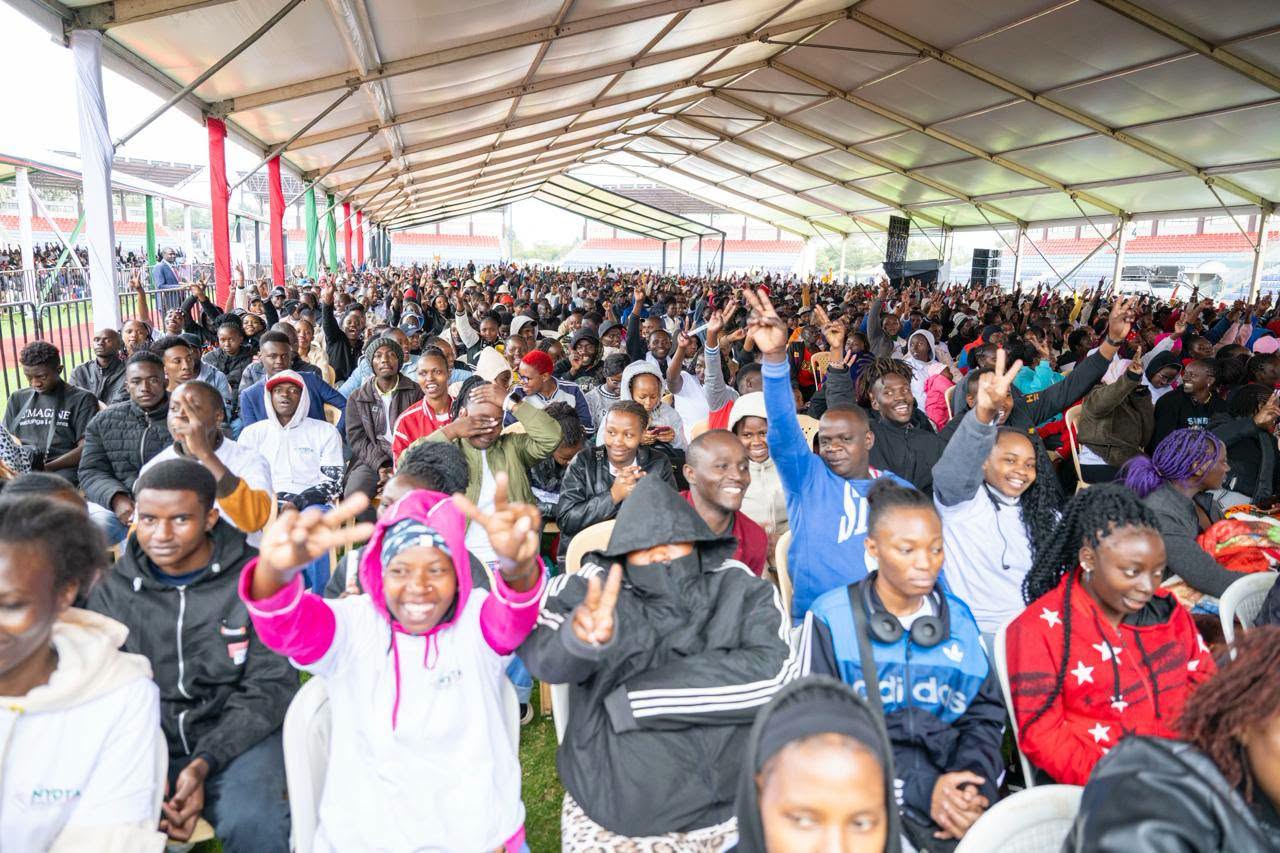
Mang’eni maintained that the compulsory savings element was intentionally incorporated into the NYOTA Programme to protect young entrepreneurs from financial shocks that often affect small businesses.
She noted that many start-up businesses struggle because owners lack emergency savings to cushion them against unexpected expenses, declining sales or other economic challenges.
“We know if you’re doing a business, a business is likely to be exposed to a number of shocks. Savings were put into the project design to provide a de-risking mechanism,” she said.
The savings component, she explained, provides participants with financial security while encouraging responsible business management and long-term planning.
Rather than spending every shilling immediately after receiving funding, beneficiaries are encouraged to build financial reserves that can support their enterprises during difficult periods.
Mang’eni also revealed that affected participants were informed before the second tranche of funds was released.
According to the PS, the programme management sent notifications warning beneficiaries that withdrawing all their savings would affect subsequent payments.
“We communicated to them two days before. We sent them messages and told them we could see they had withdrawn all their savings, so they would receive less,” she said.
The advance communication, she added, was intended to ensure transparency and allow beneficiaries to understand why the amount deposited into their accounts would differ from expectations.
Beyond addressing concerns over the disbursements, Mang’eni also responded to allegations that political considerations influence beneficiary selection.
She firmly dismissed claims that membership in any political party plays a role in determining who qualifies for the programme.
“This process began in September last year. Among the eligibility criteria, there was nothing about political parties,” she stated.
The PS challenged media organizations, civil society groups and independent observers to verify the integrity of the programme by engaging directly with beneficiaries across the country.
She maintained that the selection process follows established eligibility requirements without political bias.
The NYOTA Fund remains one of the government’s flagship youth empowerment programmes aimed at tackling unemployment by supporting entrepreneurship and small business development.
Beyond providing financial support, the initiative focuses on equipping young people with business management skills, financial literacy, savings discipline and practical entrepreneurship training.
Officials believe that combining funding with structured financial education increases the likelihood that supported businesses will survive beyond their early stages and create sustainable employment opportunities.
The programme also seeks to strengthen financial inclusion by introducing young entrepreneurs to formal savings mechanisms while encouraging long-term investment in their enterprises.
Through partnerships such as the Haba Haba savings platform, beneficiaries gain access to incentives that reward consistent saving while helping build stronger financial foundations.
Government officials have repeatedly argued that access to capital alone is not enough to guarantee business success.
Financial discipline, proper planning, continuous savings and resilience against unexpected challenges remain equally important ingredients for building successful enterprises.
Mang’eni said those principles explain why the savings requirement remains a central feature of the NYOTA Programme despite concerns raised by some beneficiaries.
Read Also: Kenyan marathoner remanded over Ksh8 million land fraud case
She encouraged participants to preserve their savings throughout the project to maximize the benefits available under the programme, including matching grants that can significantly increase business capital.
With thousands of young Kenyans already benefiting from the initiative, the government hopes the NYOTA Fund will continue creating sustainable enterprises, expanding employment opportunities and nurturing a new generation of financially disciplined entrepreneurs capable of driving Kenya’s economic growth.