
William Ruto: Why Intelligence Collaboration Is Key to AU Reform

African Union (AU) reform has remained one of the continent’s most ambitious but it remains one of most difficult political projects.
Despite successive leaders have acknowledged the need to modernize the continental body, progress has often been slowed by concerns over sovereignty, financing, and institutional efficiency.
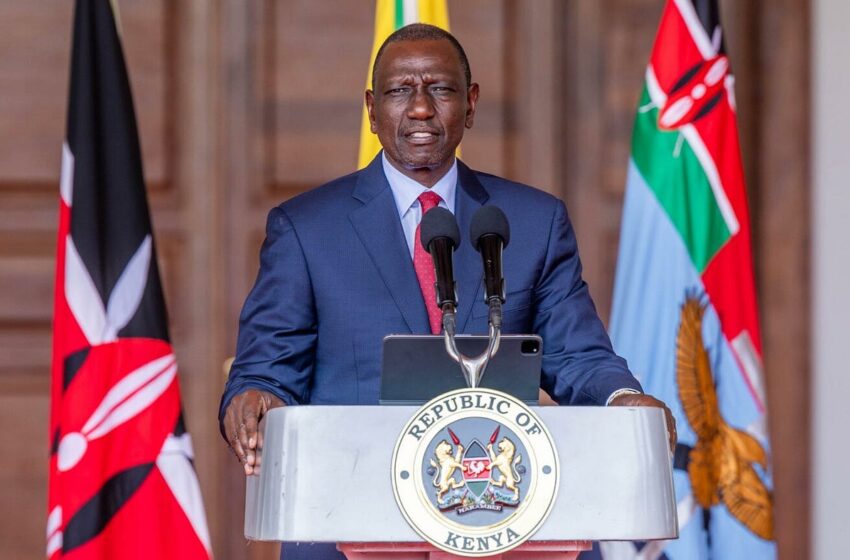
Kenya president William Ruto’s recent engagement with the Committee of Intelligence and Security Services of Africa (CISSA) suggests a different approach, one that recognizes intelligence collaboration as a critical foundation for meaningful reform.
To many of those who follow African football news, intelligence cooperation may appear unrelated to institutional restructuring. However, many of the obstacles that have historically undermined AU reforms are rooted in security concerns and the reluctance of member states to surrender influence over matters they consider vital to national interests.
Bringing intelligence and security agencies in reform discussions, Ruto is attempting to build confidence among governments that a stronger African Union can coexist with national sovereignty rather than threaten it.
“Reforming the African Union is not simply an administrative exercise; it is fundamentally a political process that depends on confidence-building among states. Intelligence collaboration can provide the assurance necessary for governments to embrace stronger continental institutions,” says Adekeye Adebajo.
The Security Dimension of AU Reform
| Challenge | Impact on AU Reform | How Intelligence Cooperation Helps |
|---|---|---|
| National sovereignty concerns | Slows transfer of authority to AU institutions | Builds confidence that national interests remain protected |
| Financial constraints | Limits implementation of reforms | Supports coordinated security spending and resource sharing |
| Institutional inefficiency | Delays decision-making | Improves coordination and information sharing |
| Political mistrust | Reduces willingness to integrate | Encourages trust through intelligence collaboration |
African leaders have debated how to create a more effective and financially sustainable AU for many decades. Reports such as the Kagame Reform Agenda have emphasized the need for streamlined decision-making, stronger institutions, and greater financial independence. However, the implementation has often been slow because member states remain cautious about transferring authority to continental structures.
Security agencies occupy a unique position within government as they are responsible for assessing threats, protecting state interests and safeguarding national stability. When you study the Kagame report you will find out that the intelligence institutions support continental initiatives, political leaders may feel more confident that integration efforts will not undermine their countries’ strategic interests.
Clear picture that it brings clearly show is that this is actual point where CISSA becomes particularly relevant. Being a platform that brings together intelligence and security chiefs from across Africa, it gives out an opportunity to build trust among member states while fostering a shared understanding of emerging security challenges. Such cooperation can reduce suspicion and create an environment where institutional reforms are more likely to gain political support.
Why Trust Matters More Than Policy Documents
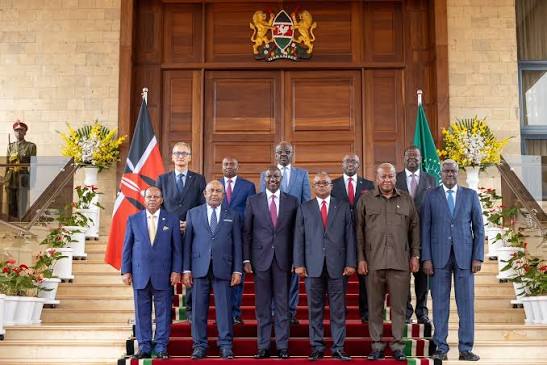
One of the greatest barriers to AU reform has not been the absence of proposals but the absence of trust. Many governments fear that stronger continental institutions could weaken national decision-making powers or create new political vulnerabilities.
Intelligence collaboration addresses this challenge differently from traditional diplomacy. Instead of relying solely on political declarations, it creates operational relationships among institutions responsible for national security.
The time governments trust one another’s intentions, negotiations become easier and reforms become more achievable. In this sense, intelligence cooperation functions as a strategic enabler of political integration rather than merely a security tool.
Strengthening Africa’s Response to Modern Threats
The case for intelligence-driven collaboration becomes even stronger when considering the nature of contemporary security threats. Terrorism, cybercrime, transnational organized crime, illegal arms trafficking, and violent extremism rarely respect national borders.
No single African country can effectively address these challenges in isolation. A fragmented approach creates security gaps that can be exploited by criminal networks and extremist groups. A high level of intelligence coordination enables governments to identify threats earlier, respond more effectively, and reduce vulnerabilities across the continent.
An AU that is supported by stronger intelligence networks is therefore better positioned to fulfill its peace and security mandate. Enhanced cooperation can strengthen institutions such as the AU Peace and Security Council while improving the continent’s overall capacity to prevent and manage conflicts.
The Economic Case for Security Cooperation
Security and economic development are deeply interconnected. Investors seek predictable environments, businesses depend on stability, and regional trade requires secure transport corridors. Failure to put into place an effective security cooperation makes the goals of the African Continental Free Trade Area (AfCFTA) become more difficult to achieve.
Ruto’s engagement with Africa’s intelligence community highlights this reality. A more coordinated security architecture can help protect trade routes, reduce conflict-related disruptions, and strengthen investor confidence across the continent.
However, as the continent pursues deeper economic integration, intelligence cooperation may become just as important as trade agreements and infrastructure investments. Stable governance and collective security create the conditions necessary for long-term growth.
A Pragmatic Path Forward
Intelligence collaboration alone cannot solve every challenge facing the African Union, it offers a practical mechanism for addressing one of the reform agenda’s most persistent obstacles: trust among member states.
President Ruto’s approach reflects an understanding that institutional reform is not solely a bureaucratic exercise. It requires political confidence, strategic alignment, and a shared commitment to continental goals. By bringing intelligence and security agencies into the reform conversation, he is seeking to build the foundations needed for broader political and economic integration.
If this strategy succeeds will depend on the willingness of member states to translate cooperation into concrete reforms. However, it underscores an important reality as a more effective African Union will require not only stronger institutions but also stronger trust between the nations it seeks to unite.