
5 Pillars of Ferdinand Omanyala’s Historic 2026 Sprint Dominance

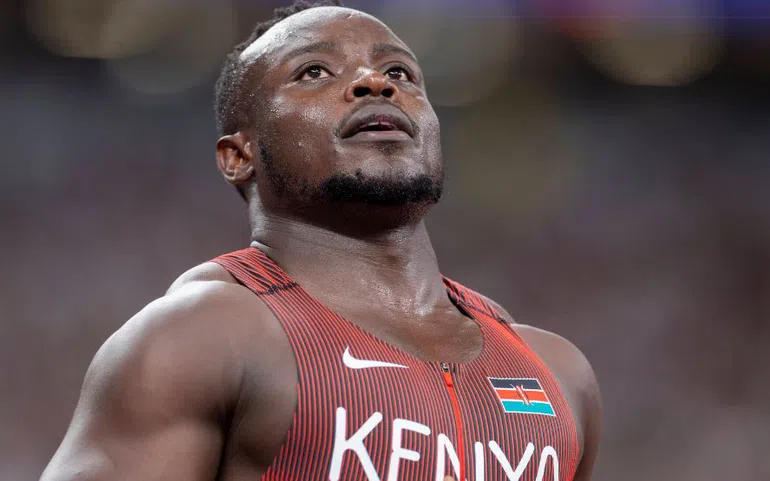
Africa’s fastest man, Ferdinand Omanyala, has orchestrated a masterclass in career longevity and tactical evolution throughout the 2026 season.
By the time he reached the Diamond League stage in Shanghai, it was evident that the Kenyan star had moved beyond being a regional sensation to becoming a model of global sprinting consistency.
Omanyala’s recent performances are the fruit of a deliberate, high-stakes overhaul of his daily environment and training philosophy.
5.Tactical Relocation to South Africa

The decision to move his preparation base from the familiar tracks of Nairobi to the high-performance centers of South Africa has proven to be a masterstroke. This relocation allowed Omanyala to escape the comfort of his home environment and immerse himself in a dedicated “sprint culture” that South Africa has cultivated over decades. The move provided access to world-class sports science facilities and specialized coaching insights that are often hard to replicate elsewhere on the continent.
Beyond the physical facilities, the relocation offered a unique psychological edge. By training in South Africa, Omanyala was able to foster a sense of focus that comes with being in a “boot camp” setting, away from the domestic distractions that naturally follow a national hero. This solitude allowed him to focus entirely on the minutiae of his sprint mechanics, from his blocks exit to his transition phase, ensuring every movement was optimized for maximum velocity.
The environmental change also addressed the logistical needs of an elite sprinter. South Africa’s lower altitude compared to Nairobi,and its proximity to key early-season meets like the Cape Milers Continental Tour, meant less travel fatigue and better physiological adaptation for short-burst speed. This strategic positioning allowed him to open his outdoor campaign with a sharp 10.19-second win, setting a dominant tone for the rest of his southern circuit.
4.Overhauled Heavy Loading Programme

Central to Omanyala’s 2026 resurgence is a radical shift in his physical conditioning, characterized by what he describes as “more loading.” This approach involved increasing the intensity and volume of his weight room sessions and track intervals during the off-season.
The goal was to build a more robust power base that could withstand the rigors of a long Diamond League season without the mid-year dip in form that often plagues sprinters.
Omanyala has always been known for his top-end speed, but his 2026 form shows a much more violent and efficient drive phase.
By strengthening the posterior chain and improving his force application against the ground, he has managed to stay level with the world’s best starters, allowing his natural closing speed to secure podium finishes in high-stakes environments.
To balance this heavier workload, his team integrated advanced recovery protocols to ensure the 30-year-old athlete remained injury-free. The increased training weight was carefully monitored alongside nutritional and physiotherapeutic support, ensuring that the “loading” didn’t lead to burnout. The result is an athlete who looks physically stronger and more resilient than in previous years, capable of dipping under the 10-second mark multiple times within a single month.
3.Normalizing the Sub-10 Standard
Omanyala has achieved something rare in 2026: he has made the sub-10 second performance feel like a routine expectation rather than a career highlight. With four sub-10s already clocked before the season reached its peak, he has established a “new normal” for African sprinting. This streak began in earnest at the Addis Ababa Grand Prix, where his 9.98-second victory signaled to the world that his training adjustments were yielding immediate, elite-level results.
The psychological impact of this consistency cannot be overstated. When an athlete knows they can consistently run 9.95 or 9.96, it changes how they approach a Diamond League final. In Shanghai, despite a crowded field featuring Kenneth Bednarek and Gift Leotlela, Omanyala remained composed, clocking 9.98 to finish second. This level of performance ensures that even on a “bad day,” he remains a threat to any podium in the world.
This mastery was perhaps best displayed at the Kip Keino Classic in front of his home fans.
Under the immense pressure of a packed Nyayo National Stadium, he delivered a season-best 9.96. By maintaining technical discipline under such emotional stakes, he proved that his sub-10 standard is a product of muscle memory and professional maturity, rather than just favorable wind or track conditions.
2.Leading the National Relay Revolution

While his individual accolades are numerous, Omanyala’s role in the Kenyan 4x100m relay team has sparked a national revolution in short-distance running. Traditionally a nation known for the marathon and middle-distance excellence, Kenya has lacked a world-class sprint presence in the relays. Omanyala has changed that narrative, acting as both the anchor and the inspiration for a quartet that is now breaking national records on the global stage.
At the World Relay Championships in Gaborone, Omanyala’s influence was palpable as he led Meshack Babu, Mark Otieno, and Ronald Koech to a historic performance. His presence on the team brings a level of gravity that forces competitors to take Kenya seriously. The leadership he provides during training,sharing the insights he gained from his South African base, has elevated the technical proficiency of the entire squad, particularly in the high-pressure baton exchanges.
This relay success is building a sustainable legacy for Kenyan athletics. By showing that a Kenyan team can compete with the world’s best in a sprint relay, Omanyala is opening doors for younger athletes who might have previously felt pushed toward the 5,000m or 10,000m events. He is proof that with the right leader and a focused technical approach, Kenya can diversify its dominance across all track disciplines.
1.Strategic Focus on Beijing 2027

Every race Omanyala runs in 2026 is a calculated step toward the 2027 World Championships in Beijing. He is not merely chasing individual race wins; he is gathering data and building the physiological foundation required to peak on the world’s biggest stage. The focus is on longevity and championship-style racing, which involves navigating multiple rounds and maintaining top speed across several days of competition.
The 30-year-old sprinter is acutely aware that global medals are won by those who can replicate 9.9-low performances under fatigue. By testing himself in the Diamond League circuit against the likes of Andre De Grasse and Jerome Blake, he is learning the nuances of his rivals’ strategies. Each second-place finish, like the narrow margin in Shanghai, serves as a vital lesson in race management that will be applied in the Beijing finals.
Ultimately, the 2026 season is about cementing a legacy. Omanyala wants to be remembered not just as a fast runner, but as the athlete who broke the ceiling for African sprinters. By aiming for a fifth sub-10 performance in Xiamen and keeping his eyes fixed on the 2027 global stage, he is demonstrating a professional discipline that will likely see him remain the king of African sprints for years to come.

