Kenya Trade Mission Billions Questioned As MPs Demand Diaspora Strategy

Kenya’s aggressive foreign trade diplomatic strategy faces intense structural scrutiny after lawmakers challenged whether multi-billion shilling expenditures on overseas promotional tours yield tangible economic value.
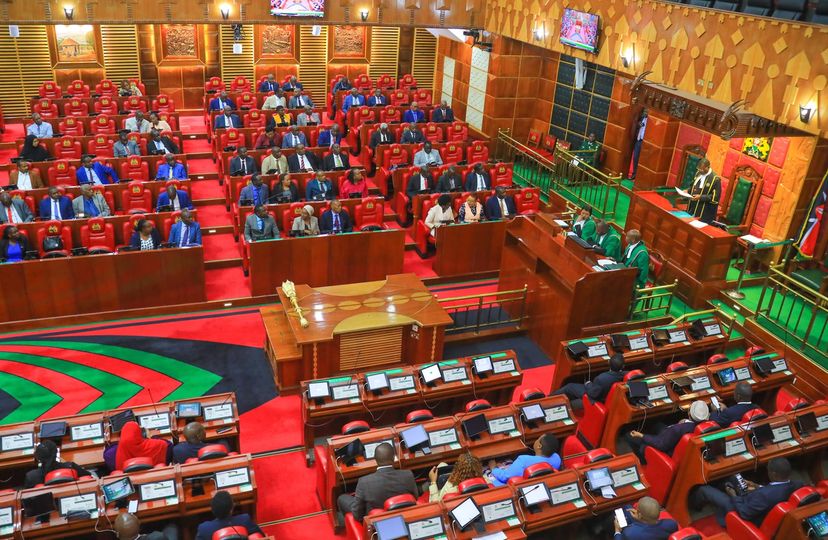
The National Assembly Committee on Trade, Industry and Cooperatives halted review of the 2026/2027 Budget Estimates to demand absolute accountability regarding recurrent international travel costs.
At the center of this legislative dispute is a proposed Ksh1.2 billion allocation earmarked for the International Trade Development and Promotion sub-programme. While trade bureaucrats defend the funding as essential for marketing local products and sealing bilateral pacts, members of parliament warn that taxpayers are financing high-cost foreign excursions that lack measurable performance metrics.
The Structural Deficit: High Expenditure vs Low Footprint
The primary friction point lies in the operational inefficiency of the traditional Trade Attaché Programme. Lawmakers revealed that within key strategic global markets, Kenya’s physical diplomatic footprint remains radically thin.
For instance, the committee noted that Kenya maintains only a single trade officer to oversee the entire United States market—an expansive, multi-state economy. This glaring imbalance exposes a deeper systematic issue within the State Department for Trade:
-
Skeletal Coverage: One public official cannot effectively track consumer trends, build corporate networks, and secure market access across fifty distinct state jurisdictions.
-
High Recurrent Overheads: Sinking capital into traditional foreign service offices generates vast administrative costs (foreign allowances, housing, and travel) without expanding actual field penetration.
-
Proactivity Deficit: Parliamentarians directly chided the department for failing to actively position Kenyan agricultural and manufactured goods in emerging markets, relying instead on passive attendance at static trade fairs.
The Diaspora Alternative: Tapping Commercial Diplomacy Networks
In a decisive policy recommendation, legislators urged the executive to abandon the costly bureaucrat-first framework. The committee proposed a transition toward leveraging Kenyans living abroad to drive national trade promotion.
This legislative stance aligns directly with the newly enacted Kenya Diaspora Investment Strategy (DIS 2025–2030), curated by the State Department for Diaspora Affairs. The DIS policy explicitly seeks to convert historic diaspora remittances—which recently achieved a record $5.04 billion—away from basic household consumption and into structured, productive economic investments.
Under the traditional model, a single trade officer attempts to cover the entire US market, resulting in high travel allowances and low local business integration. In contrast, the proposed diaspora model leverages thousands of citizens already living abroad to act as organic brand ambassadors. This approach eliminates state housing and travel costs while utilizing individuals who already possess deep market immersion and regulatory familiarity within their host countries.
Kenyans residing overseas, especially those holding dual citizenship, possess deep local language fluency, immediate consumer network access, and native regulatory familiarity within their host countries. Activating these individuals as decentralized commercial attachés offers vast cross-border market penetration at a fraction of the current state expenditure.
The Fiscal Conflict: Reconciling the Funding Gap
Despite the push for fiscal consolidation under the broader Bottom-Up Economic Transformation Agenda (BETA), the State Department for Trade informed lawmakers that the proposed Ksh1.2 billion budget is fundamentally inadequate. The department is actively requesting an additional Ksh784 million to close its self-proclaimed operational funding gap.
However, the Trade Committee refused to consider the supplementary injection without empirical proof of past performance. Lawmakers ordered an exhaustive audit report detailing every public shilling spent on international exhibitions and bilateral missions over recent fiscal cycles, alongside the precise export volume growth triggered by those specific trips.
| Budget Component (FY 2026/2027) | Financial Allocation (KES) | Legislative Status |
| International Trade Promotion Base | KES 1.2 Billion | Under strict audit hold |
| Additional Funding Requested | KES 784 Million | Deferred pending performance data |
| Benchmark Annual Diaspora Inflows | USD 5.04 Billion ($5,040,000,000) | Main driver of forex earnings |
If the State Department for Trade is asking for an additional Ksh784 million to bridge its self-proclaimed funding gap, it must first reconcile its mission with these existing diaspora frameworks. Duplicating efforts while ignoring the immense commercial leverage of the global Kenyan community is no longer a viable fiscal strategy as lawmakers clamp down on public finance targets. You can track all ongoing parliamentary budget debates and legislative updates directly on our comprehensive Kenya Frontline Politics and Policy Hub.