
Inside Benni McCarthy’s Tactical Blueprint to Neutralize South Africa at Nyayo Stadium

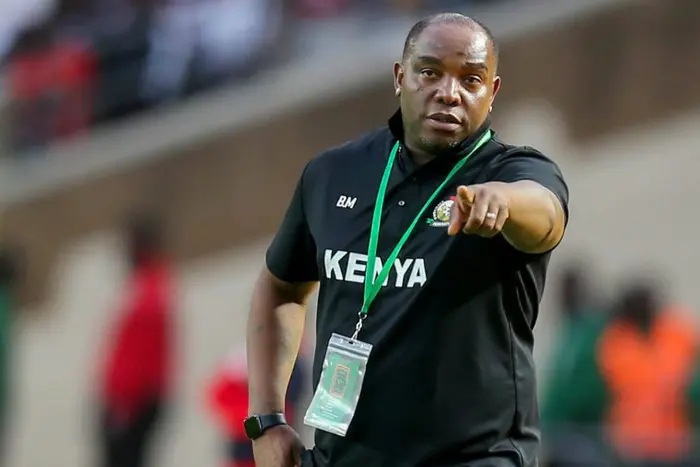
Kenya national men’s football team, the Harambee Stars, head into Tuesday night’s return Africa Cup of Nations (AFCON) 2027 qualifier against South Africa with renewed confidence after fighting back twice to secure a 2-2 draw at Orlando Amstel Arena in Johannesburg.
The result offered head coach Benni McCarthy an important tactical lesson about how to compete against one of Africa’s more established football teams. More importantly, it revealed the adjustments Kenya must make to prevent Bafana Bafana from exploiting spaces in wide areas while allowing the hosts to control more of the contest.
The two teams meet again at Nyayo National Stadium on Tuesday, November 17, with kick-off scheduled for 7pm East African Time. Kenya will be looking to turn the encouraging performance in Johannesburg into a home victory in front of their supporters.
Read Also: KNEC Grade 10 Assessment 2026: Guidelines, Timelines & School Requirements
McCarthy has already indicated that his approach will be more aggressive in Nairobi. The former South African international believes playing at home gives his players greater freedom to impose themselves, although he has also warned against underestimating the attacking quality of Pitso Mosimane’s team.
The tactical challenge is therefore clear: Kenya must combine the confidence to attack with the defensive organisation required to contain Bafana’s dangerous forward players.
What McCarthy Learned From the 2-2 Draw in Johannesburg
Friday’s encounter provided a detailed examination of the strengths and weaknesses of both teams.
Kenya initially struggled to deal with South Africa’s attacking movements, particularly when their wide forwards moved into central positions and created opportunities for overlapping full-backs.
The hosts took the lead in the ninth minute after defender Amos Wanjala turned the ball into his own net under pressure.
Bafana continued to threaten, with Tshepang Moremi among the players causing problems for Kenya’s defensive structure.
However, McCarthy’s response changed the direction of the contest.
The Harambee Stars coach introduced a back-three structure, allowing the wing-backs to push higher and occupy South Africa’s advancing full-backs.
The adjustment helped Kenya regain possession, create more space and compete more effectively across the pitch.
McCarthy explained the thinking behind the tactical switch after the match.
“Ossie (Oswin Appollis) and Tshepang (Moremi) were tucking inside, and you had Iqraam and Rele who were causing us a lot of problems, and then the full-backs were having a free ride every single time, and then we changed it,” he explained.
“We changed into a back-three, and then the wing-backs occupied the full-backs, which I think they didn’t know what hit them, and then we started having a bit of space and more possession, and we were able to do what we did.”
The adjustment demonstrated that Kenya did not necessarily need to abandon their attacking ambitions to compete with South Africa. Instead, they needed a structure capable of addressing the spaces Bafana were exploiting.
1. Midfield Transitions Must Become More Controlled
One of the most important areas McCarthy must address at Nyayo is the transition between defence and attack.
Kenya showed that they could compete with South Africa when they moved the ball quickly and attacked the available spaces. However, their possession was not always controlled enough to prevent the opposition from launching counterattacks.
McCarthy admitted that the first encounter sometimes became too open.
“I thought we played a good game of football, a little too basketball-like for my liking. I would like to have had more control of the game, especially when we went 1-1,” the coach said.
That observation could prove important when selecting the midfield structure for Tuesday’s fixture.
Against a technically capable opponent, losing possession in central areas can expose the entire defensive line.
Kenya therefore need their midfielders to maintain shorter passing distances, provide immediate support to the player on the ball and avoid forcing forward passes when better options are available.
The defensive midfielder will have a particularly important responsibility.
Rather than chasing the ball towards South Africa’s attacking players, the holding midfielder should protect the space in front of the central defenders and prevent Bafana from finding easy passing lanes between the lines.
When Kenya regain possession, the first pass should ideally move the team away from immediate pressure before the attacking players accelerate forward.
This approach would allow the hosts to retain possession for longer periods while reducing the number of dangerous transitions.
Michael Olunga’s ability to hold up the ball could also become important, particularly when Kenya need an outlet during periods of sustained South African pressure.
2. A Back Three Could Be McCarthy’s Most Important Weapon
Friday’s tactical switch provides perhaps the clearest indication of how Kenya could approach the return leg.
South Africa’s wide attacking players caused problems by moving inside and drawing Kenyan defenders away from their original positions.
Appollis and Moremi frequently occupied central spaces, while their full-backs advanced into the areas left available on the flanks.
This movement created difficult defensive decisions for Kenya.
If the central defenders moved wide to follow the attacking players, spaces appeared in the middle. If the full-backs stayed narrow, South Africa’s overlapping players received more freedom to deliver crosses.
McCarthy’s back-three adjustment addressed much of this problem.
Three central defenders provided additional protection against South Africa’s movement through the middle, while the wing-backs were able to track and engage the advancing full-backs.
The structure also gave Kenya more flexibility when moving forward because the wing-backs could provide width without leaving the central defenders exposed.
Read Also: Public Service Commission Recruitment 2026: How to Apply, Shortlist and Interview Process
Maintaining this arrangement could be particularly useful against the attacking combinations involving Appollis, Moremi, Relebohile Mofokeng and Iqraam Rayners.
However, a back three will only work if the wing-backs understand when to advance and when to recover.
Pushing both wing-backs forward simultaneously could leave Kenya vulnerable to quick counterattacks, especially against South Africa’s pace in wide areas.
The better option would be to allow one wing-back to advance while the opposite side maintains a more conservative position, depending on the location of the ball.
This would preserve attacking width without sacrificing defensive balance.
3. Defensive Compactness Will Be Crucial Against Bafana’s Wide Runners
South Africa possess several attacking players capable of creating problems through individual movement and combination play.
Appollis and Moremi are particularly dangerous when they move inside from wide positions, creating opportunities for overlapping defenders and midfield runners.
Mofokeng also provides an attacking threat through his ability to receive between defensive lines, turn quickly and create opportunities around the penalty area.
Kenya cannot afford to defend these movements individually without maintaining the overall shape of the team.
The distance between the midfield and defensive lines must remain compact, reducing the spaces available for South Africa’s attacking players to receive and turn.
The central defenders must also communicate effectively when deciding who should engage the ball carrier and who should provide cover.
One of the dangers of defending against technically gifted attackers is allowing them too much time to assess their options.
Kenya should therefore look to close down passing angles rather than relying entirely on individual tackles.
Read Also: Pharmacy Board Looks to Shape Future of Pharmaceutical Practice
The wing-backs must also avoid being drawn too far inside when South Africa’s forwards move towards the centre.
A disciplined defensive structure would force Bafana to circulate possession around the outside rather than finding easy combinations through the middle.
Limiting their ability to deliver dangerous cutbacks and crosses will be equally important.

