CMA Unlicensed Trading Red Flags 2026: Dangote IPO Warning, Platform Scrutiny, and Capital Markets Tribunal Stalemate

Kenya’s capital markets are facing renewed scrutiny after the Capital Markets Authority (CMA) issued fresh warnings over unlicensed investment platforms and the solicitation of Kenyan investors for the Dangote Petroleum Refinery IPO.
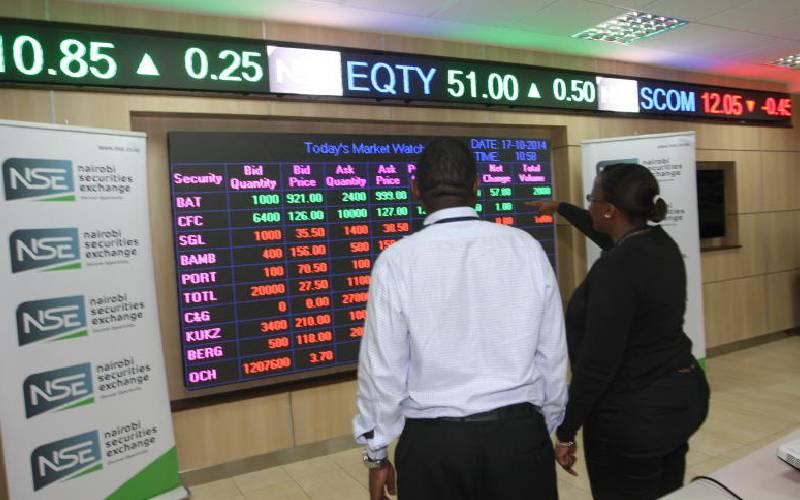
The developments have placed investor protection back at the centre of the financial conversation, coming at a time when the Nairobi Securities Exchange (NSE) has recorded significant market movements and the Capital Markets Tribunal remains unable to hear appeals because of a lack of quorum.
For investors, the latest developments highlight three different but connected issues: whether investment platforms operating in Kenya are properly licensed, whether foreign securities can be marketed to Kenyan retail investors without local regulatory approval, and whether Kenya’s capital-markets dispute-resolution system is functioning effectively.
Read Also: Pharmacy Board Looks to Shape Future of Pharmaceutical Practice
CMA Unlicensed Trading Platforms Under Scrutiny
On September 11, the CMA issued a public caution against a group of entities it said were purporting to offer investment services in Kenya without the required licences or approvals.
The regulator named 16 entities in its advisory, including Global Investment Group (GIG), QVSE, Kore Exchange, Abacus Wealth Management, Brown Advisory Group, B Invest, Bitblock Capital Limited, Maliwave Investments, Monetrix Capital Investments, Twenty-four Hours Pro Expert Trader, Wealth Sharing Group (Opticoin), CBEX, Just Markets, Ultima Cryptocurrency and Lukman-trust fund.
The CMA public caution on investment scams states that the entities were allegedly operating unlawfully and soliciting funds from the public. The Authority said the entities were subject to active investigations involving the Directorate of Criminal Investigations, CMA and other law-enforcement agencies.
The warning gives investors another reason to check the regulatory status of an investment company before depositing money.
Online trading has made financial markets considerably more accessible. Investors can now open accounts, deposit funds and trade products through websites and mobile applications without physically visiting a financial institution.
That convenience also presents a challenge for regulators.
A professionally designed website or mobile application does not automatically mean that the operator is authorised to provide investment services in Kenya. The same applies to investment advertisements circulating through WhatsApp, Facebook, Telegram, Instagram or other social-media channels.
The CMA’s warning is therefore not simply about individual companies. It is also a reminder that investors should establish whether an entity is regulated before transferring money.
Dangote IPO Warning Reaches Kenyan Investors
The second major warning involves the Dangote Petroleum Refinery and Petrochemicals IPO in Nigeria.
The Nigerian Securities and Exchange Commission approved the IPO to open on September 14, 2026. Nigeria’s regulator has advised prospective investors to use only officially designated receiving agents, subscription channels and platforms.
The Nigerian regulator has also warned investors against unsolicited calls, WhatsApp messages, social-media advertisements and other unofficial channels purporting to offer access to the shares.
The issue became particularly relevant in Kenya after the CMA issued a public notice on September 21 concerning information circulating about the offer.
The Kenyan regulator said the Dangote IPO is regulated in Nigeria and has not been submitted to the CMA for consideration and approval under Kenya’s applicable legal and regulatory framework.
The warning is important because it distinguishes between the legitimacy of the Nigerian IPO itself and the legality of marketing or facilitating the offer to investors in Kenya.
The Nigerian offering has been approved by Nigeria’s regulator. That does not, by itself, mean that every person, website or investment platform claiming to sell the shares to Kenyans has regulatory approval to do so in Kenya.
The CMA has therefore urged investors to independently verify the authenticity and source of any prospectus or other offering document before sending money or providing personal and financial information.
What Kenya’s Capital Markets Act Says
The legal framework governing public offers provides an important part of the answer.
Under Kenya’s Capital Markets Act, a public offer includes an offer made to any section of the public in Kenya, however selected. Section 30A further states that an issuer or offeror should not make a public offer of securities unless a prospectus has been submitted to the Authority for approval, subject to the provisions and exemptions contained in the law.
The Capital Markets (Public Offers, Listings and Disclosures) Regulations, 2023 also establish requirements relating to public offers, listings and disclosures in Kenya. The regulations provide that a public offer can include communication presenting information about transferable securities and their terms where that communication is designed to, or could, reach at least 100 people.
That legal framework helps explain why the CMA has taken an interest in the Dangote IPO even though the offer is regulated in Nigeria.
A foreign securities offering may be legitimate in its home jurisdiction while still raising separate questions if it is being promoted or offered to the Kenyan public.
The regulatory question is therefore not simply whether Dangote Refinery is a genuine company or whether the Nigerian IPO exists.
The question for Kenyan investors is also whether the specific person, intermediary or platform offering access to the shares is authorised to undertake that activity within Kenya’s regulatory framework.
Read Also: Top Comoros Official Hospitalized in Nairobi Amid Rising Tensions in Moroni
Social Media Creates a New Investor-Protection Challenge
The Dangote warning also demonstrates how quickly information about international investments can move across borders.
A potential investor does not necessarily encounter an IPO through a traditional stockbroker or financial newspaper. The first point of contact can now be a WhatsApp message, a Facebook advertisement, a Telegram group or a website promising a simple route into a foreign share offering.
Nigeria’s Securities and Exchange Commission has already warned investors about misleading promotions surrounding the Dangote offering. In June, the regulator issued cease-and-desist directives over advertisements and digital promotions connected to a purported securities offering before an application had been filed with the Nigerian regulator.
The SEC’s September guidance similarly tells investors to verify websites, platforms and links before providing personal or financial information and to use only approved subscription channels.
For Kenyan investors, the message is similar: the existence of an investment opportunity online is not evidence that the person collecting money is authorised.
Capital Markets Tribunal Paralysis
The investor-protection concerns are unfolding alongside another problem within Kenya’s capital-markets system.
The Capital Markets Tribunal has reportedly been unable to hear and determine appeals because it has lacked the required quorum since mid-May 2026.
A September 21 report by Business Daily said the Tribunal had been without quorum for close to five months, leaving several corporate disputes and regulatory appeals in limbo. The Tribunal had been reconstituted in June 2023 after years of inactivity.
The institution has an important role in Kenya’s capital-markets framework.
Under the Capital Markets Act, parties aggrieved by certain decisions of the CMA can appeal to the Tribunal. The specialised forum provides a mechanism for handling disputes arising from regulatory action within the capital markets.
A prolonged lack of quorum means cases cannot proceed normally.
That does not determine the merits of the disputes themselves. Instead, it creates uncertainty over when affected companies, investors and regulators will receive determinations.
The Business Daily report cited concerns that the backlog, combined with uncertainty surrounding the disputes handled by the Tribunal, is not favourable for the investment environment.
For companies operating in regulated markets, dispute-resolution mechanisms are part of the wider institutional infrastructure that supports investor confidence.
NSE Volatility Adds to the Background
The regulatory developments also come against a backdrop of considerable movement on the NSE.
According to the Standard Investment Bank weekly market wrap, the Kenyan equity market ended the week in negative territory.
The NSE All Share Index (NASI) declined 2.5 percent week-on-week, while the NSE 10, NSE 20 and NSE 25 indices fell by 3.3 percent, 4.1 percent and 3.4 percent respectively.
Trading activity increased to $72.3 million during the week, while foreign investors recorded net outflows of $19 million.
Several major counters also recorded declines. KCB Group fell 7.4 percent over the week, while Equity Group declined 3.4 percent, according to Standard Investment Bank.
The figures should, however, be viewed in context.
Market volatility is not itself evidence of regulatory failure or investment fraud. Share prices can move because of company-specific developments, investor flows, valuations, economic expectations and international conditions.
The significance of the September developments is that investors are being asked to distinguish ordinary market risk from risks created by unlicensed operators or misleading investment solicitations.
What Investors Should Check
The latest CMA warnings offer several practical lessons for investors.
Before depositing money with an online investment platform, an investor should first establish whether the company is licensed by the relevant regulator and whether the specific service being offered falls within its authorised activities.
Investors considering a foreign IPO should also establish which regulator oversees the offer, whether the offer has the necessary regulatory clearance for solicitation in Kenya and whether the intermediary handling the transaction is authorised.
Official prospectuses should be obtained from recognised sources rather than forwarded messages or unverified websites.
The CMA investor-protection resources and official communications from regulators can provide a starting point for verification.
The same principle applies to investment promises that appear unusually attractive. Claims of guaranteed returns, preferential allocations or urgent opportunities to invest should be treated cautiously until the underlying offer and intermediary have been independently verified.
A Market Facing Two Institutional Tests
Kenya’s capital markets are therefore dealing with two different forms of pressure.
The first involves the growing number of investment opportunities reaching Kenyans through digital platforms and cross-border channels. The CMA’s warnings over unlicensed operators and the Dangote IPO demonstrate how quickly investors can encounter products outside the traditional local investment infrastructure.
The second involves the ability of institutions to resolve disputes once they arise.
The Capital Markets Tribunal backlog is separate from the CMA’s warnings over investment scams and the Dangote IPO. However, both developments point to the importance of a functioning regulatory ecosystem.
Effective capital markets require more than investment opportunities and trading platforms. They also require clear rules, properly authorised intermediaries, investor-protection mechanisms and functioning avenues for resolving disputes.
For Kenyan investors, the immediate lesson is to verify before investing.
A foreign IPO may be genuine. A trading platform may look professional. A social-media investment advert may appear convincing. None of those factors should replace a check of the relevant regulatory status.
Read Also: Kenyan marathoner remanded over Ksh8 million land fraud case
In September 2026, the CMA’s message is particularly relevant: before money changes hands, investors should know exactly who is receiving it, what is being offered, which regulator oversees the transaction and whether the intermediary has the authority to conduct the business.
In a financial market where investment opportunities can cross borders almost instantly, due diligence remains one of the most important protections an investor has.