
Kenya moves to transform cancer care

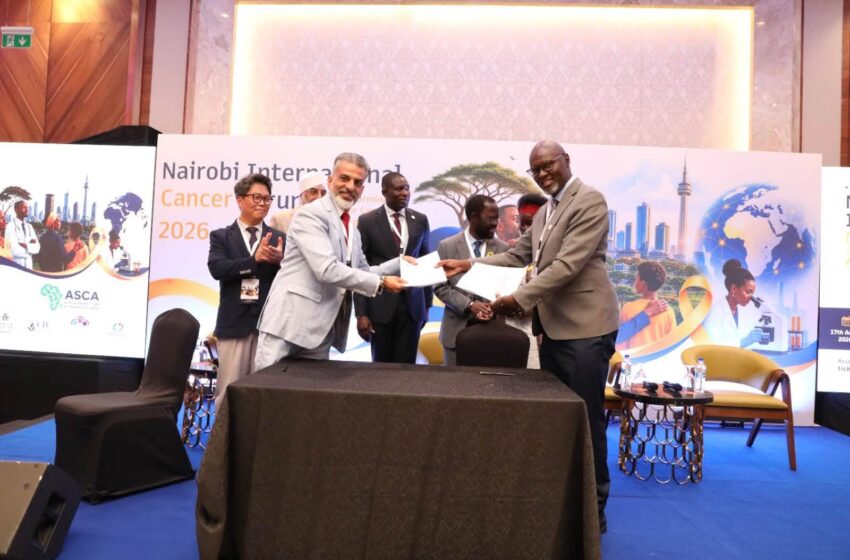
Image/ Ministry of Health
Kenya is moving towards a more integrated approach to cancer care, with the Government calling for stronger links between early detection, health financing, healthcare workers, diagnosis and specialised treatment.
Principal Secretary for Medical Services Dr Ouma Oluga said cancer services must be developed within a stronger and more equitable health system rather than relying mainly on specialised treatment centres.
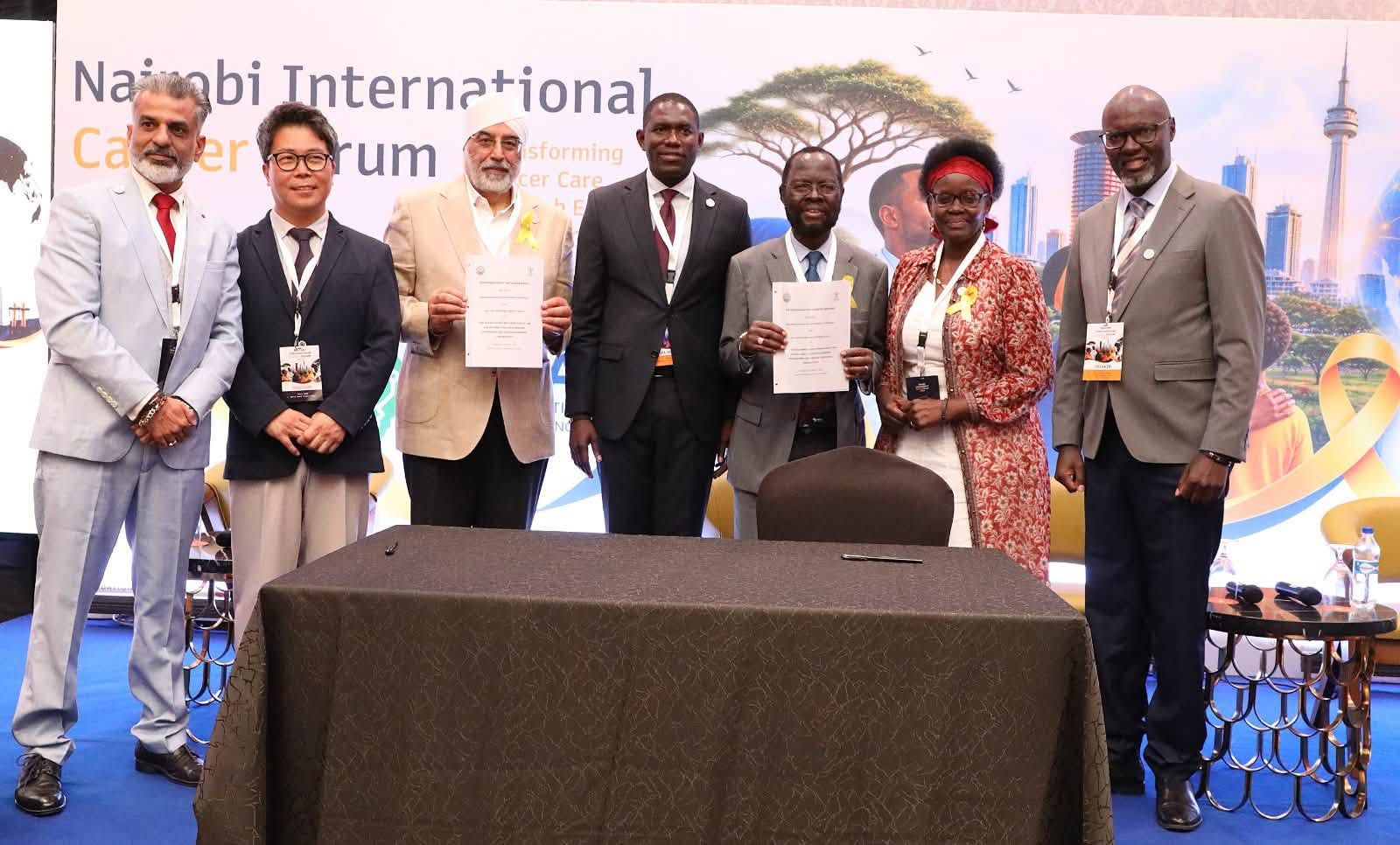
Oluga made the remarks on August 17, 2026, while delivering the keynote address at the Nairobi International Cancer Forum at Emara Ole-Sereni Hotel in Nairobi.
PAY ATTENTION: Follow Kenya Frontline WhatsApp channel for more news
He welcomed the proposed Early Cancer Screening Programme in Kisumu and Homa Bay, saying access to timely diagnosis and treatment should not depend on where a patient lives or their ability to pay.
“The question is not simply how we build more cancer services, but how we build a cancer response within a stronger, more equitable and sustainable health system.”
The remarks point to a broader shift in Kenya’s approach to cancer, with greater emphasis on connecting prevention and screening with diagnosis, treatment and follow-up.
Kenya targets earlier cancer detection
Oluga said cancer care should begin before patients reach specialised hospitals.
He called for continued investment in healthcare workers at every stage of the cancer-care pathway, including Community Health Promoters, primary healthcare teams, laboratory personnel, diagnostic specialists, surgeons, oncologists and palliative-care providers.
“Cancer care does not begin at the cancer centre; it begins in communities and primary healthcare facilities.”
The approach places primary healthcare at the centre of efforts to identify cancer earlier.
Community health workers can help create awareness and encourage people to seek appropriate screening, while primary healthcare facilities can connect patients to diagnostic and specialist services.
Screening alone, however, cannot deliver better cancer outcomes.
Oluga said programmes should be assessed not simply by the number of people screened, but by whether patients with positive results proceed to timely diagnosis, referral and treatment.
A comprehensive pathway therefore needs to connect:
Awareness → screening → diagnosis → referral → treatment → follow-up and palliative care.
SHA funding could play a bigger role
Oluga identified the Social Health Authority (SHA) as a critical part of improving access to cancer services.
He said healthcare financing should support the entire patient journey, from prevention and screening through diagnosis, treatment, palliative care and follow-up.
The Principal Secretary also stressed the importance of transparency and accountability.
Patients should receive the healthcare services to which they are entitled, while healthcare providers should be reimbursed for legitimate services and public funds should produce measurable results.
Cancer care can involve multiple stages and extended periods of treatment, making the financing system particularly important.
A patient may require screening, laboratory tests, imaging, specialist consultations, surgery, medicines, chemotherapy, radiotherapy or follow-up services depending on their diagnosis and treatment plan.
Gaps in financing at any stage can create barriers even when other parts of the healthcare system are available.
Kisumu and Homa Bay screening programme
The proposed early cancer screening programme in Kisumu and Homa Bay could provide an opportunity to test a more coordinated approach to detection and referral.
The programme’s success should not be measured solely by the number of people screened.
Patients with concerning results need access to confirmatory diagnostic services, appropriate referrals and treatment.
Referral systems are therefore just as important as screening itself.
Kenya’s broader health policy and cancer-control work will need to connect community-level interventions with county and national specialist services.
Successful lessons from Kisumu and Homa Bay could eventually inform the expansion of early-detection services to other parts of the country.
Proposed Kisumu cancer centre could serve the region
Oluga also highlighted the proposed Chun Jeong-eun Nyong’o Cancer Centre in Kisumu as a potential regional platform for cancer services.
The proposed centre could support prevention, diagnosis, treatment, training, research and specialist networking across the Lake Victoria region.
A regional cancer facility could reduce the distance some patients travel to access specialised services.
Constructing a cancer centre alone, however, would not solve all the challenges facing patients.
A fully functioning regional facility would require trained specialists, diagnostic equipment, medicines, reliable financing and referral links with facilities providing primary and secondary healthcare.
The centre’s success would therefore depend partly on how effectively it is integrated into the wider healthcare system.
Digital health could connect cancer services
Oluga also pointed to digital health and innovation as tools that could connect screening, diagnosis, referral and treatment.
Digital systems can potentially make it easier for healthcare workers to share information and connect patients with specialists outside major hospitals.
Oluga cautioned against simply digitising fragmented services.
His argument is that technology should support an integrated patient pathway rather than create another disconnected system.
Digital health should help healthcare workers follow patients from screening through diagnosis and treatment while giving decision-makers reliable information.
Kenya’s broader digital health strategy and health-system work will therefore be relevant to the Government’s ambitions for a more coordinated cancer-care system.
Kenya pushes local production of medical supplies
The Principal Secretary also called for partnerships that strengthen Kenya’s health sovereignty by supporting local production of medicines, diagnostics and health technologies.
He said international partnerships should leave behind skills, technology, research capability and sustainable investment.
Greater local capacity could reduce vulnerabilities associated with dependence on imported medical products while strengthening domestic expertise.
The Kenya Medical Supplies Authority (KEMSA) is an important part of the country’s medical-supply system, although expanding local manufacturing would require investment in production capacity, technology, regulation and research.
Government wants to avoid parallel systems
Oluga urged stakeholders to build on existing investments in laboratories, disease surveillance, community health, maternal health and health information systems rather than establishing parallel structures.
The approach could reduce duplication and allow cancer services to become part of existing healthcare systems.
Kenya’s devolved healthcare structure also makes coordination between national and county governments important.
County governments oversee much of healthcare delivery, while national institutions retain important responsibilities in policy, specialised services and national health programmes.
Effective cancer care therefore requires cooperation between national institutions, county governments, hospitals, healthcare workers and other partners.
Oluga calls for clear targets
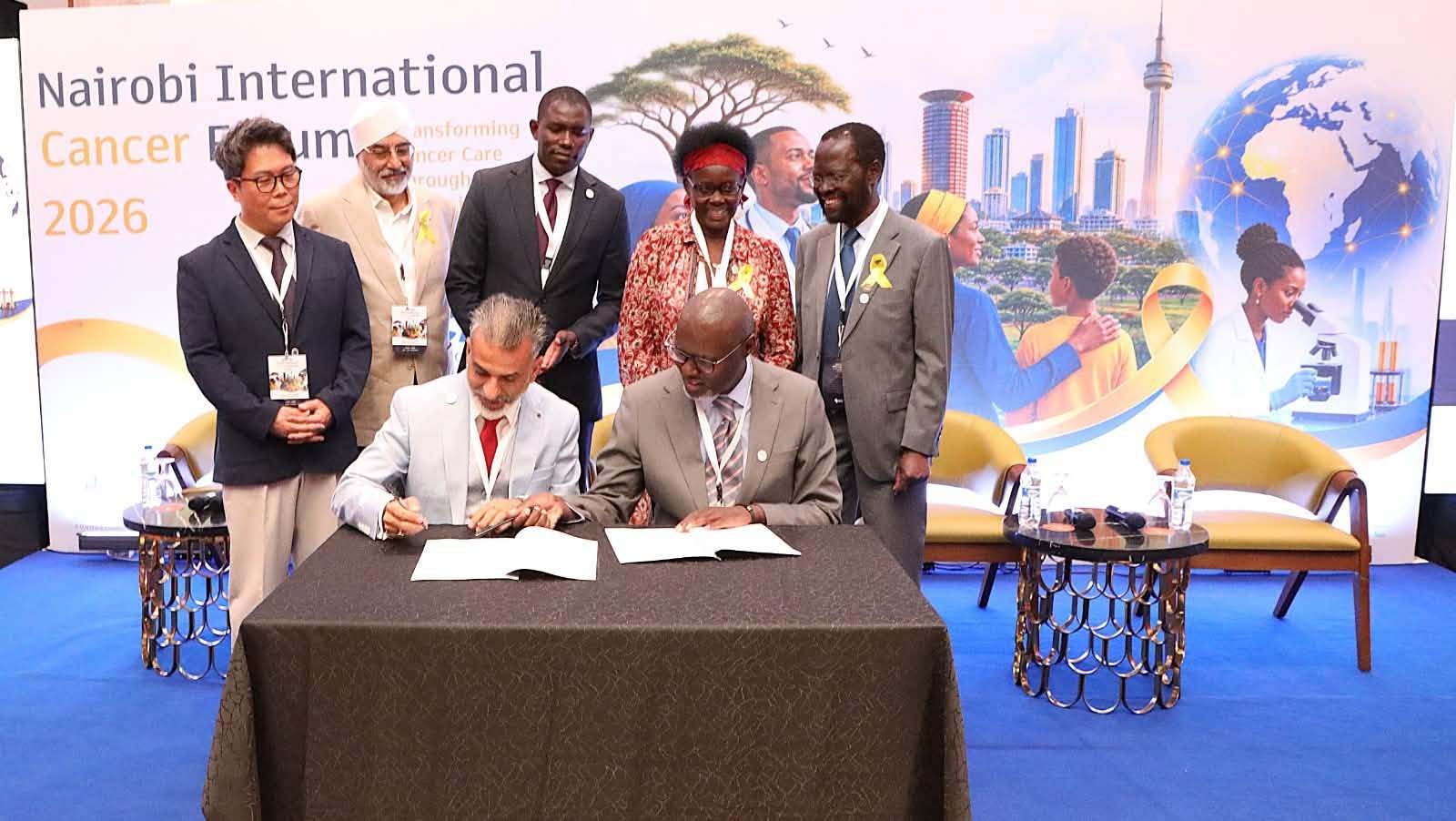
Oluga called for the proposed partnership agreement to clearly define responsibilities, resources, targets and measures of success.
Clear targets would make it easier to determine whether proposed programmes are producing measurable improvements.
He said lessons from Kisumu and Homa Bay should guide the expansion of effective early-detection and coordinated-care models to other parts of Kenya.
Successful programmes could then be evaluated before being scaled nationally.
What the changes could mean for cancer patients
The most important question for patients is whether the proposed reforms result in earlier diagnosis, faster referrals and more reliable access to treatment.
A more integrated system could make it easier for a person identified through community screening to move into diagnostic and specialist services without navigating multiple disconnected parts of the healthcare system.
Implementation will determine whether the proposals deliver those benefits.
Kenya will need adequate financing, trained healthcare workers, diagnostic equipment, medicines, referral systems and functioning health information systems.
Oluga reaffirmed the Government’s commitment to working with county governments, healthcare providers, academia, communities, the private sector and development partners to strengthen early detection and expand regional cancer capacity.
“The future of cancer care will be determined by whether we can connect financing to services, primary healthcare to specialist care, screening to treatment, data to decisions, and international partnerships to local capability.”
Why Kenya’s cancer strategy matters
The Nairobi International Cancer Forum brought together representatives from national and county governments, development and international partners, the private sector, academia and civil society.
The discussions focused on strengthening collaboration in cancer prevention, diagnosis and treatment.
Kenya’s challenge is not simply building additional cancer facilities. The country needs a system in which patients can move efficiently from prevention and screening to diagnosis, treatment and follow-up.
The proposals outlined by Oluga therefore place integration at the centre of Kenya’s next phase of cancer care.
Successful implementation could help reduce some of the geographic and financial barriers that prevent patients from accessing timely cancer services.
The real test will be whether the proposed investments translate into earlier detection, better referral systems and more equitable access to treatment across the country.