
Rebellion or proxy war? The real motive behind Ndindi Nyoro’s new People’s Party

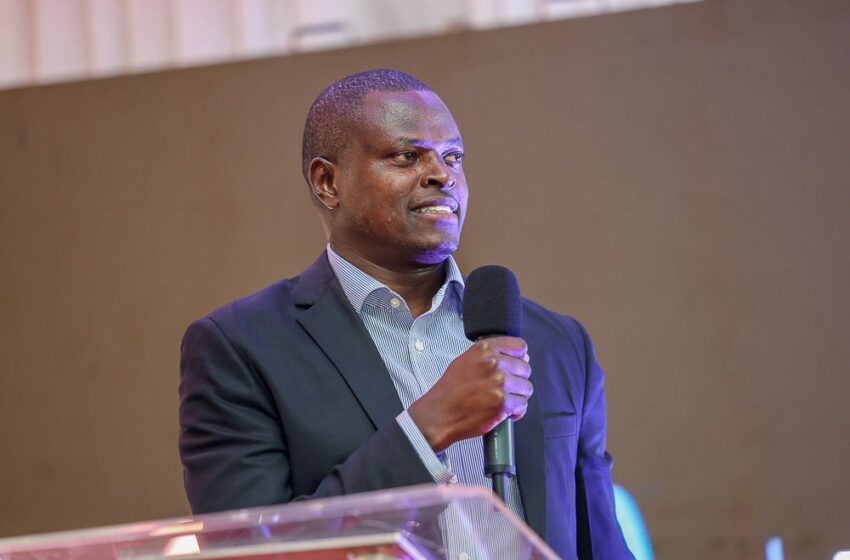
Member of Parliament for Kiharu, Ndindi Nyoro
If Central Kenya’s political history has taught us anything, it is that there are no accidental moves on the mountain, only carefully scripted gambits disguised as spontaneous declarations.
The sudden announcement by Kiharu MP Ndindi Nyoro that he has officially dumped the ruling United Democratic Alliance (UDA) to join the People’s Party of Kenya, taking it straight into the Opposition, has sent shockwaves through the region’s political landscape.
On paper, it presents itself as a daring breakaway by an ambitious young lawmaker who has grown disillusioned with the government he once passionately defended. But beneath the glossy surface of this political rebranding lies a far more cynical calculus that observers across Mount Kenya are already beginning to dissect.
The central question gripping political corridors is simple: Is Ndindi Nyoro truly striking out on his own, or is the People’s Party of Kenya a Trojan horse, discreetly bankrolled by President William Ruto to fragment the vote in Central Kenya and systematically weaken former Deputy President Rigathi Gachagua’s Democratic Congress Party (DCP)?
PAY ATTENTION: Follow Kenya Frontline WhatsApp channel for more news
To understand the suspicion surrounding Nyoro’s latest move, one must examine the precarious political realignment currently taking place in Mount Kenya. Following his high-profile fallout and subsequent impeachment, Gachagua pivoted to solidify his grip on the region through the DCP, positioning himself as the undisputed defender of the mountain against perceived betrayals by the current administration.
The DCP’s rapid consolidation of local grassroots structures created a major headache for State House, threatening to wipe out UDA’s footprint in a region that voted almost as a monolith in 2022.
Enter Ndindi Nyoro. Long viewed as one of the brightest economic minds and articulate communicators within the Kenya Kwanza camp, Nyoro spent months cultivating an aura of strategic neutrality and principled dissent. He noticeably stepped back during Gachagua’s impeachment proceedings, lost his coveted post as Chair of the National Assembly Budget and Appropriations Committee, and gradually transformed into a sharp parliamentary critic of taxation and public debt. It was a masterclass in political distance-building, designed to convince the electorate that he had severed ties with the powers that be.
Yet, politics is driven by outcomes, not narratives. By launching or aligning with the People’s Party of Kenya instead of uniting with existing regional forces, Nyoro effectively guarantees a multi-polar battle in Mount Kenya. A unified opposition under the DCP presented an existential threat to President Ruto’s 2027 re-election mathematics. A divided opposition, split between Gachagua’s regional crusade and Nyoro’s youthful, economic-centric alternative, serves the interests of the incumbent far better.
Skeptics point out that launching and sustaining a nationwide political party, complete with county offices, branding, and mobilization networks, requires immense financial muscle and institutional cover. For a politician who claims to have fallen out with state machinery, the speed and scale of this party rollout raise obvious eyebrows. Is it plausible that Nyoro managed this entirely independently, or is he operating as a proxy sponsored to draw the youth, urban voters, and business community away from Gachagua’s influence?
By framing the People’s Party as a fresh, opposition-leaning platform, Nyoro offers an alternative home for voters who are disgruntled with UDA but remain hesitant to fully embrace Gachagua’s aggressive brand of regional nationalism. It creates a secondary political valve in Central Kenya, effectively diluting the DCP’s attempt to claim a monopoly on regional grievances. If the strategy succeeds, Mount Kenya will enter the next election cycle fragmented into competing camps—allowing State House to negotiate with divided entities rather than face a unified bloc.
However, this strategy carries monumental risks for Nyoro himself. The electorate in Central Kenya has historically been unforgiving toward politicians perceived as political stooges or divisionists during moments of heightened regional identity. If the public comes to believe that the People’s Party is merely a funded vehicle designed to undermine local unity, Nyoro’s carefully curated image as a transformative leader could unravel rapidly. He risks being viewed not as an independent statesman, but as a operative executing a divide-and-conquer strategy on behalf of external forces.
Whether the People’s Party represents a genuine rebellion or a funded state project, one reality is inescapable: the battle for the heart and soul of Mount Kenya has entered a volatile new phase. The emergence of Nyoro’s party ensures that the region will not be a smooth, single-party enclave leading into 2027. As voters scrutinize the real motives behind this bold move, time will tell if Ndindi Nyoro has engineered a path to his own political destiny or simply executed a masterstroke on someone else’s chessboard.

