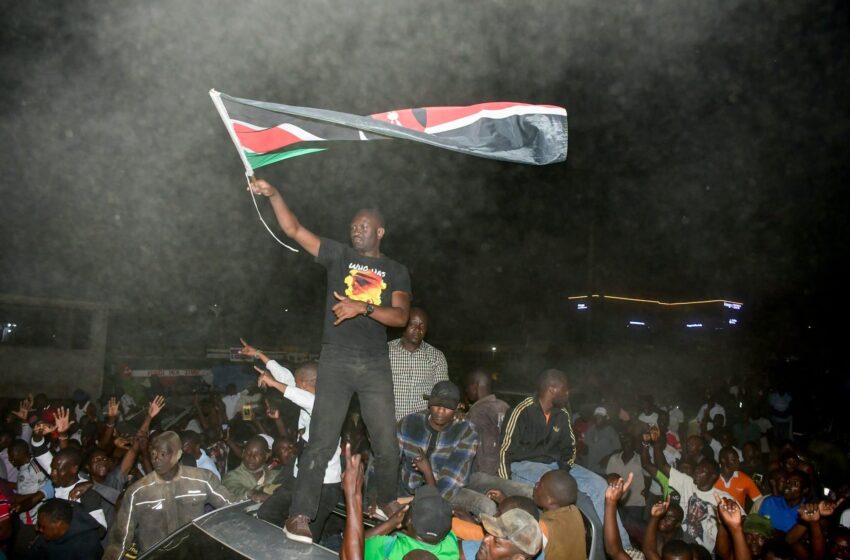
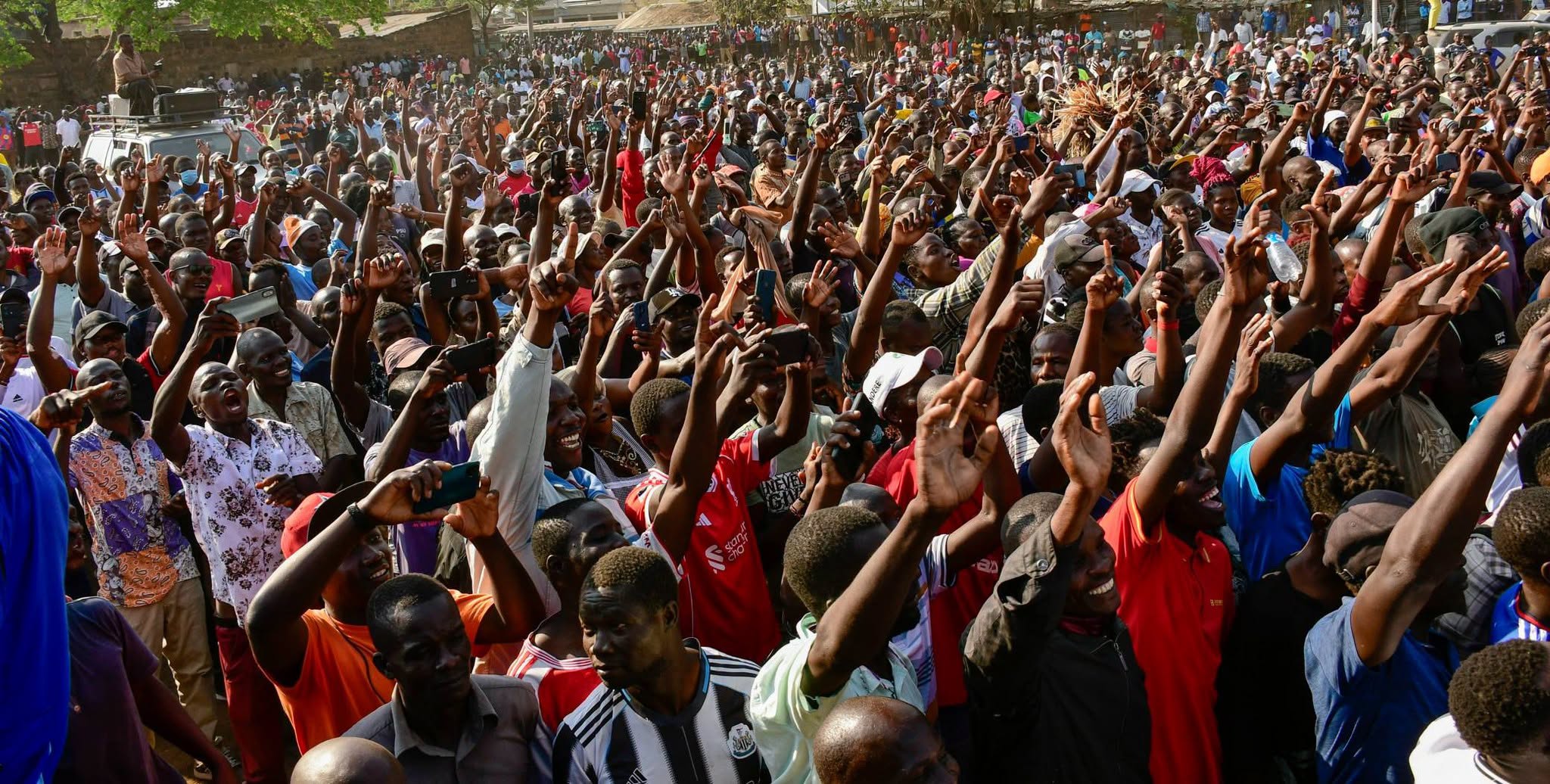
Fear gripped the streets of Homa Bay as political hostility erupted into full-scale violence, transforming routine campaign stops into scenes of destruction and terror.
What was framed as a series of spontaneous local clashes was actually a calculated, well-funded operation designed to silence political rivals and block key leaders from stepping foot in the county.
Behind the chaos lay days of secret meetings, financial incentives, and a coordinated network of mobilisers who turned young people into armed combatants.
The unrest targeted the Linda Mwananchi team—a breakaway Orange Democratic Movement (ODM) faction featuring Siaya Governor James Orengo, Nairobi Senator Edwin Sifuna, and Embakasi East MP Babu Owino. Planning began days prior to the planned Sunday rally, starting with a high-level political gathering on August 2 following a homecoming ceremony for Homa Bay Woman Representative Joyce Osogo. The directive was straightforward: block the rival political group at all costs.
Tensions escalated dramatically on the eve of the rally when Homa Bay Town MP Peter Kaluma hosted a meeting at Lo Rateng to map out execution details. Captured on video addressing a cheering crowd, the legislator explicitly called for the removal of political opponents from the area.
“We are now issuing a command that whoever says one term should be flushed out,” he said, to cheers from his supporters.
Following the rally, armed youths aboard motorcycles swept through town to enforce the directive. Armed with machetes and crude weapons, they targeted local establishments to purge suspected opponents. The earliest casualty was the Homa Bay Tourist Hotel, where armed men stormed the premises, destroyed the CCTV infrastructure, forced guests out, and ransacked 21 rooms.
By Sunday morning, strategic blockades composed of stones and debris paralyzed transport and local commerce. Ordinary citizens found themselves caught in the crossfire as armed groups operated across major transit routes. Reports from a local news investigation highlighted the pre-planned nature of the operations, revealing how youth mobilisers coordinated movement through central leaders using encrypted phone calls and financial payouts.
The Anatomy of Mobilisation
According to a detailed report by Nation, the coordination relied heavily on key figures acting as bridges between politicians and youth groups from informal settlements such as Shauri Yako, Sophia, Misita, and Got Rabuor. Central to the operation was an ODM youth leader known locally as “Commander” Abdi, who organized group logistics and weapon distribution. To maximize impact, youths were ferried from surrounding areas, with payment tiers set based on distance and risk.
While local operatives received baseline compensation, recruits transported from neighbouring Migori County were paid up to Sh4,000 for their participation. The physical preparations were equally calculated; participants underwent conditioning and used drugs to boost confidence before entering confrontations. Weapons ranged from standard household items to custom-welded dual machetes designed for extended reach.
The violence reached a crisis point when fighting spilled into the Homa Bay County Teaching and Referral Hospital, where goons attempted to invade the facility to target injured rivals receiving emergency care. Police intervention was required to secure the building and assist medical personnel with transferring patients safely.
The Linda Mwananchi convoy similarly anticipated hostility, travelling with heavy security personnel and licensed firearm holders. The resulting standoffs at Lala, Ndhiwa, and Kodoyo Junction saw tear gas deployment, pelted vehicles, exchange of gunfire, and multiple torched cars along dusty transit routes.
The Aftermath and Law Enforcement
By the time the clashes subsided, two people—including a police officer—had lost their lives, dozens suffered severe injuries, six vehicles were reduced to burnt shells, and local businesses suffered heavy losses from looting. Victims included market traders and motorists caught in roadblocks, alongside young participants left with severe cut wounds.
Law enforcement agencies have since initiated sweeping operations to apprehend key coordinators and suppress further violence across the region. Authorities confirmed the arrest of dozens of suspects linked to both factions, seizing an array of crude weapons, customized blades, and firearms.
“I wonder how someone in his rightful mind decides to join two machetes. Artisans who weld the machetes should also question those who give them the task,” he said.
Police spokesperson Muchiri Nyaga confirmed that 37 suspected gang members were taken into custody equipped with machetes, ropes, metal rods, knives, rungus, batons, and torches. Officers are actively pursuing key individuals suspected of orchestrating the violence, including Oliver Jaoko, alias “Olivetti,” who remains at large. Furthermore, Directorate of Criminal Investigations (DCI) officers intercepted transport vehicles across Kisumu and Migori counties, arresting additional individuals allied with opposing sides and recovering weapons including a loaded Ceska pistol.
The deliberate deployment of armed youths highlights a troubling trend of political violence used to control territories and suppress alternative viewpoints. As investigations continue, residents of Homa Bay are left to rebuild amid damaged infrastructure and heightened political divisions, confronting the heavy human and economic cost of orchestrated chaos.