Talanta Stadium Costs Trigger Budget Alarm as Kenya Reworks AFCON 2027 Plans

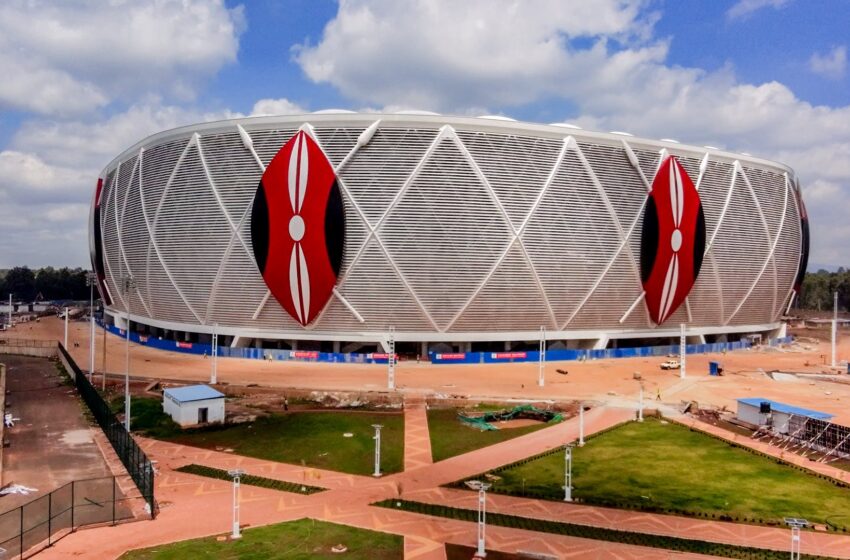
The grand vision of the East Africa “Pamoja Bid” bringing the 2027 Africa Cup of Nations (AFCON) to the region is facing an infrastructure reality check.
Government officials are overhauling financial plans and narrowing focus onto the most viable sports arenas to avoid missing strict continental deadlines.
Unexpected gaps of Ksh11.02 billion threaten to halt key projects, prompting the State Department for Sports to present a massive Ksh32.24 billion revised budget for the 2026/27 financial year to Parliament. This represents an ambitious leap from the earlier ceiling of Ksh25.49 billion, signaling readiness to deploy significant financial resources to secure co-hosting rights with Uganda and Tanzania.
Read Also: Talanta Stadium: Why 91% Completion Mark Signals Massive Leap Forward for AFCON 2027
What Caused the Massive Deficit?
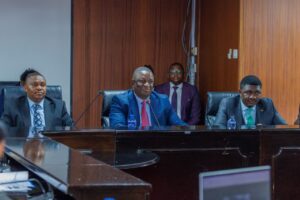
Trouble emerged when Sports Principal Secretary Elijah Mwangi revealed that out of a contractual cost of Ksh15.11 billion for the AFCON stadium program, only Ksh3.74 billion has been settled. The conventional funding vehicle, the Sports, Arts and Social Development Fund (SASDF), remains heavily overcommitted despite its Ksh18.38 billion allocation.
Millions are split across critical obligations including annual loan repayments for Talanta Sports City, ongoing sports events, event management, escrow deposits, and standby letters of credit.
“Given these competing obligations, SASDF is constrained to meet the financing requirements for critical AFCON 2027 projects.”— Elijah Mwangi, Sports Principal Secretary.
Recognizing these limitations, Sports Cabinet Secretary Salim Mvurya confirmed that the state is shifting its funding strategy. Policymakers are looking to direct Exchequer interventions, increased development expenditure allocations, and targeted windfalls from national betting taxes and lottery revenues to insulate the sports tournament from fiscal shortfalls rather than depending on a single strained fund.
Which Stadiums Will Be Saved?
Resource preservation requires the Ministry of Sports to revise its strategy by dropping underperforming assets. The long-delayed Kipchoge Keino Stadium in Eldoret, which remains stuck at an 18 percent completion rate, has officially been removed from the tournament schedule.
Contractors are instead redirecting resources to guarantee the completion of primary, world-class tournament venues. Talanta Sports City Stadium stands at 91 percent completion and serves as the main match venue alongside the renovated Moi International Sports Centre, Kasarani. Nyayo National Stadium and Ulinzi Sports Complex have been relegated to official training grounds to minimize unnecessary luxury spending.
How Will the Remaining Cash Be Raised?
Consolidation of focus onto Talanta Stadium and Kasarani ensures that development spending, which has been pushed to Ksh28.8 billion in the proposed budget estimates, can be highly concentrated where it matters most.
The funds will immediately address unexpected operational costs. An unbudgeted Ksh937 million is required to construct a dedicated power substation for Talanta Stadium to satisfy CAF’s infrastructure parameters.
Eliminating underperforming projects, anchoring the financing framework to betting-tax-backed funding, and securing commitment from the National Treasury to bridge the remaining billions allows the government to keep construction crews working around the clock.
The revised sports framework treats AFCON 2027 not merely as a temporary series of matches, but as an economic driver for infrastructure, youth development, and regional tourism.