
Treasury confronts fresh debt challenge

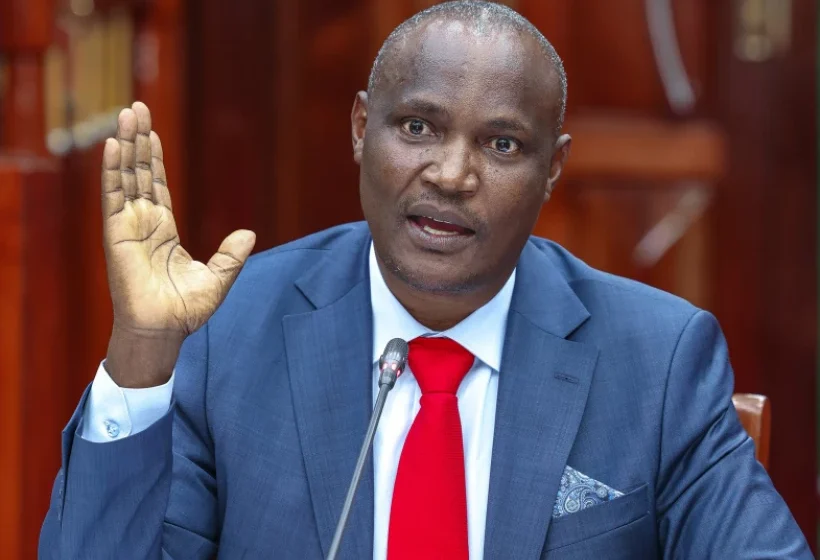
Treasury CS John Mbadi. IMAGE/ Citizen
Treasury borrowed Sh983.7 billion in the financial year ended June 2026, with Sh207.7 billion of the debt going towards recurrent expenditure exposing continued pressure on the government to finance its day-to-day operations without relying on loans.
The disclosure is contained in the draft 2026 Budget Review and Outlook Paper (BROP), which shows that 78.9 per cent of the borrowing was channelled towards development expenditure while 21.1 per cent financed recurrent needs.
The latest figures mean that more than one in every five shillings borrowed by the government was used to meet expenses such as wages, operations and other recurrent obligations rather than directly financing long-term development projects.
The development comes at a time when Kenya is facing severe fiscal pressures, high debt-servicing costs and weaker-than-expected revenue collection, forcing the Treasury to seek additional financing to keep government operations running.
“Over the medium term, the government will ensure adherence to the fiscal responsibility principles,” Treasury officials wrote in the review paper as per Business Daily.
Treasury Struggles to Keep Borrowing Within the Law
The admission is significant because Kenya’s borrowing framework requires the national government to use borrowing for development expenditure over the medium term. Section 15(2)(c) of the Public Finance Management Act, 2012 states that national government borrowing should, over the medium term, be used only for development expenditure and not recurrent expenditure.
The latest figures therefore point to a continued gap between the law and the government’s actual financing needs, even as Treasury seeks to demonstrate that public debt is increasingly being directed towards productive investment.
The situation also comes against the backdrop of President William Ruto’s pledge shortly after taking office in 2022 to end the use of borrowing to finance recurrent government expenditure.
“The government should never borrow to finance recurrent expenditure. It is not right, it is not prudent, and it is not sustainable. It is simply wrong. We must bring ourselves and our country to sanity,” the President said at the time.
Ruto had also pledged that his administration would restore fiscal discipline and reduce reliance on borrowing to meet ordinary government expenses.
“Over the next three years, we must reverse this and go back to a situation where the government contributes to the national savings effort by keeping recurrent expenditure below revenue levels.”
Although the latest figures show an improvement compared with previous years, the Sh207.7 billion allocation highlights how difficult it has been for the government to fully fund recurrent expenditure through ordinary revenues.
In the financial year 2023/24, Kenya borrowed Sh766.4 billion, of which Sh415.7 billion went towards recurrent expenditure. That meant more than half of the year’s borrowing was used to finance government consumption.
The situation improved in 2024/25 when total borrowing increased to Sh854.5 billion, while Sh604.1 billion was allocated to development and Sh250.4 billion to recurrent spending. The development share consequently rose to 70.7 per cent.
The 2025/26 figures represent another step towards reducing the portion of borrowing used to fund recurrent expenditure. However, the remaining Sh207.7 billion is still substantial at a time when the country is struggling with high debt-servicing costs and weaker-than-expected revenue collection.
Development Spending Rises but Falls Short of Target
Kenya’s recurrent expenditure rose to nearly Sh3.29 trillion in the year to June, up from Sh2.95 trillion a year earlier. The spending covers public-sector wages, pensions, debt interest payments, transfers to State agencies and counties, as well as operations and maintenance across government ministries and departments.
Debt servicing has become one of the biggest pressures on the national budget, with a growing share of government revenue being used to pay interest and principal on existing loans.
At the same time, the Treasury has sought to highlight growth in development expenditure as evidence that its borrowing programme is gradually shifting towards investment.
Development expenditure rose from Sh493.66 billion in 2022/23 to Sh546.39 billion in 2023/24 and Sh582.94 billion in 2024/25.
Treasury estimates that development expenditure reached a provisional Sh731.54 billion in 2025/26, the highest level recorded during the four years of the Ruto administration.
However, the government still fell short of its own development spending target for the year.
“Development expenditure amounted to Sh731.5 billion against a target of Sh771.0 billion, translating to an under-spending of Sh39.5 billion. This variance was largely driven by lower-than-projected absorption in development projects, which underperformed by Sh41.5 billion,” Treasury officials wrote in the draft BROP.
The shortfall adds another layer to the debate over public borrowing because the government borrowed nearly Sh1 trillion while failing to fully utilise the development funds it had budgeted for.
Borrowing to finance development is generally considered more sustainable because investments such as roads, dams, schools and hospitals can improve productivity and, ultimately, support economic growth and revenue generation.
Debt-funded recurrent expenditure, by contrast, leaves taxpayers servicing loans after the money has already been consumed through salaries, operations and other routine government costs.
The Treasury has been pursuing fiscal consolidation aimed at narrowing the budget deficit, slowing the accumulation of debt and improving the balance between government revenues and expenditure.
However, the BROP shows that ordinary revenues, including taxes, dividends from State-owned entities and charges for government services, remained insufficient to meet all recurrent obligations.
That shortfall has left the government with limited room to manoeuvre as it faces rising debt-servicing costs, pressure to maintain essential services and demands for higher development spending.
The latest borrowing figures are therefore likely to renew scrutiny of Kenya’s fiscal consolidation programme and its commitment to the Public Finance Management Act.
For the government, eliminating recurrent borrowing will require a combination of stronger revenue collection, tighter expenditure controls and continued efforts to reduce the cost of servicing public debt.
Treasury’s commitment to comply with the borrowing rule in future budgets now places greater pressure on the administration to ensure that every new loan is matched by development spending, while ordinary government operations are funded through sustainable domestic revenues.
The challenge will be turning that commitment into reality as Kenya attempts to restore fiscal credibility while maintaining essential services and investing in long-term economic growth.