
Why Jabali Towers Could Become Turning Point for Kenya’s Urban Development
- Business
Stephen Thumbi
- June 29, 2026
- 0
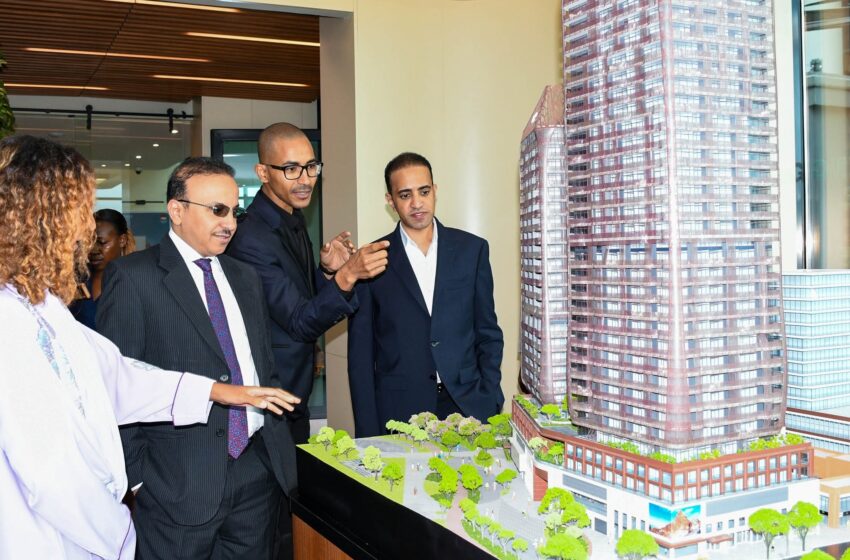
Kenya’s real estate sector has entered a new phase where developers are no longer building isolated apartment blocks or office complexes. Investors are increasingly pursuing integrated communities that combine housing, workplaces, hospitality and retail into self-contained urban centres. The decision to appoint China Road and Bridge Corporation (CRBC) as the main contractor for Jabali Towers in Tatu City reflects that broader transformation.
The mixed-use development is expected to become one of the most ambitious commercial and residential projects currently under construction in Kenya. Beyond its impressive skyline, the project illustrates how changing lifestyles, rising urban populations and investor confidence are reshaping the country’s property market.
Jabali Towers is not simply another high-rise development. It represents the growing demand for live-work-play environments that reduce commuting times while creating vibrant communities where residents can access homes, offices, hotels, restaurants and essential services within a single location.
Also Read: Famyard Enterprises Ltd Driving Structural Transformation In Mt Kenya Property Investment Sector
Why Mixed Use Developments Are Becoming the Future of Kenyan Cities
Traditional urban planning separated residential neighbourhoods from commercial districts.
Modern cities increasingly favour integrated developments where different land uses coexist.
This planning approach creates neighbourhoods that remain active throughout the day instead of becoming deserted after office hours or quiet during working hours.
Developments like Jabali Towers respond to changing consumer preferences.
Professionals increasingly value convenience over long daily commutes.
Businesses benefit from locating close to residential communities.
Retailers enjoy consistent customer traffic throughout the week.
Hotels also gain from proximity to offices and residential populations.
The result is a more efficient urban environment where people spend less time travelling and more time participating in local economic activity.
Tatu City Has Evolved Beyond an Ordinary Housing Estate
Tatu City has gradually transformed into one of Kenya’s most ambitious private urban developments.
The Special Economic Zone combines residential estates, schools, industrial parks, commercial offices and retail centres within a master-planned environment.
Its long-term strategy differs from conventional real estate developments.
Instead of selling individual plots or apartment blocks, developers are creating a complete urban ecosystem capable of supporting thousands of residents and businesses.
That vision explains why demand for residential units continues to attract both local and international investors.
The reported pre-sales achieved before construction demonstrates confidence in the long-term value of integrated developments.
Why CRBC’s Appointment Matters
China Road and Bridge Corporation has become one of the most recognised engineering companies operating across Africa.
Its portfolio extends beyond buildings into highways, bridges, ports, rail infrastructure and large public projects.
Selecting an experienced contractor reduces construction risks associated with complex mixed-use developments.
Large projects require expertise in coordinating multiple engineering disciplines simultaneously.
Residential towers, hotels, office spaces and retail facilities each present unique construction requirements.
Delivering them as a single integrated development demands substantial technical capacity.
Developers therefore often prioritise contractors with proven experience managing large-scale infrastructure.
Project Overview
| Feature | Details |
|---|---|
| Development Type | Mixed-use urban complex |
| Residential Towers | 25 and 36 floors |
| Hotel | 150 rooms |
| Office Space | Grade A commercial offices |
| Retail | 35 shops and restaurants |
| Development Size | Approximately 88,000 square metres |
| Main Contractor | China Road and Bridge Corporation |
The combination of multiple property segments reduces investment risk because income can originate from several sources instead of depending on one market alone.
The Rise of Mixed Use Property Investments
Investors increasingly favour developments capable of generating multiple revenue streams.
Residential apartments produce rental income.
Hotels generate hospitality revenue.
Retail outlets create commercial leases.
Office buildings attract corporate tenants.
Diversification makes large developments more resilient during economic fluctuations.
Weakness in one property segment may be offset by stronger performance elsewhere.
That investment model has become increasingly popular in global real estate markets.
Kenya appears to be following the same direction.
Job Creation Extends Beyond Construction
Employment figures associated with large property developments often focus only on construction workers.
The broader economic impact is considerably larger.
Hospitality staff, retail employees, office workers, security personnel, cleaners, maintenance teams, landscapers and property managers all contribute to the long-term workforce required after completion.
Employment Opportunities
| Sector | Potential Employment |
|---|---|
| Construction | Engineers, artisans, technicians |
| Hospitality | Hotel management and guest services |
| Retail | Shop employees and restaurant staff |
| Property Management | Maintenance and administration |
| Commercial Offices | Corporate employment opportunities |
Each new business operating within the development generates additional indirect demand across transport, logistics and professional services.
Also Read: Kenya Mobile Money Taxation Framework And Digital Economy Impact Analysis
Infrastructure Often Determines Property Value
Successful developments rely on more than attractive architecture.
Reliable infrastructure frequently determines long-term investment performance.
Road networks reduce transport costs.
Electricity supports business operations.
Water systems ensure reliable service delivery.
High-speed internet has become essential for modern businesses and remote workers.
Existing infrastructure within Tatu City gives developers an important advantage.
Rather than constructing basic utilities from scratch, new projects connect to established networks that already serve businesses and residents.
That reduces implementation costs while accelerating project delivery.
Urban Population Growth Is Driving New Housing Demand
Kenya continues experiencing rapid urbanisation.
Growing cities require additional housing, commercial offices and public amenities.
Traditional suburban expansion cannot always accommodate rising populations efficiently.
Vertical developments therefore become increasingly attractive.
High-rise buildings maximise limited urban land while accommodating larger numbers of residents and businesses.
Mixed-use projects further improve land utilisation by combining several property functions within the same footprint.
Urban planners increasingly recognise these developments as practical responses to population growth.
Foreign Investment Continues Supporting Major Developments
International investors remain active participants in Kenya’s property sector.
Large developments require substantial financial resources that often combine domestic and foreign capital.
International contractors also contribute technical expertise developed through projects completed across multiple countries.
Such partnerships can accelerate knowledge transfer within local construction industries.
Local subcontractors frequently gain exposure to modern engineering techniques and project management systems while participating in internationally managed developments.
Sustainability Is Becoming a Competitive Advantage
Modern commercial developments increasingly compete on environmental performance.
Energy-efficient buildings reduce operating costs.
Water conservation systems improve sustainability.
Smart technologies optimise electricity consumption.
Green spaces enhance resident wellbeing.
Future property developments will likely place even greater emphasis on environmentally responsible design.
Developments capable of lowering operational costs often attract stronger investor interest over the long term.
Kenya’s Commercial Property Market Is Becoming More Sophisticated
Property buyers today evaluate developments differently than previous generations.
Purchase decisions increasingly consider:
- Walkability.
- Security.
- Digital connectivity.
- Lifestyle amenities.
- Access to education.
- Workplace proximity.
- Investment potential.
Developments capable of combining these features gain competitive advantages within increasingly sophisticated property markets.
Jabali Towers reflects that broader evolution.
Challenges Still Require Careful Management

Large-scale developments also face important challenges.
Construction cost inflation remains a concern.
Global supply chain disruptions can affect project timelines.
Interest rate movements influence mortgage affordability.
Economic uncertainty may alter investor sentiment.
Successful developers therefore require strong financial planning alongside effective construction management.
Maintaining affordability while delivering premium developments remains an ongoing balancing act.
What Jabali Towers Means for Kenya’s Property Market
The significance of Jabali Towers extends beyond one construction contract.
Its success or failure will influence perceptions surrounding mixed-use developments across Kenya.
Positive outcomes could encourage similar investments in Nairobi, Mombasa, Kisumu and other rapidly expanding urban centres.
Developers are increasingly shifting attention toward communities where people can live, work, shop and socialise without relying heavily on lengthy daily commutes.
That model aligns closely with changing lifestyles among younger professionals and growing middle-income households.
Urban development is gradually moving away from isolated buildings toward carefully planned communities.
Jabali Towers represents another important milestone in that transition.
Its completion will not simply add new residential apartments or office space to Kenya’s skyline.
It could demonstrate how integrated planning, infrastructure investment and diversified property development are shaping the next generation of African cities.