
Kioni issues warning to opposition leaders over ‘mole’ accusations

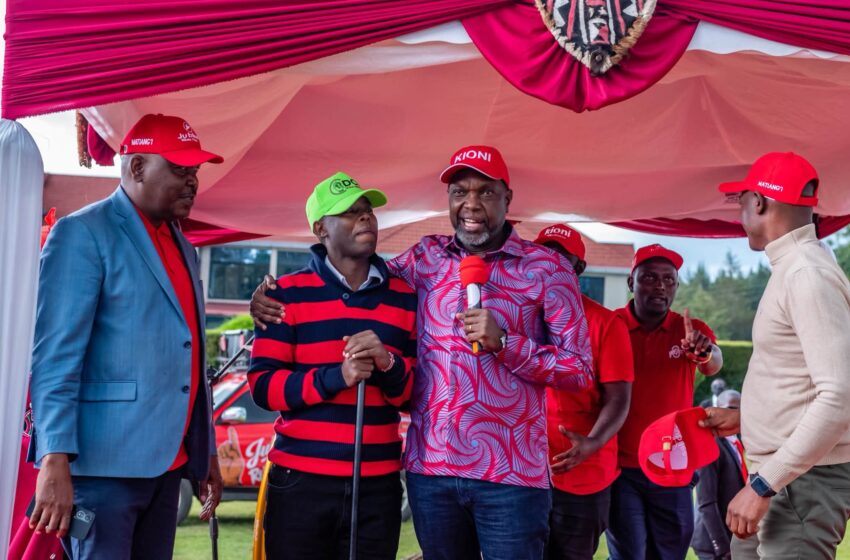
IMAGE/ Jubilee
Jubilee Party Deputy Leader Jeremiah Kioni has warned opposition leaders against bullying political partners and branding fellow members as “moles”, saying such tactics could weaken efforts to defeat President William Ruto in the 2027 General Election.
Kioni said opposition parties should embrace a broad and inclusive approach instead of deciding who belongs in the political movement and who should be pushed out.
Speaking during an interview with K24 TV on Tuesday, September 15, 2026, Kioni said opposition leaders must recognise that even a small section of voters or political actors could determine the outcome of a closely contested 2027 General Election.
“When you are in opposition, never bully anybody. When you come with a bully attitude that alienates the opposition and starts making it look like this cannot help us from where we are. In opposition, you come with open hands,” Kioni said.
Read Also: Pharmacy Board Looks to Shape Future of Pharmaceutical Practice
Kioni argued that opposition leaders cannot afford to alienate potential allies at a time when different parties and political figures are exploring ways of working together against Ruto.
His comments come as the opposition continues grappling with competing ambitions, party interests and disagreements over who should eventually lead a united presidential campaign.
Kioni Warns Against ‘Mole’ Accusations
The Jubilee deputy leader particularly criticised the practice of labelling fellow opposition politicians as government “moles” or using derogatory descriptions against potential political partners.
“When you come and call me a mole, and another one a wheelbarrow, that doesn’t help us come together,” he said.
Kioni said every political group within the opposition could potentially contribute to an electoral victory, warning leaders against dismissing sections of the movement as irrelevant.
“If there is a section of people that you think are not useful to the opposition, whatever small portion that you cut can cost you the win,” Kioni said.
The remarks echo Kioni’s previous calls for opposition leaders to stop branding rivals as “moles” and instead focus on building a united political front ahead of 2027.
The debate comes as political parties continue positioning themselves for an election that is expected to feature a number of competing presidential ambitions.
Kenya’s opposition has yet to settle on a common presidential candidate, while different leaders continue holding consultations over a possible coalition.
Kioni said leaders should therefore avoid actions that could make it more difficult to bring political parties and voter groups together.
He argued that the opposition’s ultimate objective should not simply be to produce a leader of the opposition but to build a political force capable of taking power.
“When you are looking to become the opposition leader, you want to become the leader so that you can win government, and when you win, you become a leader for those in opposition and in government. You are not supposed to have enemies,” Kioni said.
The Jubilee leader said anyone seeking national leadership should be prepared to govern Kenyans across political and regional divides.
Read Also: Top Comoros Official Hospitalized in Nairobi Amid Rising Tensions in Moroni
His remarks come as the opposition explores different strategies for defeating Ruto, including efforts to consolidate regional political bases into a broader national movement.
Recent discussions have also focused on the importance of cooperation between political heavyweights as parties seek to avoid splitting the anti-government vote.
Kioni Backs Matiang’i Approach
Kioni cited former Interior Cabinet Secretary Fred Matiang’i as an example of the leadership style he believes the opposition needs.
He praised Matiang’i for remaining calm during political provocation and attempting to bring competing leaders together.
“It requires leaders who have a global approach, and I admire Fred Matiang’i; even at the extreme point of provocation, he still remains calm in the room and tries to bring people on the board,” Kioni said.
Kioni’s comments came days after he publicly backed Fred Matiang’i’s 2027 presidential bid, saying the former Interior CS should be on the ballot.
On September 12, Kioni said Jubilee aspirants in Ndaragwa had expressed strong support for Matiang’i, arguing that his candidacy would give Kenyans an opportunity to choose a different political direction.
The endorsement has added momentum to discussions surrounding Matiang’i’s potential presidential campaign as opposition leaders weigh possible candidates.
Matiang’i has increasingly featured in discussions about a possible opposition coalition, alongside other national political figures seeking to challenge Ruto.
Kioni also urged opposition politicians to keep serious disagreements away from the public arena.
“If there is a point that people have to bang tables, you bang them under closed doors and you never come to say it out there,” he said.
His argument is that political negotiations inevitably involve disagreements, but public confrontations can make reconciliation more difficult.
The approach could become increasingly important as opposition parties attempt to develop a common strategy for the 2027 contest.
Opposition Intensifies Unity Talks
The opposition’s search for a common political strategy has intensified in recent months, with leaders holding consultations aimed at preventing divisions from weakening their challenge to Ruto.
The political landscape has already experienced significant realignment, including growing discussions around James Orengo’s political strategy and opposition realignment.
Orengo has remained an important figure in discussions surrounding opposition politics, particularly as different factions debate how to reorganise ahead of 2027.
The emerging political alignments have also brought Nairobi Senator Edwin Sifuna into several consultations involving opposition figures.
Sifuna is among leaders associated with the wider opposition conversations, alongside Orengo and Matiang’i.
Kenya Frontline previously reported on the political activities involving Sifuna, Orengo and the Linda Mwananchi movement, highlighting the increasingly complex alliances taking shape within opposition politics.
Kioni’s latest remarks therefore come at a critical stage in the opposition’s efforts to create a political structure capable of challenging an incumbent president.
The challenge is not only identifying a popular presidential candidate but also keeping different parties, regions and political interests within one coalition.
Political leaders will also have to agree on how a presidential candidate should be selected without triggering divisions among supporters of competing aspirants.
The search for unity is taking place alongside preparations by the electoral commission, which has already begun laying the groundwork for the next election. Kenya Frontline has previously examined IEBC preparations ahead of the 2027 General Election.
For Kioni, however, political unity must begin with the way opposition leaders treat one another.
His warning is that insults, public accusations and claims that certain politicians are government agents could push away supporters needed to win the election.
Read Also: Kenyan marathoner remanded over Ksh8 million land fraud case
The opposition’s ability to accommodate competing interests could therefore become a major factor in determining whether it can mount a serious challenge to Ruto.
With the 2027 contest approaching, political negotiations are expected to intensify as parties weigh alliances, presidential candidates and regional strategies.
Kioni believes the opposition has little room for internal exclusion if it wants to succeed.
His message is straightforward: political leaders seeking to defeat Ruto must open their doors to potential allies rather than spend their energy identifying enemies within the opposition

