
Kenya Sports Infrastructure Project Exploded Beyond AFCON 2027 Goals

The intersection of professional football excellence and aggressive national development took center stage at State House Nairobi. President William Ruto hosted the newly crowned 2025/2026 SportPesa Premier League champions, Gor Mahia FC, following their historic 22nd domestic title triumph. This state reception served as a strategic platform for the government to articulate its accelerated nationwide sports infrastructure programme.
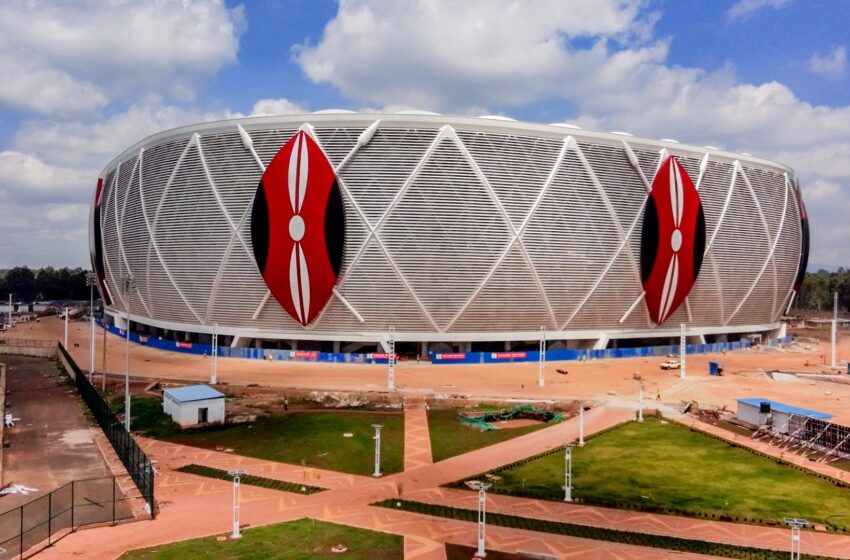
The state is positioning sports facilities not merely as recreational grounds but as critical drivers of regional economic growth. The updated directive aims to finalize nearly 28 new stadiums across the country within the next twelve months. This represents a significant scaling up of previous development timelines, aiming to decentralize modern sporting facilities to historically underserved regions.
The modern sports landscape requires a shift away from traditional, single-use pitches toward self-sustaining civic investments. The government seeks to address long-standing gaps in regional talent optimization by creating high-performance hubs in every corner of the republic. This comprehensive rollout aims to prepare the nation for upcoming international showcases while establishing a permanent foundation for domestic athletic monetization.
Also Read: Top Comoros Official Hospitalized in Nairobi Amid Rising Tensions in Moroni
Kenya Sports Infrastructure Development Plan Exploded
The administrative framework underpinning this infrastructure drive marks a departure from previous public works approaches. The national executive is directly supervising the construction pipelines to eliminate bureaucratic bottlenecks and bypass traditional procurement delays. This centralized oversight ensures that stalled municipal projects receive immediate budgetary and technical interventions.
The multi-billion shilling allocation reflects a broader geopolitical objective to position East Africa as a premier continental sporting destination. The upcoming 2027 Africa Cup of Nations (AFCON), co-hosted alongside Uganda and Tanzania, serves as the immediate horizon for these structural upgrades. The state is utilizing this international window to rapidly advance projects that would otherwise take decades to complete.
The execution strategy involves a multi-agency framework where specialized state organs collaborate with local engineering authorities. The involvement of entities like the Kenya Defence Forces in specific projects demonstrates a commitment to rapid delivery and strict quality compliance. This collaborative model intends to deliver international-standard playing surfaces, high-capacity seating, and media infrastructure within compressed timelines.
Commercial Stadium Ecosystem Model Explained
The structural philosophy governing these 28 new facilities rejects the traditional model of isolated sports fields. Modern sports management requires facilities to operate continuously, generating reliable revenue streams independent of match-day ticket sales. The state has designed these projects as multi-purpose commercial ecosystems capable of stimulating micro-economies within host counties.
Each facility integrates dedicated training grounds, commercial fitness centers, hospitality suites, and retail storefronts into a unified architectural footprint. The inclusion of digital ICT hubs and modern conference spaces aims to attract corporate clients, tech entrepreneurs, and local businesses. This diversified setup ensures that the infrastructure remains financially viable, self-sustaining, and deeply integrated into the daily economic life of the community.
The integration of commercial spaces creates a continuous funding mechanism for facility upkeep, addressing the historical challenge of stadium degradation in sub-Saharan Africa. The revenues collected from retail leases, gym memberships, and corporate events will fund specialized maintenance teams. This model ensures that high-quality playing surfaces and spectator facilities do not deteriorate after the initial construction phase.
Regional Distribution of New Football Facilities
The geographical distribution of the stadium pipeline emphasizes national inclusivity, targeting both traditional football hubs and frontier regions. The inclusion of frontier zones like Garissa, Wajir, and Mandera indicates a strategic intent to formalize talent identification pipelines in northern Kenya. These regions have historically lacked the modern scouting networks and training facilities necessary to launch professional athletic careers.
Concurrently, traditional football strongholds in western Kenya and the coastal strip are receiving substantial infrastructural upgrades. The completion of the Bungoma facility serves as a proof of concept for rapid regional delivery. Meanwhile, large-scale projects like the Ksh1 billion Gusii Stadium in Kisii and the 10,000-seater facility in Kilifi are moving through their final phases of structural development.
| Target Facility Location | Current Engineering Status | Integrated Commercial Infrastructure | Primary Regional Sport Impact |
| Gusii Stadium (Kisii) | Phase Two Groundbreaking Completed | Tech Hubs, Corporate Gyms, Retail Outlets | Western Region Talent Scouting Hub |
| Wajir Stadium | Advanced Structural Assembly | Conference Spaces, Community Markets | Northern Frontier Athletics Development |
| Kilifi Stadium | Substructure Construction Active | Hospitality Suites, Sports Clinics | Coastal Football Academy Integration |
| Ithookwe Stadium (Kitui) | Final Fit-Out and Track Calibration | Restaurant Blocks, ICT Training Centers | Eastern Zone Multi-Sport Optimization |
The logistical coordination of these concurrent builds requires precise supply chain management and localized labor sourcing. Local contractors and artisans are being integrated into the construction ecosystems, providing immediate employment boosts within the respective counties. This localized economic injection reinforces the role of sports infrastructure as a tool for community development and youth economic empowerment.
Gor Mahia FKF Premier League Dominance Capitalization
The athletic justification for this infrastructural push is demonstrated by the sustained dominance of elite clubs like Gor Mahia FC. Securing their 22nd top-flight championship underscores the immense talent pool existing within the domestic football ecosystem. The club’s consistent performance in the SportPesa Premier League highlights the necessity of providing stable, world-class environments to support local athletes.
The state rewarded this athletic consistency with a direct financial pledge of Sh10 million to the club’s administrative kitty. Additionally, an immediate cash bonus of Sh100,000 was awarded to each member of the playing squad to recognize their professional discipline. This financial injection aims to ease the operational pressures that often disrupt elite clubs during continental transitions.
The financial reward system established by the executive marks a shift toward performance-based state patronage in football. The administrative bench must leverage these resources to transition from local dominance to sustained competitiveness in continental tournaments. The availability of upgraded regional stadiums will provide elite clubs with the necessary training facilities to prepare for high-intensity international club competitions.
Financial Rewards and Corporate Sports Sponsoring
The financial dynamics of Kenyan football are experiencing a parallel shift, driven by increased corporate sponsorship and structured prize distributions. Football Kenya Federation (FKF) President Hussein Mohammed confirmed that Gor Mahia will take home Sh15 million from the league’s centralized Sh20 million prize pool. This structured payout indicates a growing formalization of the domestic game’s financial architecture.
The injection of state funds alongside corporate sponsorships creates a more secure financial environment for premier league teams. This capital allows clubs to honor player contracts consistently, upgrade training equipment, and invest in modern sports science personnel. The stabilization of club finances reduces talent flight, keeping the brightest domestic stars within the local league system for longer periods.
The emergence of corporate entities willing to finance league prize pools indicates a growing commercial confidence in domestic sports administration. The state’s massive infrastructure commitments complement this corporate interest by providing high-quality broadcasting environments. Modern stadiums equipped with professional lighting and media centers directly enhance television production values, driving higher sponsorship valuations and digital viewership.
Stadium Infrastructure Versus Youth Talent Academies Debate
The rapid expansion of physical infrastructure has initiated a critical policy debate within the national sports ecosystem. Analysts and lawmakers argue that constructing concrete arenas without equivalent investments in foundational human capital will not yield long-term athletic success. The core challenge centers on balancing capital-intensive construction projects with community-level talent cultivation.
The critique highlights the urgent need for structural reforms within football federations to ensure new facilities are fully utilized. The establishment of specialized football academies, advanced coaching certification courses, and structured youth leagues must occur alongside stadium construction. This dual approach ensures that when a new facility opens, a structured pipeline of young talent is already prepared to utilize the space.
The Ministry of Sports is tasked with developing operational frameworks that bridge this gap between infrastructure and talent development. The state must collaborate with schools, regional clubs, and independent academies to guarantee open access to these new multi-purpose hubs. This integration will transform the stadiums into active centers for daily training, sports science testing, and youth mentorship, rather than leaving them underutilized outside of major match days.
Also Read: Rio Ferdinand To Open International Doors For Arusha Through AFCON 2027
Sustainable Ecosystems Over Concrete Arenas
The true measure of the ongoing infrastructure program will be determined by its operational sustainability over the next decade. The completion of 28 new stadiums will fundamentally alter the physical architecture of Kenyan sports, but operational management will dictate the long-term outcomes. The transition from construction to active asset management requires specialized personnel trained in sports marketing, turf management, and event logistics.
The national sports policy must evolve to support public-private partnerships in managing these commercial ecosystems. The state can ensure the long-term viability of these venues by allowing professional management firms to run the commercial zones, fitness centers, and conference facilities. This approach guarantees that public infrastructure remains insulated from shifting political priorities and municipal budget constraints.
The path toward the 2027 Africa Cup of Nations and long-term athletic growth depends on the successful execution of this dual strategy. The combination of elite performance rewards, localized commercial stadiums, and grassroots structural reforms forms a strong framework for the future. This holistic development model aims to elevate the standard of domestic football while establishing sports as a key sector of the national economy.

